Rank:
Lieutenant Commander
Post nominals:
VRD
Birth date:
17.05.1910
Birth Place:
Auckland, New Zealand
Date Discharged:
02.12.1946
Death date:
08.11.1995
Place of death:
Auckland, New Zealand

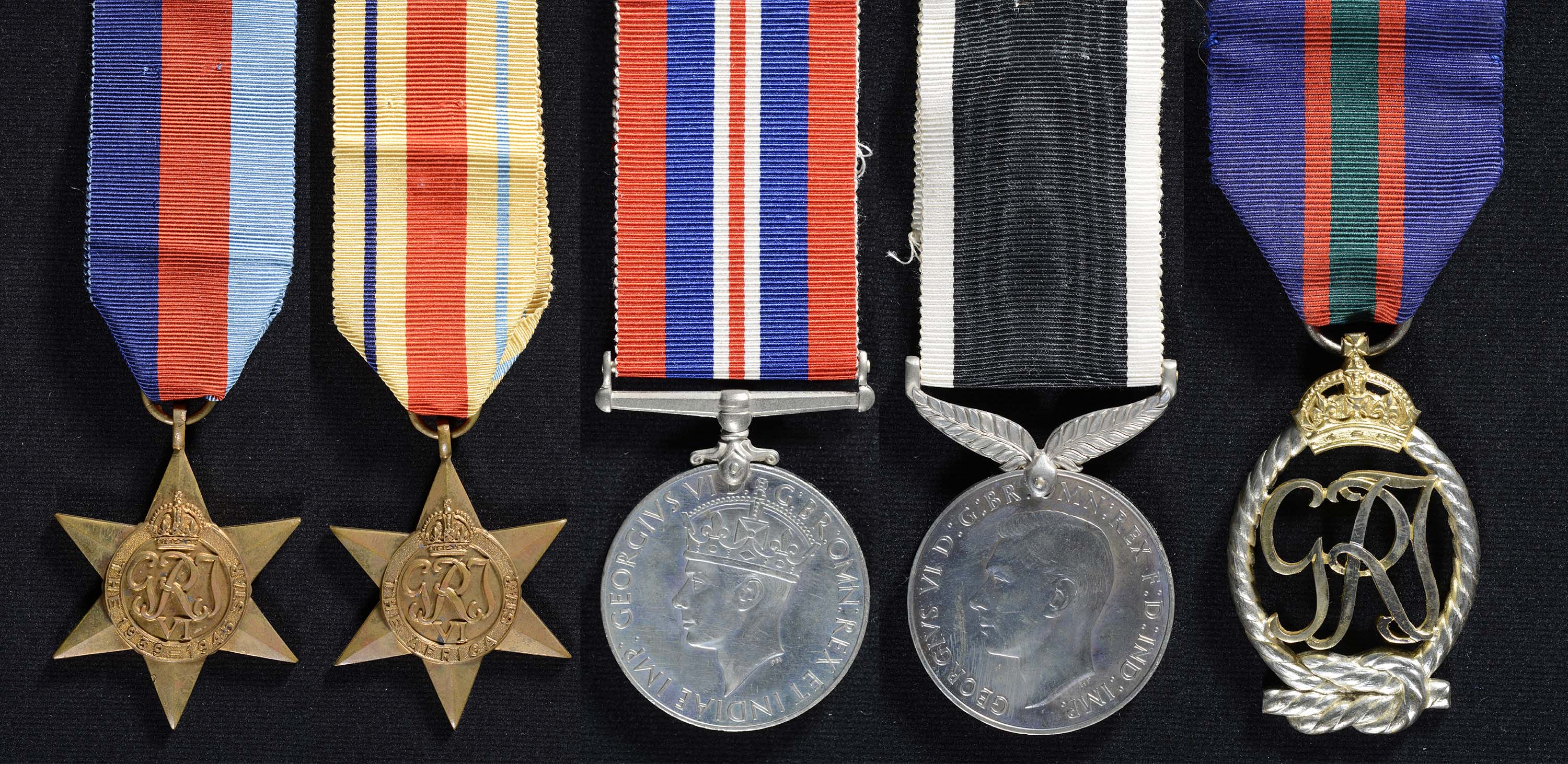
Trevor Horner was a member of the Auckland Division of the Royal Naval Volunteer Reserve. Horner served as a Coxswain on Volunteer Reserve craft throughout the 1930s. He became a Paymaster and spent time in HMS Dunedin in 1936. In late 1938 Horner was part of the crew that took HMS Achilles to the United Kingdom for refit. He was mobilised for service during the Second World War in April 1940. Horner was sent to the United Kingdom and served in HMS York in the Mediterranean Fleet based out of Alexandria, Egypt. He was serving in HMS York when the ship was abandoned in Souda bay, Crete in March 1941 after being damaged by Italian explosive motorboats.
Following this, Horner had a brief stint in HMS Leander which was also operating out of Alexandria. In July 1941, he was posted to HMS Nile, a shore establishment in Alexandria. Horner spent most of 1942 attached to HMS Resource, a repair ship serving in the Mediterranean. He was then attached to HMS Stag, a shore establishment in Port Said, Egypt, before returning to New Zealand in August 1943. Horner spent the next three years serving in HMNZS Philomel and was promoted to Pay Lieutenant Commander in 1944. He was discharged in December 1946 and received the Royal Naval Volunteer Reserve Decoration.
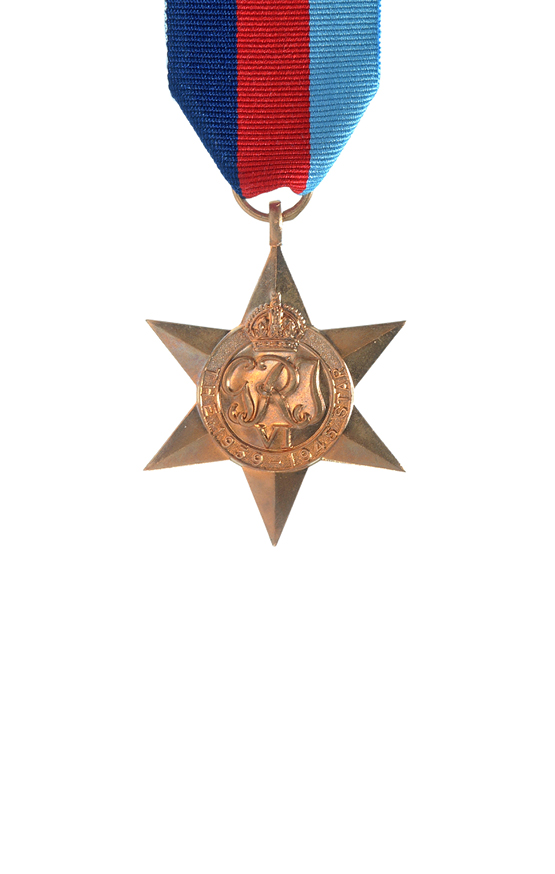
The 1939-45 Star is the first in a series of eight campaign stars instituted in 1945 to recognise service in World War Two. The ribbon has three equal vertical stripes of dark blue, red and light blue. The dark blue stripe symbolises the service of the Navy and the Merchant Navy, the red stripe symbolises the service of the Army, and the light blue stripe symbolises the service of the Air Force. The equal width bands represent the equal contributions of the three service arms towards victory. The ribbon was devised by King George VI. Two clasps could be awarded with this medal: ‘Battle of Britain’ and ‘Bomber Command’. Only aircrew would qualify for these clasps although a small number of Fleet Air Arm naval pilots flew for the air force and would be eligible for the ‘Battle of Britain’ clasp.
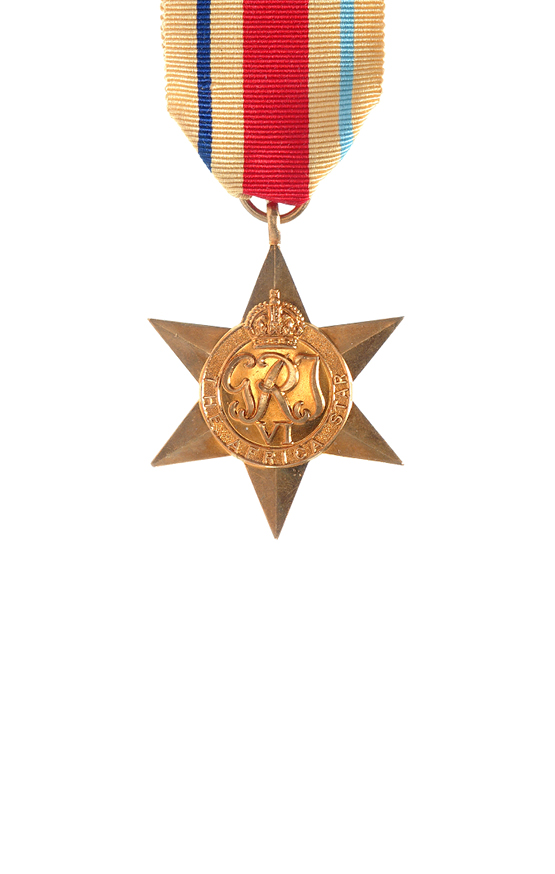
The Africa Star was awarded in the Second World War for service in North Africa between 10 June 1940 and 12 May 1943. The ribbon is pale buff in colour, with a central vertical red stripe, and narrower stripes, one dark blue and the other light blue. The pale buff background symbolises the desert, the central red stripe symbolises the Army, the dark blue stripe symbolises the Navy and Merchant Navy, and the light blue stripe symbolises the Air Force. Three clasps could be awarded with this medal: ‘North Africa 1942-43’, ‘8th Army’, and ‘1st Army’. Naval personnel could only qualify for the ‘North Africa 1942-43’ clasp – for in shore service.
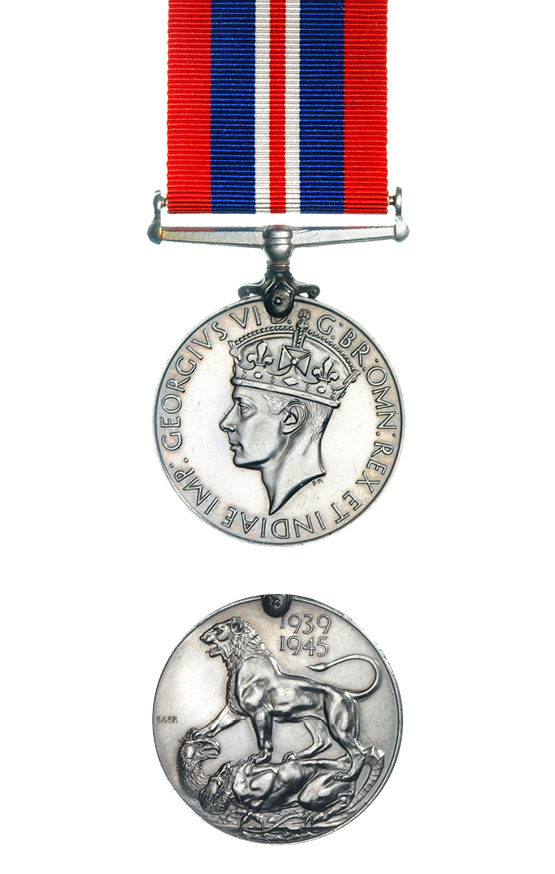
The War Medal 1939-45 was awarded across the British Commonwealth to all full-time members of the Armed Forces in the Second World War for 28 days service between 3 September 1939 and 2 September 1945, irrespective of where they were serving. The ribbon is the red, white, and blue of the (British) Union Flag. There is a narrow central red stripe with a narrow white stripe on either side. There are broad red stripes at either edge, the two intervening stripes being blue.
A bronze oak leaf on the medal ribbon denotes that the recipient was Mentioned in Despatches. To be Mentioned in Despatches a member of the armed forces had their name mentioned in an official report, written by a superior officer, and sent to a higher command. The report would describe the individual’s gallant or meritorious action in the face of the enemy.
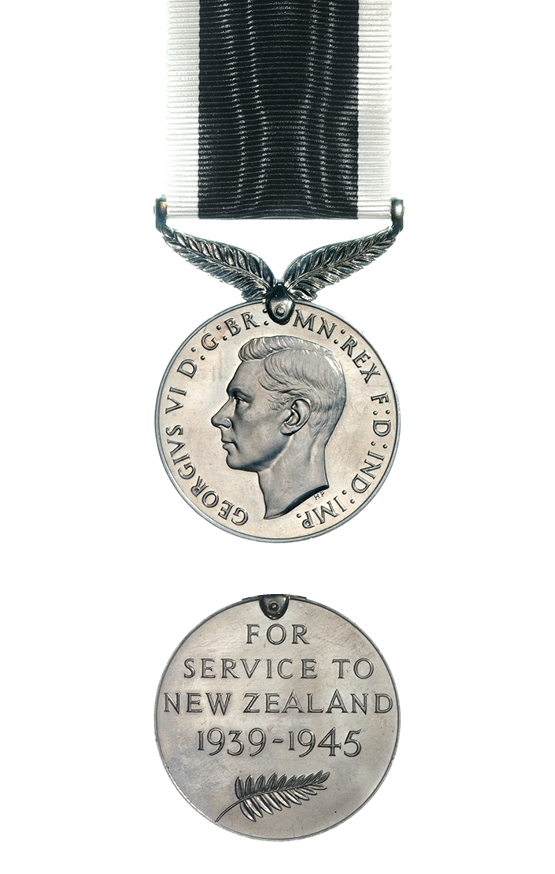
The New Zealand War Service Medal was awarded for 28 days’ full time service or six months’ part time service in the Second World War in any of the New Zealand Armed Forces including the Reserves, Naval Auxiliary Patrol Service, or Home Guard, between 3 September 1939 and 2 September 1945.
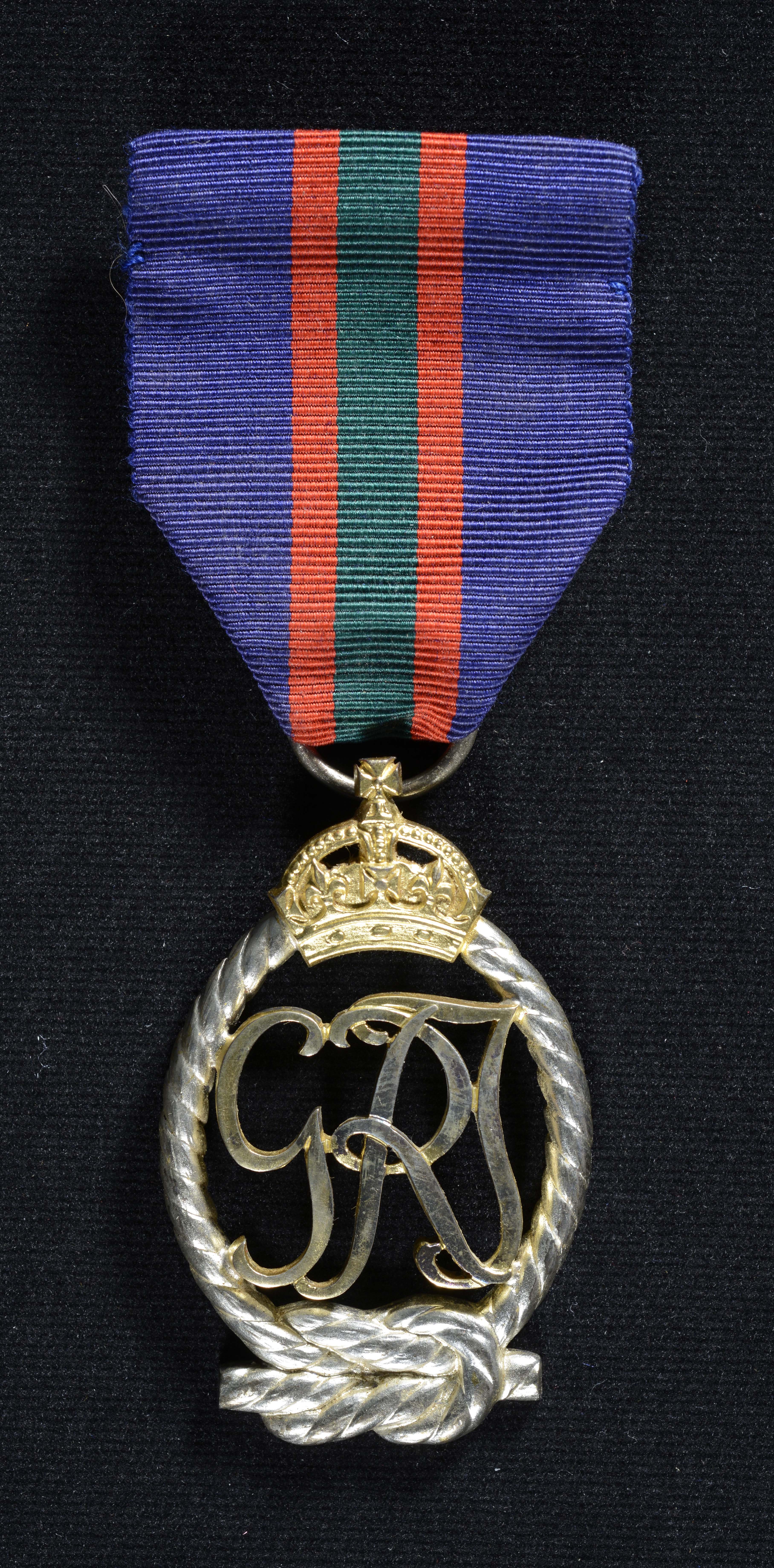
Instituted in 1908, the Royal Naval Volunteer Reserve Decoration was awarded to commissioned officers in the Royal Naval Volunteer Reserve after fifteen years of service; wartime service counting as double. Holders were entitled to the postnominal letters VD (until 1947) or VRD (after 1947). The original plain dark green ribbon was replaced with a blue, green and red striped version in 1919. The VRD was discontinued in the United Kingdom in 1966 but continued to be awarded in New Zealand, being instituted in 1985 as the Royal New Zealand Naval Volunteer Reserve Decoration with qualifying service backdated to 1977. The New Zealand VRD is the exact same design as the RNVR Decoration with the post 1919 striped ribbon. The ribbon colours are symbolic with blue representing the sea, red the Royal crimson and green which was the colour of the ribbon of the original Volunteer Officer’s decoration.