Rank:
Engineer Lieutenant
Birth date:
01.02.1891
Date Joined:
1916
Date Discharged:
1936

James Patterson Stewart was an Engineering Officer in the Royal Navy during the First World War. He served in HMS Virginian, an armed merchant cruiser which was part of the 10th Cruiser Squadron that undertook North Atlantic patrols as part of the Allied blockade of Germany. Stewart also served in HMS Nairana, an Australian passenger ferry requisitioned by the Royal Navy and refitted as a seaplane carrier. Excerpts from his service record describe him as “a zealous and promising officer” with “power of command and other officer-like qualities”. From July 1918 to August 1918 Stewart was posted to the shore establishment HMS Victory where he undertook a series of engineering courses before posting to HMS Bellerophon.
After the war, he left Britain on the 16th May 1919 with his wife Jessie Black Stewart (nee Hamilton), arriving back in New Zealand on 30th June 1919. In 1920 James rejoined the Royal New Zealand Naval Volunteer Reserve and was promoted to Engineer Lieutenant in 1922. He remained a reservist until 1936.
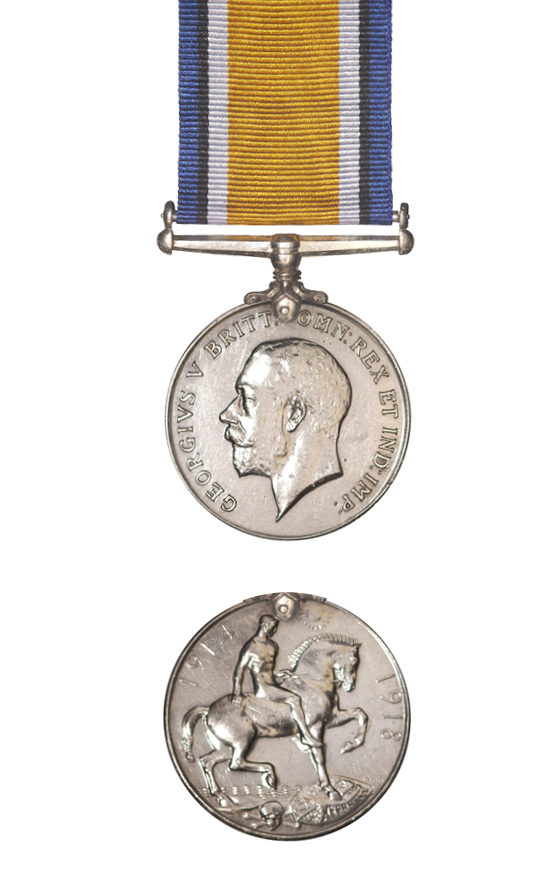
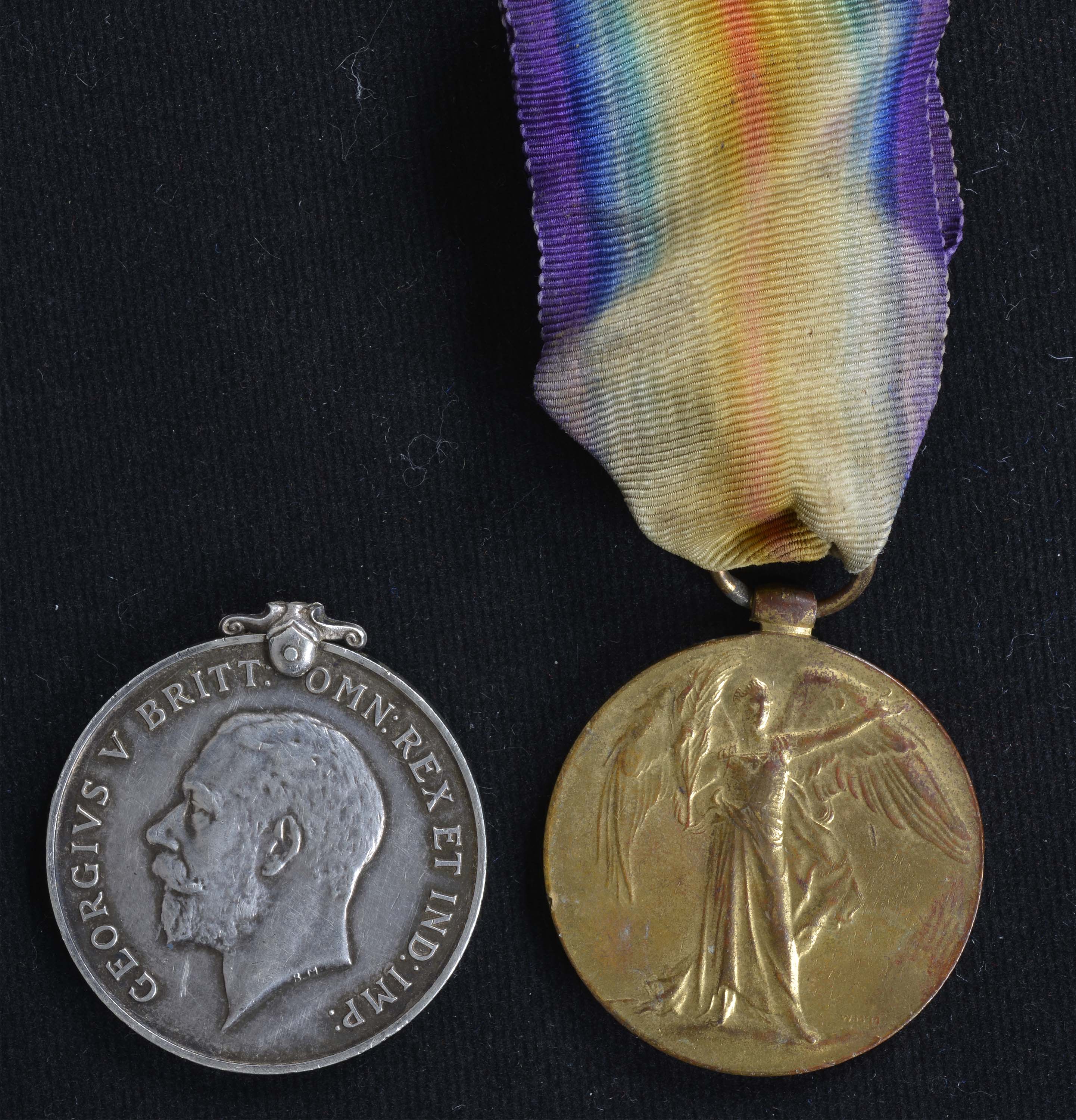
The British War Medal was instituted in 1919 to recognise the successful conclusion of the First World War (1914-1918). Its coverage was later extended to recognise service until 1920, recognising mine clearing operations at sea, and participation in operations in North and South Russia, the eastern Baltic, Siberia, the Black Sea and the Caspian Sea.
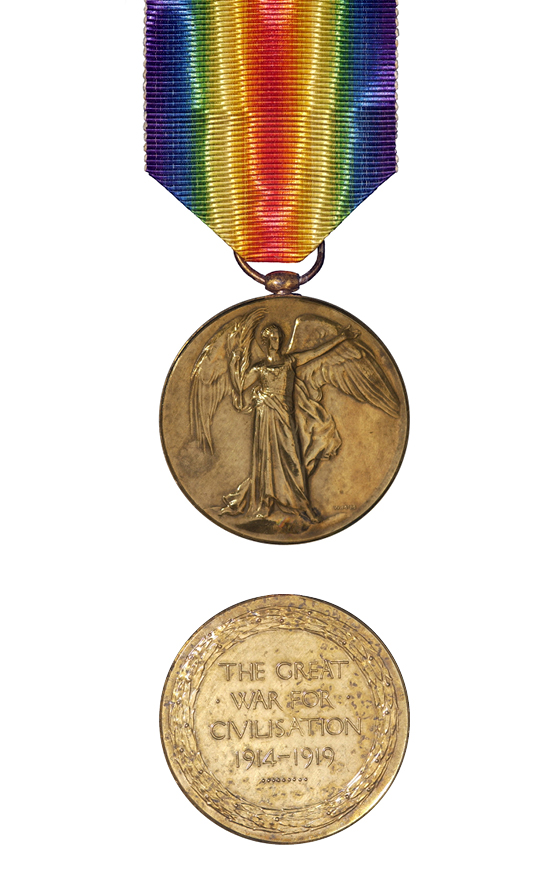
The Victory Medal was awarded in the First World War to all those who had already qualified for the 1914 Star or the 1914-15 Star, and to most persons who had already qualified for the British War Medal. The Victory Medal was awarded to all New Zealand troops serving overseas, except for those who arrived in Samoa after 30 August 1914 and those serving in Great Britain only. It has a unique double rainbow ribbon.
A bronze spray of oak leaves on the medal ribbon denotes that the recipient was Mentioned in Despatches during the period that the medal recognises. To be Mentioned in Despatches a member of the armed forces has had their name mentioned in an official report, written by a superior officer, and sent to a higher command. The report would describe the individual’s gallant or meritorious action in the face of the enemy.