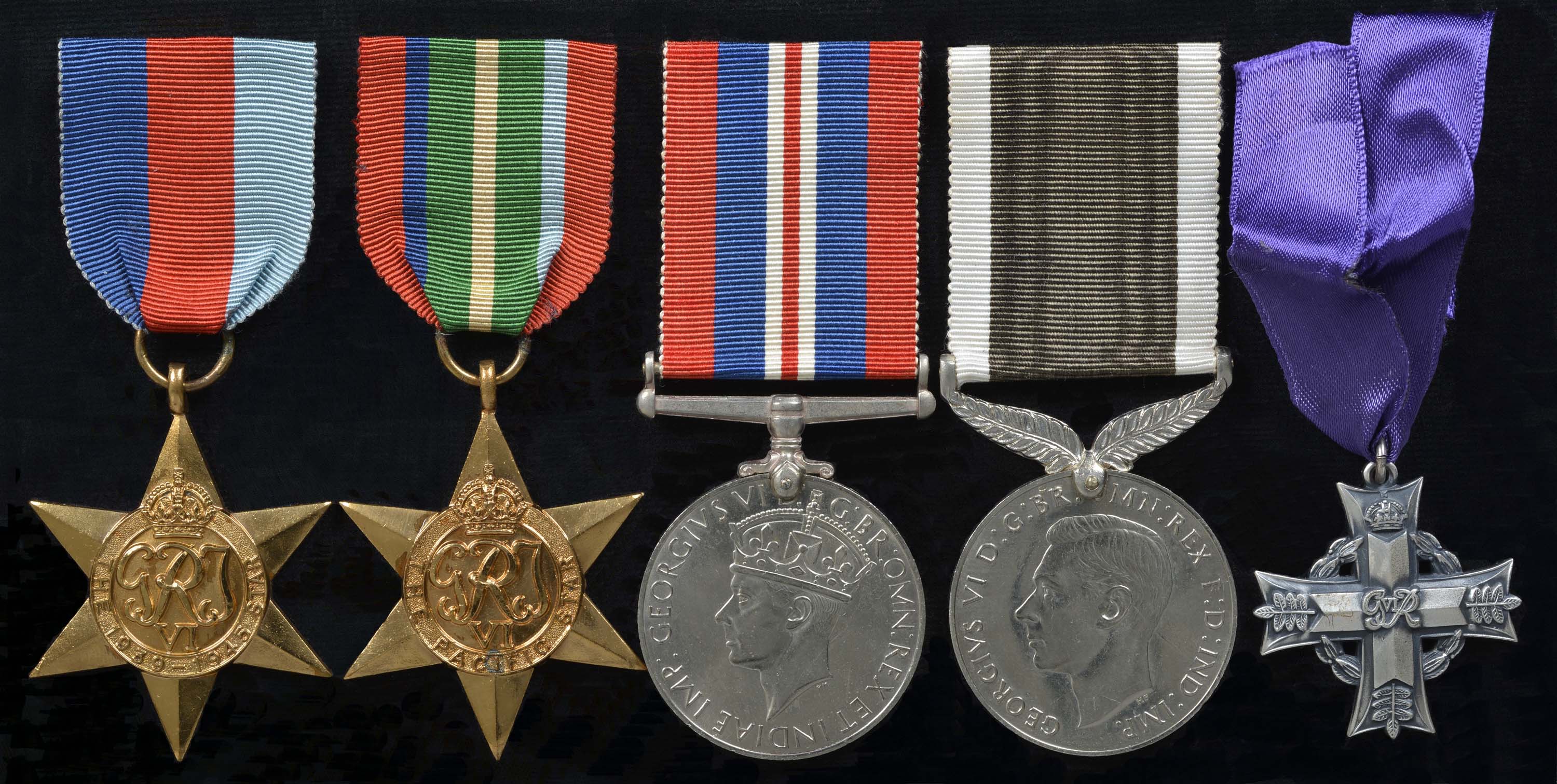
Display No. 12K
WARREN, Norman Geoffrey
Norman Warren joined the New Zealand Division of the Royal Navy on 22 October 1936 as a Stoker. His first posting was to HMS Achilles in New Zealand. At the outbreak of the Second World War, Achilles was called to patrol the Pacific and Atlantic coasts of South America for German vessels. He was subsequently involved in the Battle of the River Plate on 13 December 1939. Following promotion to Leading Stoker in October 1941, Warren joined HMNZS Leander in April 1942 which was stationed in the Pacific Ocean. In July 1943, Leander was part of an American Task Force involved in the Battle of Kolombangara in the Solomon Islands against Japanese forces. Leander was struck by a torpedo and severely damaged, killing Warren and 27 other men.
Awarded medal(s)
Medal Description [Left to Right]:
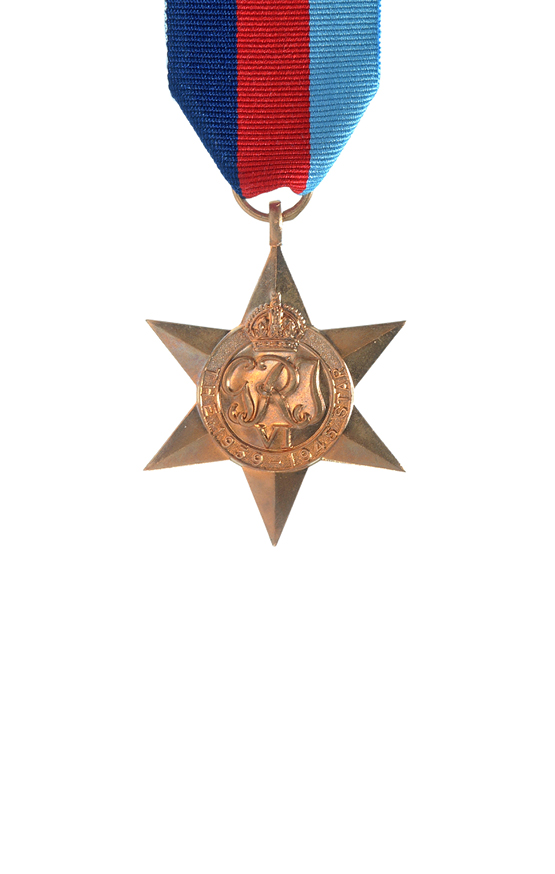
The 1939-1945 Star

The 1939-45 Star is the first in a series of eight campaign stars instituted in 1945 to recognise service in World War Two. The ribbon has three equal vertical stripes of dark blue, red and light blue. The dark blue stripe symbolises the service of the Navy and the Merchant Navy, the red stripe symbolises the service of the Army, and the light blue stripe symbolises the service of the Air Force. The equal width bands represent the equal contributions of the three service arms towards victory. The ribbon was devised by King George VI. Two clasps could be awarded with this medal: ‘Battle of Britain’ and ‘Bomber Command’. Only aircrew would qualify for these clasps although a small number of Fleet Air Arm naval pilots flew for the air force and would be eligible for the ‘Battle of Britain’ clasp.
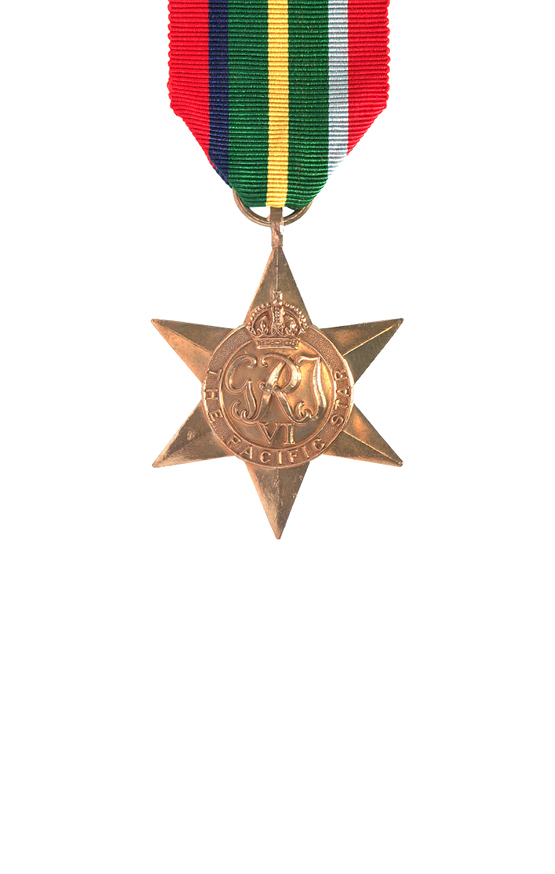
The Pacific Star

The Pacific Star was awarded in the Second World War for operational service in the Pacific between 8 December 1941 and 2 September 1945. This medal was also awarded for certain specified service in China, Hong Kong, Malaya and Sumatra: between 8 December 1941 and 25 December 1941 (for Hong Kong); between 8 December 1941 and 15 February 1942 (for China and Malaya); and between 8 December 1941 and 23 March 1942 (for Sumatra). The centre of the ribbon is dark green (symbolising the jungle) with a central yellow stripe (symbolising the beaches). On the outer edges are wide stripes of red (representing the Army), with narrow stripes of dark blue and light blue (representing the Navy and Air Force) between the stripes of dark green and red. A ‘Burma’ clasp could be awarded with this medal. Personnel qualifying for both the Pacific and Burma Stars were awarded the first star but only a clasp in respect of the second.
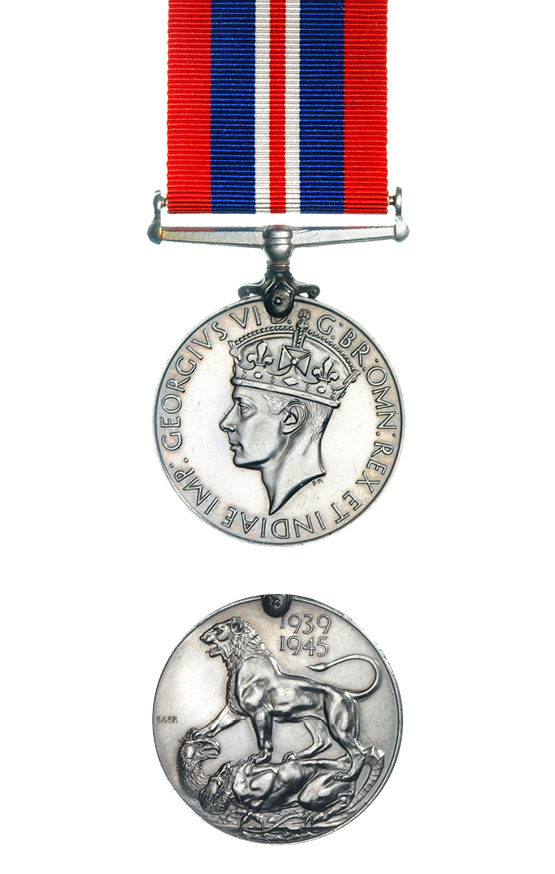
The War Medal 1939-1945

The War Medal 1939-45 was awarded across the British Commonwealth to all full-time members of the Armed Forces in the Second World War for 28 days service between 3 September 1939 and 2 September 1945, irrespective of where they were serving. The ribbon is the red, white, and blue of the (British) Union Flag. There is a narrow central red stripe with a narrow white stripe on either side. There are broad red stripes at either edge, the two intervening stripes being blue.
A bronze oak leaf on the medal ribbon denotes that the recipient was Mentioned in Despatches. To be Mentioned in Despatches a member of the armed forces had their name mentioned in an official report, written by a superior officer, and sent to a higher command. The report would describe the individual’s gallant or meritorious action in the face of the enemy.

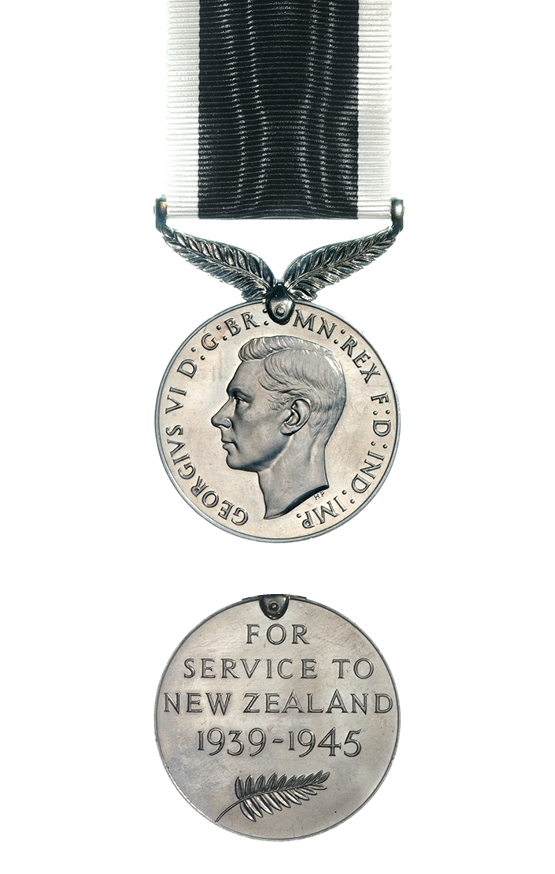
The New Zealand War Service Medal

The New Zealand War Service Medal was awarded for 28 days’ full time service or six months’ part time service in the Second World War in any of the New Zealand Armed Forces including the Reserves, Naval Auxiliary Patrol Service, or Home Guard, between 3 September 1939 and 2 September 1945.
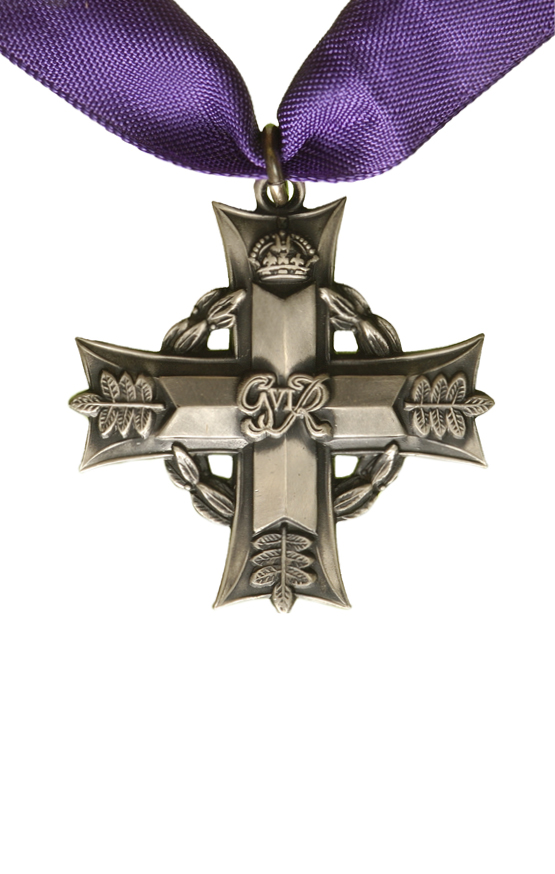
The New Zealand Memorial Cross

The New Zealand Memorial Cross is awarded to the next of kin of all New Zealand servicemen and women who were killed, while on war service or operational service overseas in the Second World War. It is also awarded to the next of kin of those who subsequently died of wounds received while on war service, or operational service overseas, since the commencement of the Second World War. For deaths during the Second World War the first cross was awarded in the late 1940s or the 1950s to the mother. If the mother was deceased, the first cross was awarded to the father, or if he was also deceased, to the eldest sister, or the eldest brother if the military service person had no living sisters. A second cross was awarded to the widow, eldest daughter or eldest son (in that order of precedence). If the deceased military service person was not married, and had no children, only one Memorial Cross was issued. It is worn on a purple ribbon around the neck.