Ref.no. APB 0243 Image may be subject to copyright restrictions.
Rank:
Sub Lieutenant
Birth date:
1889
Birth Place:
Napier, New Zealand

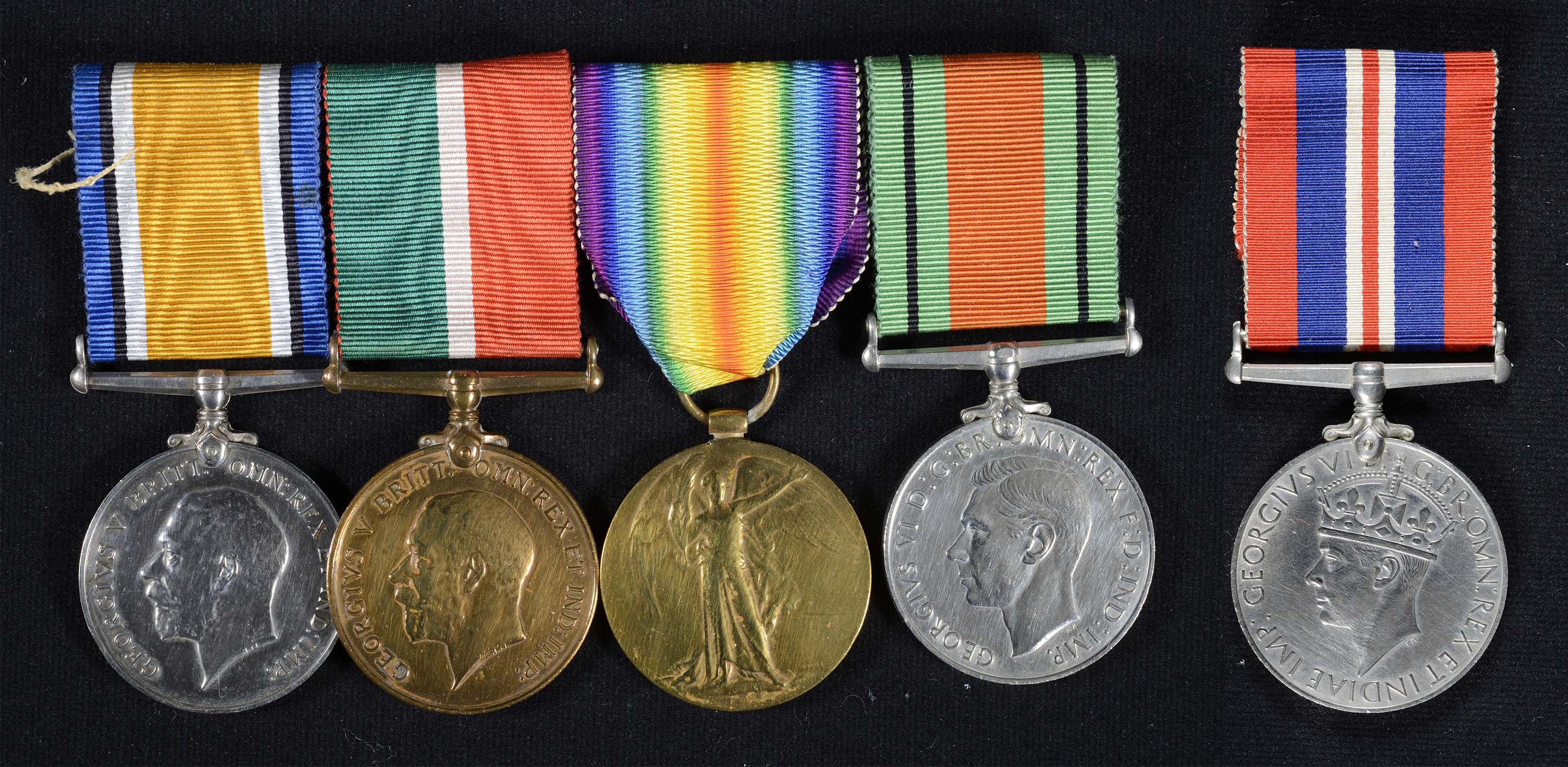
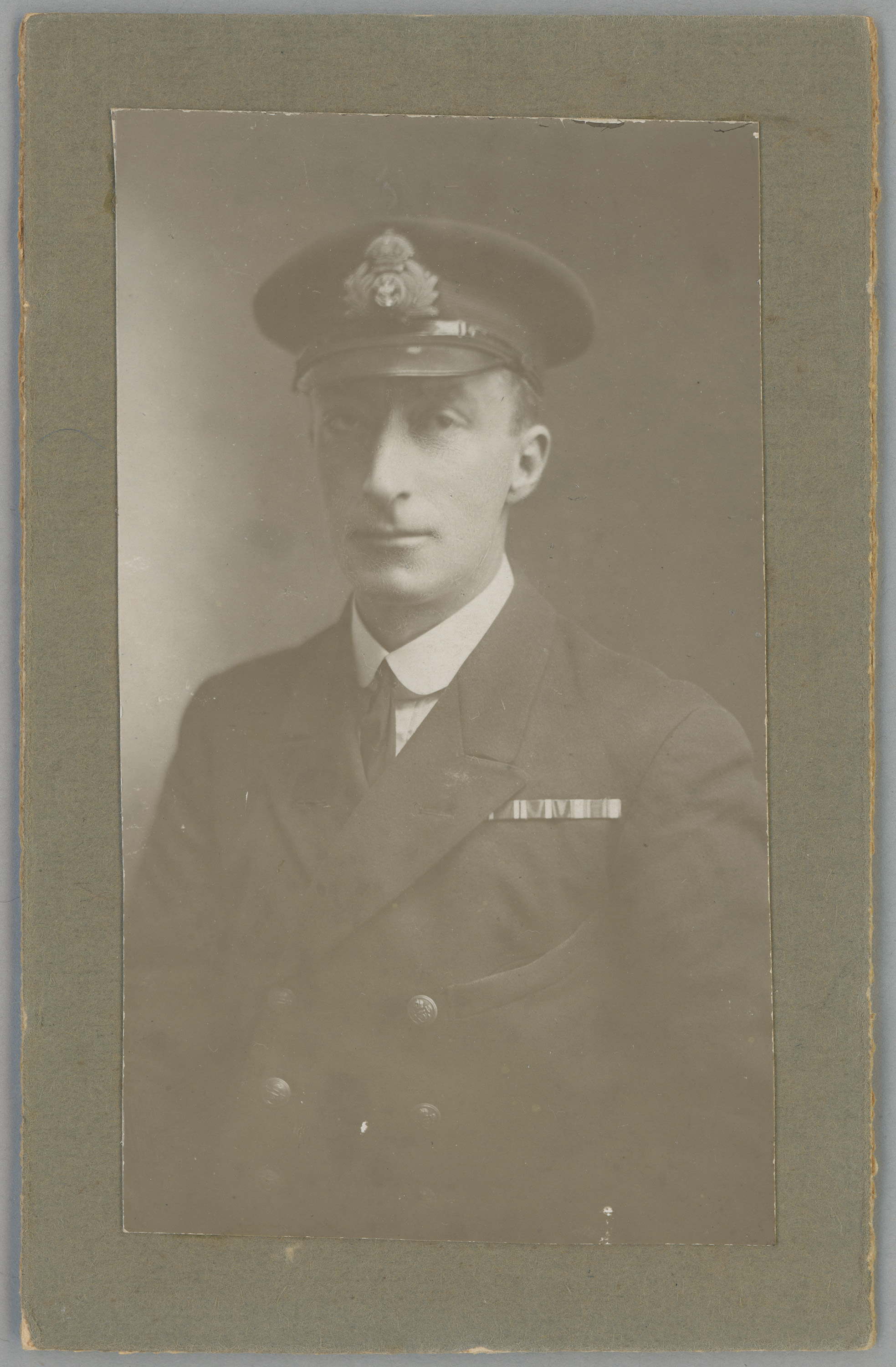
Thomas Scoble joined the Merchant Navy during the First World War as an Able Seaman. He served in the ships Prosper, Whimbrel, and Stephen Furness. In August 1916, he transferred to the Merchant Marine Reserve and was posted to HMS Sunhill at Portsmouth as a Boatswain. He was then posted to HMS Ebro, which was patrolling in the North Atlantic. He returned ashore serving in HM Ships Sunhill, Ganges, and Eaglet.
From April 1918 until the end of the war, he was posted to HMS Daggry operating out of Dunkirk where he received a temporary commission as a sub lieutenant in the Royal Naval Volunteer Reserve (RNVR). After the war Scoble returned to his work as a merchant seaman primarily based out of the United Kingdom. Scoble served in shore establishments with the Royal Navy during the Second World War.
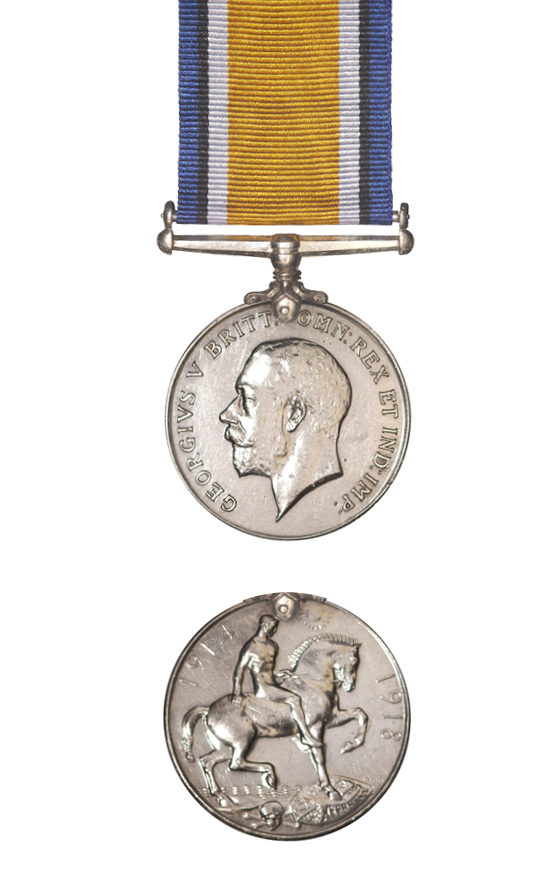
The British War Medal was instituted in 1919 to recognise the successful conclusion of the First World War (1914-1918). Its coverage was later extended to recognise service until 1920, recognising mine clearing operations at sea, and participation in operations in North and South Russia, the eastern Baltic, Siberia, the Black Sea and the Caspian Sea.
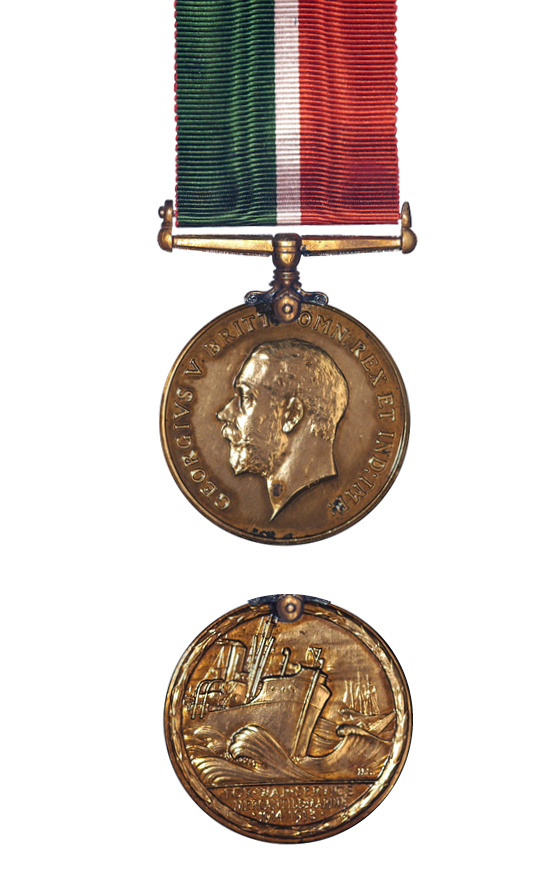
The Mercantile Marine War Medal, instituted in 1919, was awarded to all members of the Merchant Navy who had undertaken one or more voyages through a war or danger zone during the First World War. The ribbon has three bands: green, white and red. These represent a ship’s starboard (green) and port (red) running lights with the masthead (white) steaming light in the centre.
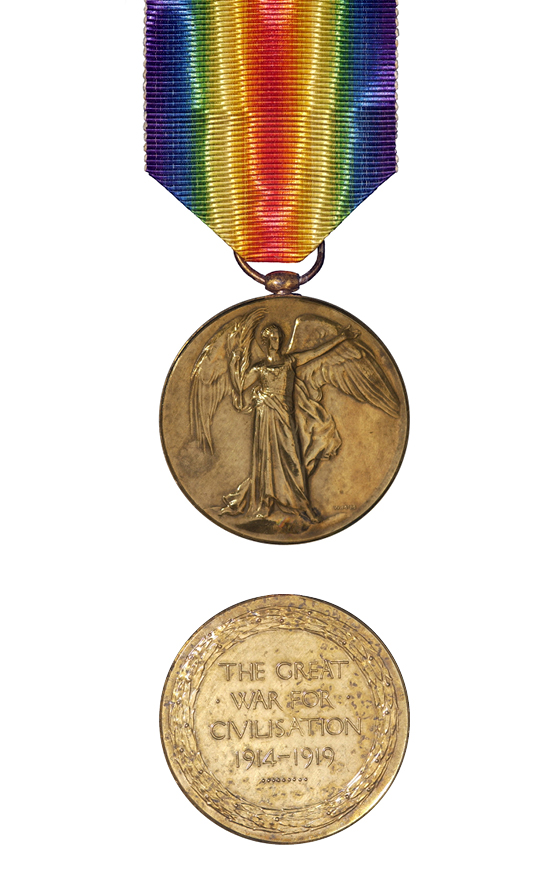
The Victory Medal was awarded in the First World War to all those who had already qualified for the 1914 Star or the 1914-15 Star, and to most persons who had already qualified for the British War Medal. The Victory Medal was awarded to all New Zealand troops serving overseas, except for those who arrived in Samoa after 30 August 1914 and those serving in Great Britain only. It has a unique double rainbow ribbon.
A bronze spray of oak leaves on the medal ribbon denotes that the recipient was Mentioned in Despatches during the period that the medal recognises. To be Mentioned in Despatches a member of the armed forces has had their name mentioned in an official report, written by a superior officer, and sent to a higher command. The report would describe the individual’s gallant or meritorious action in the face of the enemy.
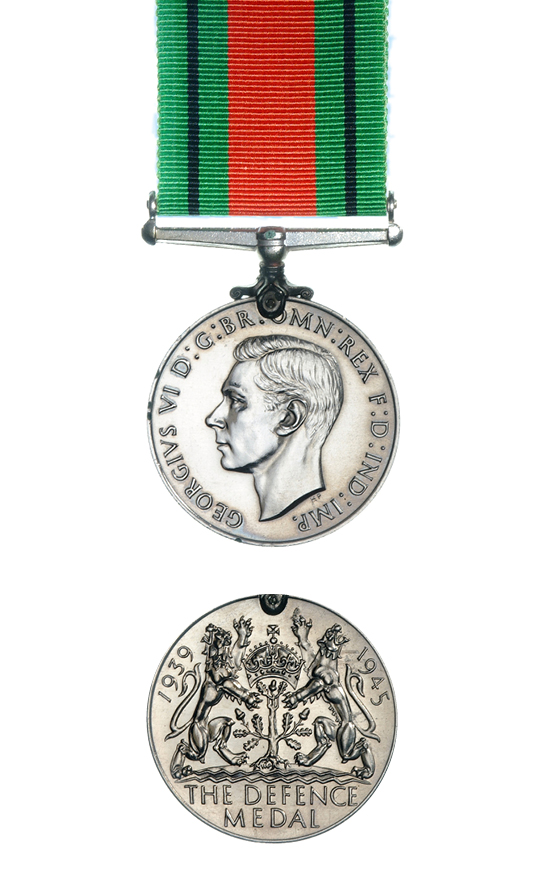
The Defence Medal was awarded to British and Commonwealth forces who served during the Second World War. It was awarded to New Zealand military personnel who served overseas in a non-operational area such as Great Britain, Palestine or Fiji. The ribbon’s flame-coloured orange centre band and green edge bands symbolise enemy attacks on Britain’s green and pleasant land. The narrow black stripes represent the black-outs against enemy air-attacks.
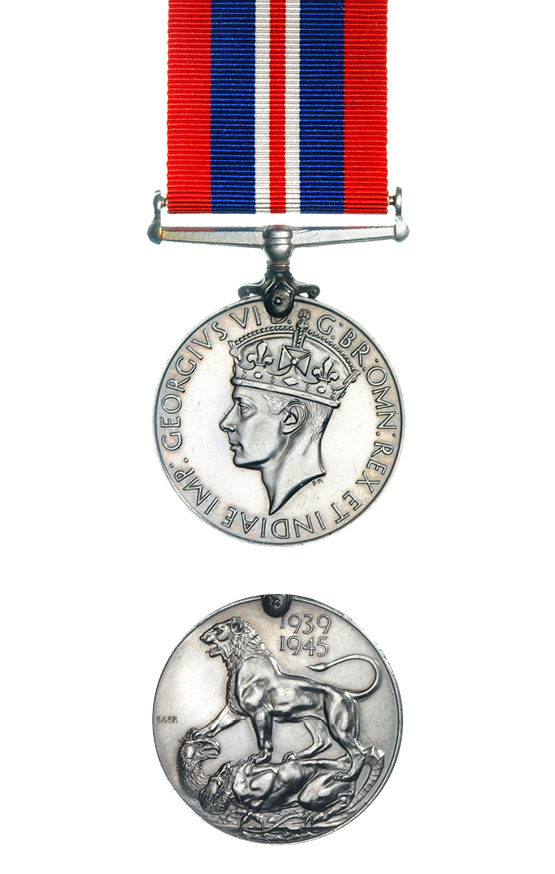
The War Medal 1939-45 was awarded across the British Commonwealth to all full-time members of the Armed Forces in the Second World War for 28 days service between 3 September 1939 and 2 September 1945, irrespective of where they were serving. The ribbon is the red, white, and blue of the (British) Union Flag. There is a narrow central red stripe with a narrow white stripe on either side. There are broad red stripes at either edge, the two intervening stripes being blue.
A bronze oak leaf on the medal ribbon denotes that the recipient was Mentioned in Despatches. To be Mentioned in Despatches a member of the armed forces had their name mentioned in an official report, written by a superior officer, and sent to a higher command. The report would describe the individual’s gallant or meritorious action in the face of the enemy.
Awarded by the Corps of Commissionaires for long and exemplary service. The Corps of Commissionaires refers to a global movement in Commonwealth countries of societies created to provide meaningful employment for veterans of the Armed Services.