profile-image-holder
Rank:
Able Seaman
Birth date:
09.10.1926
Birth Place:
Southall, Middlesex, United Kingdom
Service Number:
CJX540656 (RN); NZD12151
Date Joined:
26.04.1944 (RN); 16.06.1948 (RNZN)
Date Discharged:
03.12.1947 (RN); 12.02.1968 (RNZN)
Death date:
10.10.1985
Place of death:
Auckland, New Zealand

Display No. 5J

PUDDY, Kenneth Charles

Kenneth Puddy joined the Royal Navy in April, 1944 as a Hostilities Only rating during the Second World War. He completed his training in HM Ships Ganges and Pembroke before being assigned to HMS Papua, a colony class frigate based in Scotland and then Northern Ireland. Puddy was promoted to Able Seaman while serving in Papua in April 1945.

After the war, Puddy was posted to HMS Ocean, an aircraft carrier part of the Mediterranean Fleet and remained with the ship until August of 1947. Puddy was discharged from the Royal Navy in December of 1947, and enlisted in the Royal New Zealand Navy (RNZN) in 1948 for a three year term. He was sent to join the frigate HMS Lock Eck which was renamed HMNZS Hawea for service in the RNZN, and was part of the crew that brought the ship out to New Zealand. Hawea conducted patrols in the Pacific visiting Suva, Fiji and Samoa. Puddy also spent time attached to HMNZS Bellona before taking his discharge in June 1951, having reached the end of his three year term.

Puddy rejoined the RNZN in 1954. Over the next fourteen years, he served on various ships including HMNZ Ships Bellona, Black Prince, Kaniere, Rotoiti, Kiama and Lachlan. Puddy was part of the commissioning crew of HMNZS Royalist in 1956, and was part of the crew of HMNZS Endeavour II which went to Antarctica in 1965. Puddy was discharged in 1968.

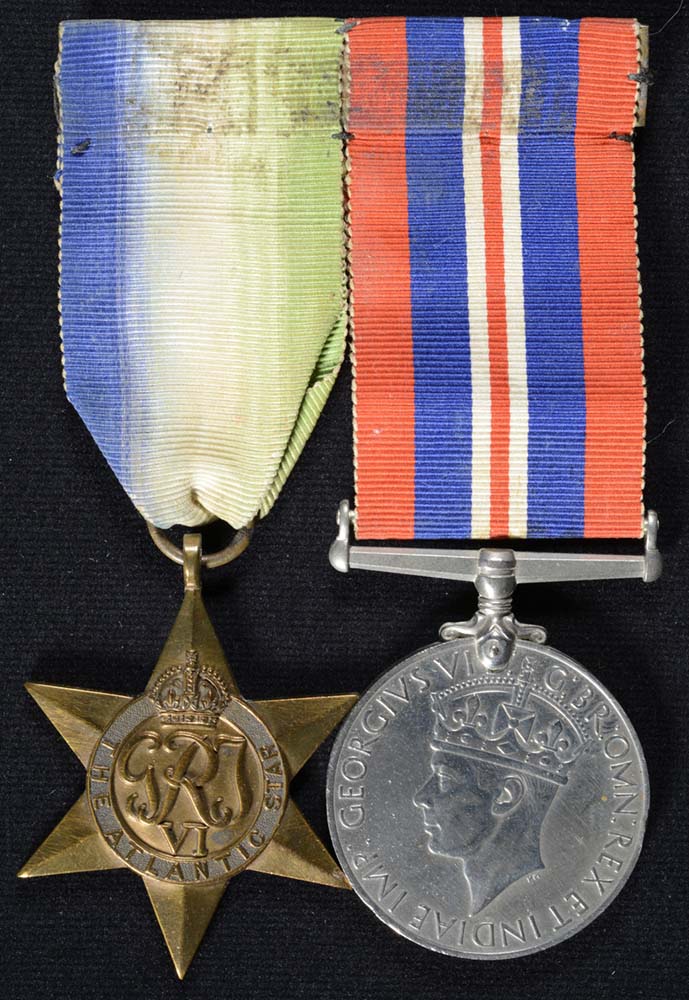
The Atlantic Star, The War Medal 1939-1945

Awarded medal(s)

Medal Description [Left to Right]:

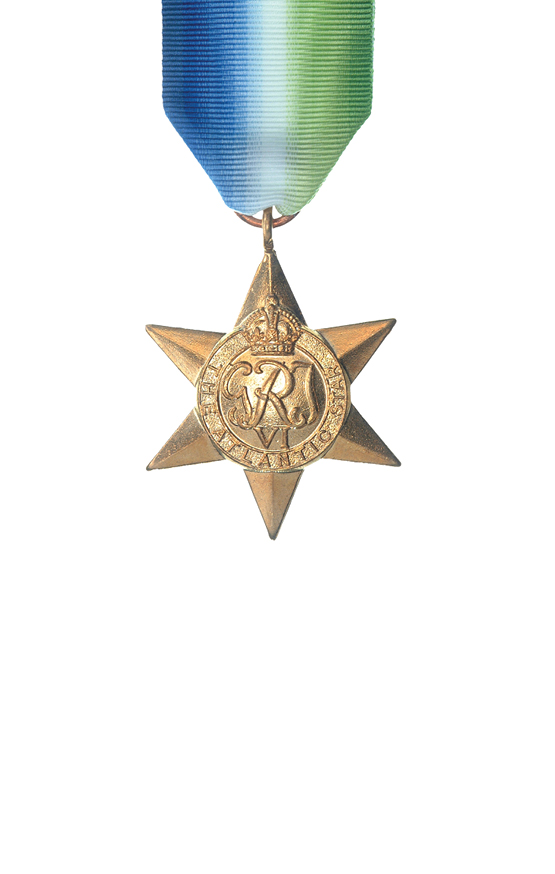
The Atlantic Star

The Atlantic Star was awarded for service during the Second World War. It was instituted to commemorate the Battle of the Atlantic the longest continuous military campaign in the Second World War running from 3 September, 1939 – 8 May, 1945. Six months naval service or four months air service in the Atlantic, United Kingdom (‘home’) waters or North Russian waters was normally required. The ribbon is watered silk coloured blue, white and green, symbolising service in the oceans. Two clasps could be awarded with this medal: ‘France and Germany’ and ‘Air Crew Europe’. Personnel issued the Atlantic Star who then qualified for either the France and Germany and the Air Crew Europe Stars were awarded a clasp in respect of the second only (as only one clasp could be worn on the star).

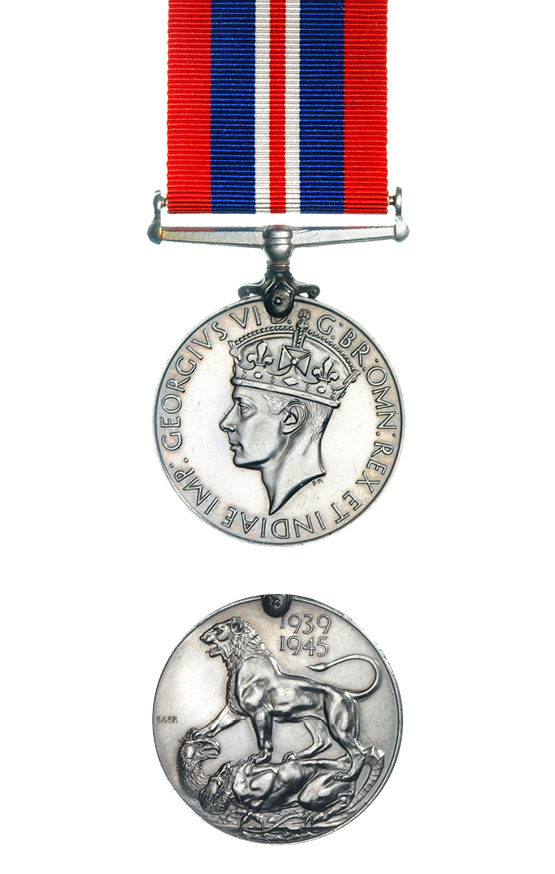
The War Medal 1939-1945

The War Medal 1939-45 was awarded across the British Commonwealth to all full-time members of the Armed Forces in the Second World War for 28 days service between 3 September 1939 and 2 September 1945, irrespective of where they were serving. The ribbon is the red, white, and blue of the (British) Union Flag. There is a narrow central red stripe with a narrow white stripe on either side. There are broad red stripes at either edge, the two intervening stripes being blue.

A bronze oak leaf on the medal ribbon denotes that the recipient was Mentioned in Despatches. To be Mentioned in Despatches a member of the armed forces had their name mentioned in an official report, written by a superior officer, and sent to a higher command. The report would describe the individual’s gallant or meritorious action in the face of the enemy.