Rank:
Leading Seaman
Birth date:
11.05.1930
Birth Place:
Whanganui, New Zealand
Service Number:
NZ12071
Date Joined:
27.05.1948
Date Discharged:
26.05.1954
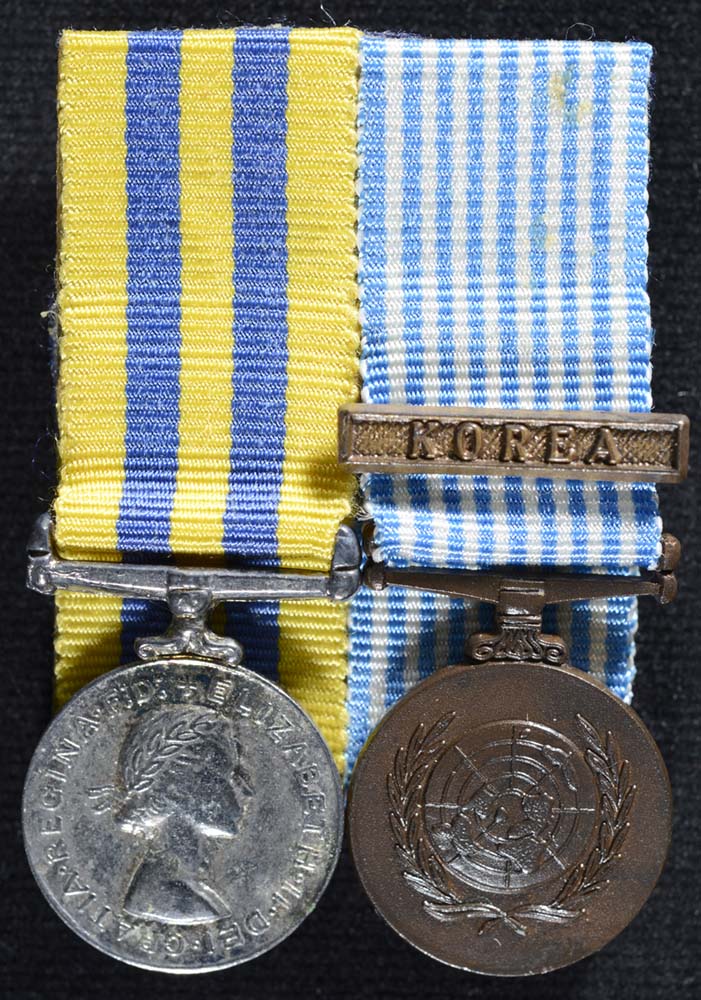
Colin Kruse joined the Royal New Zealand Navy as an Ordinary Seaman in 1948, training in HMNZS Tamaki. He served at sea in HMNZ Ships Kaniere, Lachlan, Taupo, and Rotoiti. He was serving in Taupo at the time of the 1951 Waterfront Strike, the ship was sent to Westport to man the wharves and coal mines. During the Korean War, Kruse was posted to HMNZS Rotoiti which was employed in Korean waters providing shore bombardments, patrolling, and landing raiding parties. Kruse was discharged from service in 1954 as a Leading Seaman.
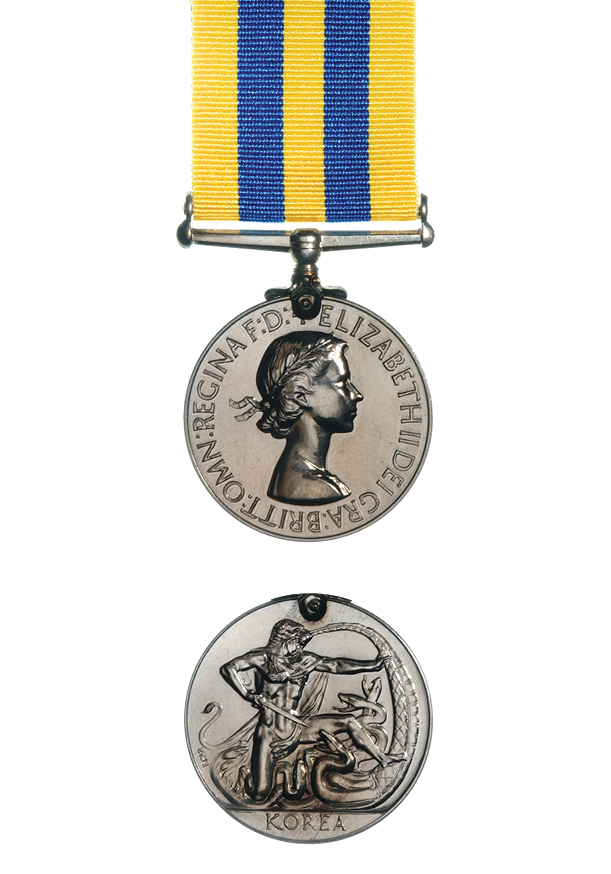
This medal was instituted in 1951, to recognise the service of Commonwealth troops in the Korean War between 2 July 1950 and 27 July 1953. It is sometimes referred to as the Queen’s Korea Medal to differentiate it from the United Nations Korea Medal. For naval forces, qualification is 28 days or more afloat in the operational area or at least one day of shore duty. The medal’s reverse features Hercules wrestling the Hydra – a symbolic representation of communism. The ribbon has alternating yellow and blue stripes. Blue represents the United Nations.
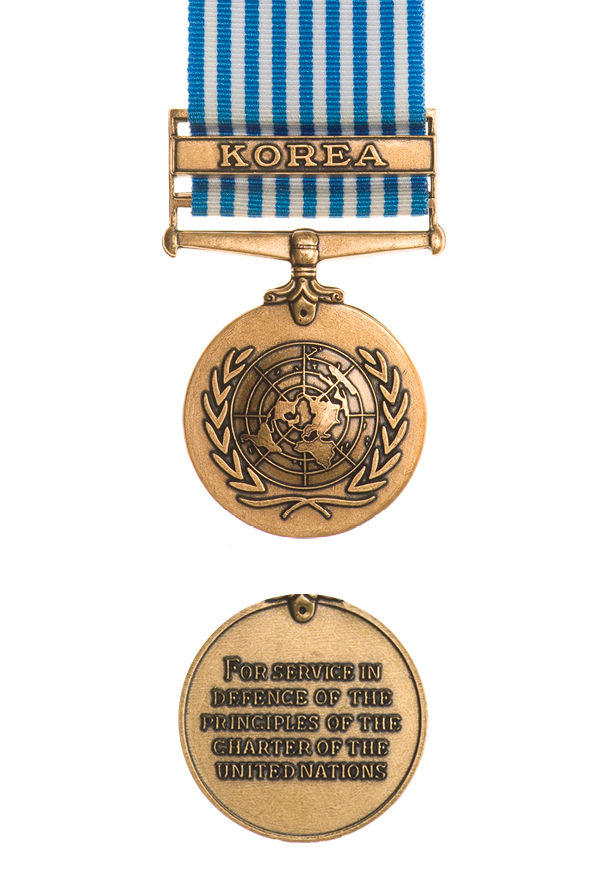
The United Nations Medal (Korea) was awarded for service during the Korean War and the year following the armistice (July 1950 to July 1954). It was the first international award created by the United Nations and features the UN emblem of a projection map of the world between two olive branches. The medal recognises the service of all military troops participating as part of the UN forces in Korea and was manufactured in the language of each country. It was also awarded to a limited range of civilians whose organisations were certified by the United Nations Commander-in-Chief as having directly supported military operations in Korea between 1950 and 1954.