Ref.no. 2007.7.76 Image may be subject to copyright restrictions.
Rank:
Leading Telegraphist
Birth date:
07.08.1920
Birth Place:
Lancashire, United Kingdom
Service Number:
D/JX216858 (RN); NZ13839 (RNZN)
Date Joined:
01.07.1940 (RN) 29.05.1952 (RNZN)
Date Discharged:
03.03.1946 (RN) 28.05.1958 (RNZN)
Death date:
31.03.2003
Place of death:
Auckland, New Zealand

Display No. 18D

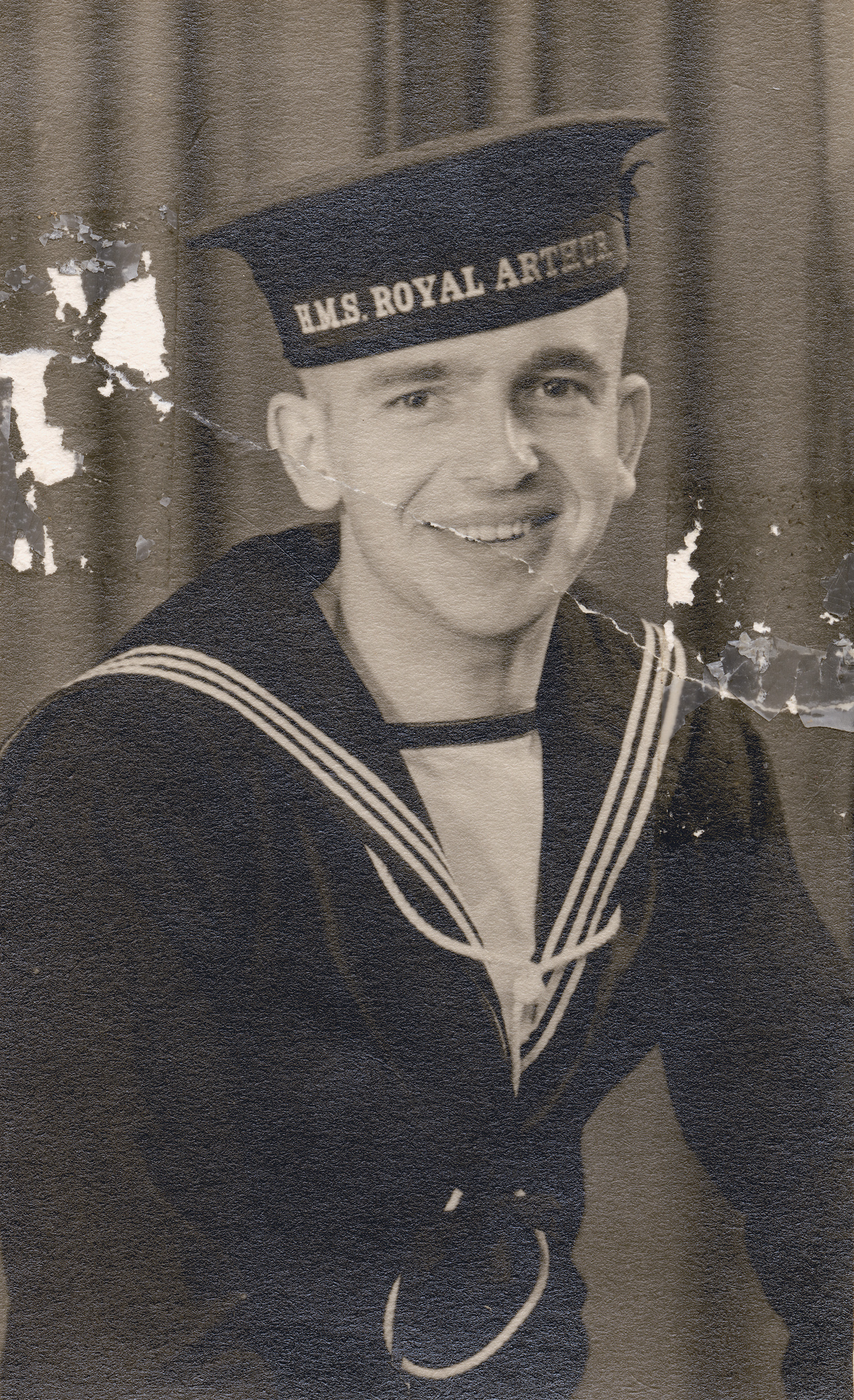
HORNE, Dennis

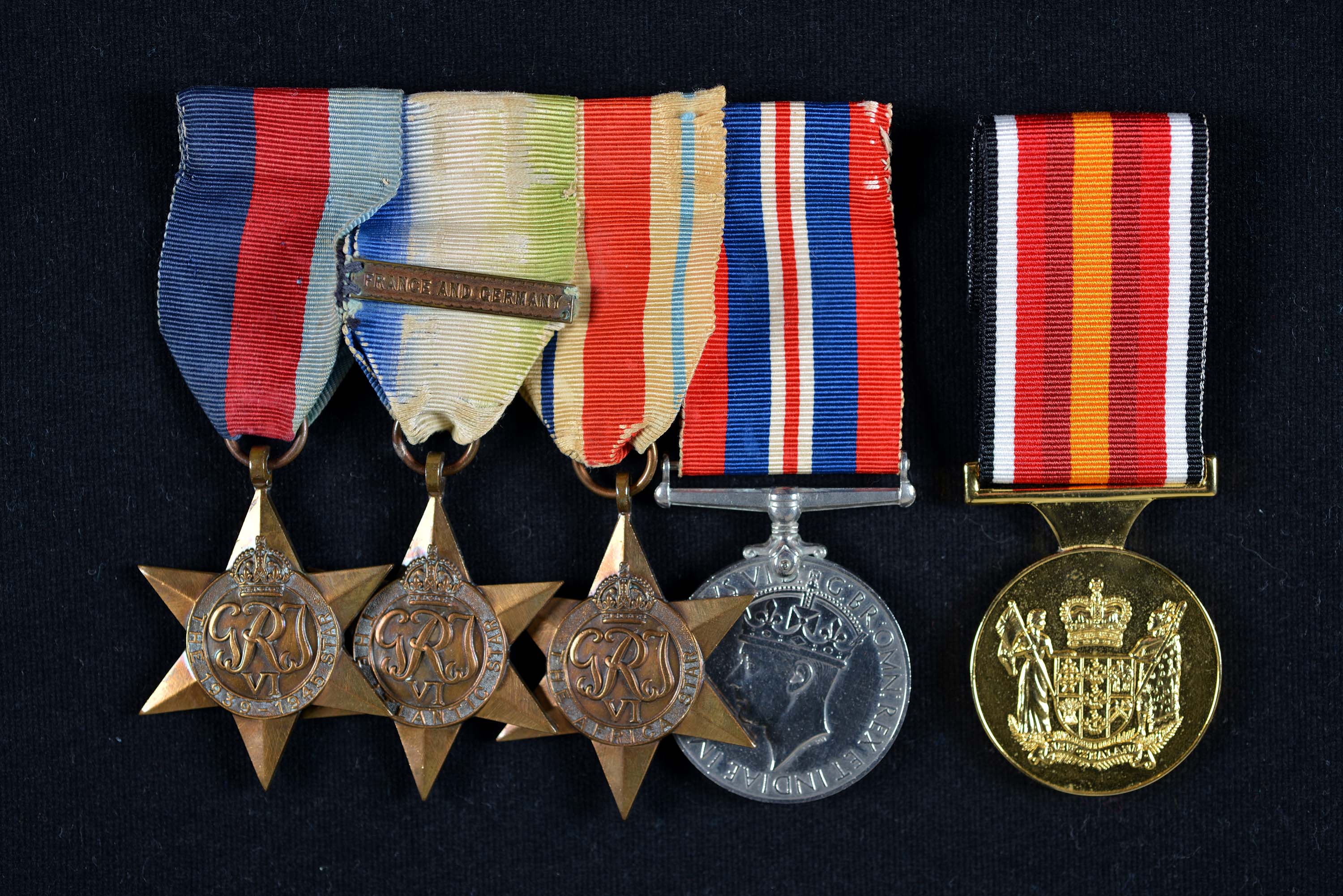
Dennis Horne joined the Royal Navy in 1940, serving the majority of his time in shore establishments before leaving the service in 1946 with the rank of Temporary Leading Telegraphist. He joined the Royal New Zealand Navy in 1952 also as a Telegraphist. He served in shore establishments, a patrol craft, and the frigates HMNZS Hawea and Rotoiti. During this time he was present at Operation Grapple, the British hydrogen bomb tests in the Pacific.

The 1939-1945 Star, The Atlantic Star, The Africa Star, The War Medal 1939-1945, New Zealand Special Service Medal (Nuclear Testing)

Awarded medal(s)

Medal Description [Left to Right]:

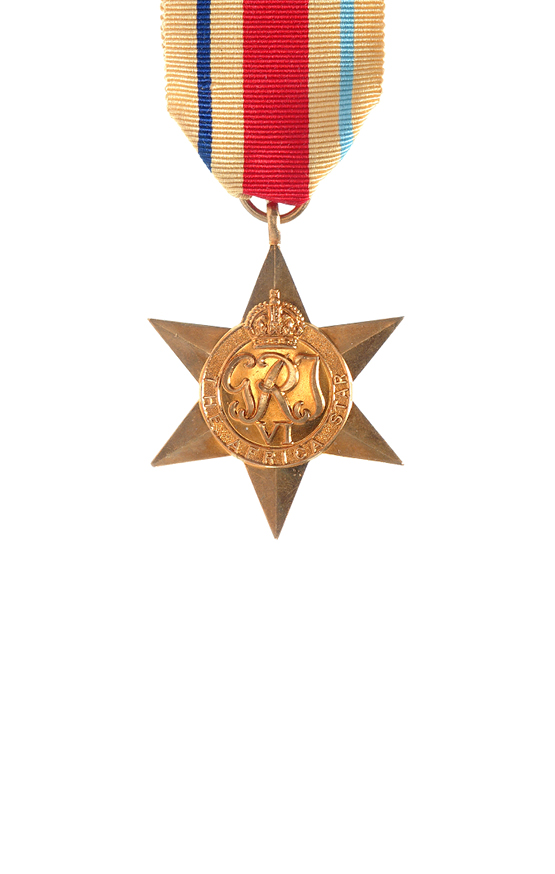
The 1939-1945 Star

The 1939-45 Star is the first in a series of eight campaign stars instituted in 1945 to recognise service in World War Two. The ribbon has three equal vertical stripes of dark blue, red and light blue. The dark blue stripe symbolises the service of the Navy and the Merchant Navy, the red stripe symbolises the service of the Army, and the light blue stripe symbolises the service of the Air Force. The equal width bands represent the equal contributions of the three service arms towards victory. The ribbon was devised by King George VI. Two clasps could be awarded with this medal: ‘Battle of Britain’ and ‘Bomber Command’. Only aircrew would qualify for these clasps although a small number of Fleet Air Arm naval pilots flew for the air force and would be eligible for the ‘Battle of Britain’ clasp.

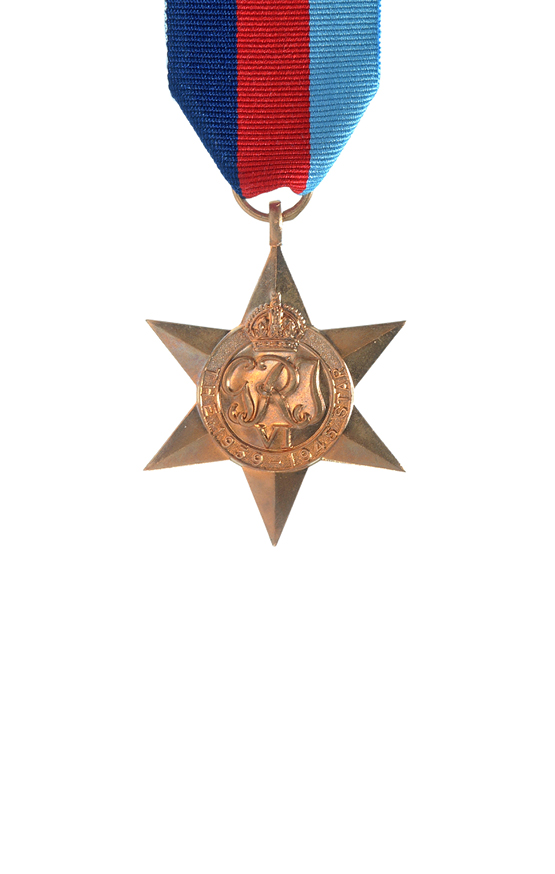
The Atlantic Star

The Atlantic Star was awarded for service during the Second World War. It was instituted to commemorate the Battle of the Atlantic the longest continuous military campaign in the Second World War running from 3 September, 1939 – 8 May, 1945. Six months naval service or four months air service in the Atlantic, United Kingdom (‘home’) waters or North Russian waters was normally required. The ribbon is watered silk coloured blue, white and green, symbolising service in the oceans. Two clasps could be awarded with this medal: ‘France and Germany’ and ‘Air Crew Europe’. Personnel issued the Atlantic Star who then qualified for either the France and Germany and the Air Crew Europe Stars were awarded a clasp in respect of the second only (as only one clasp could be worn on the star).

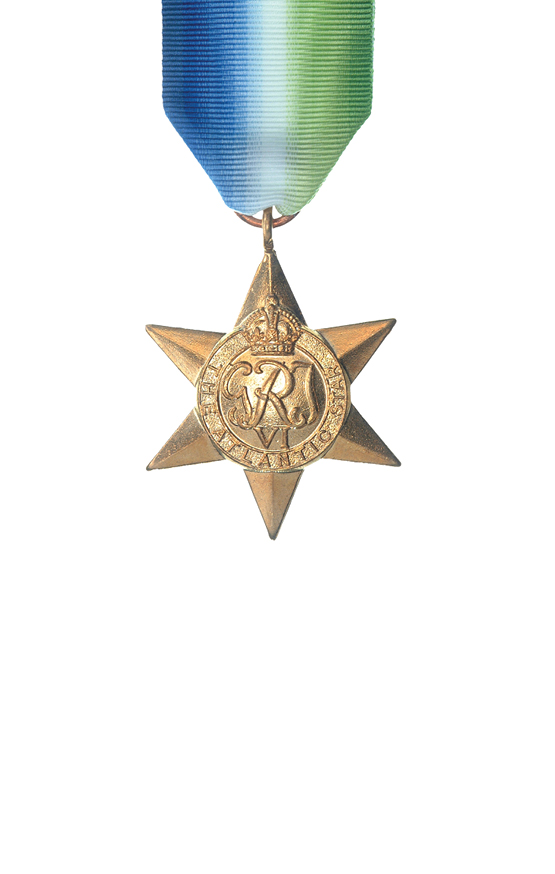
The Africa Star

The Africa Star was awarded in the Second World War for service in North Africa between 10 June 1940 and 12 May 1943. The ribbon is pale buff in colour, with a central vertical red stripe, and narrower stripes, one dark blue and the other light blue. The pale buff background symbolises the desert, the central red stripe symbolises the Army, the dark blue stripe symbolises the Navy and Merchant Navy, and the light blue stripe symbolises the Air Force. Three clasps could be awarded with this medal: ‘North Africa 1942-43’, ‘8th Army’,  and ‘1st Army’. Naval personnel could only qualify for the ‘North Africa 1942-43’ clasp – for in shore service.

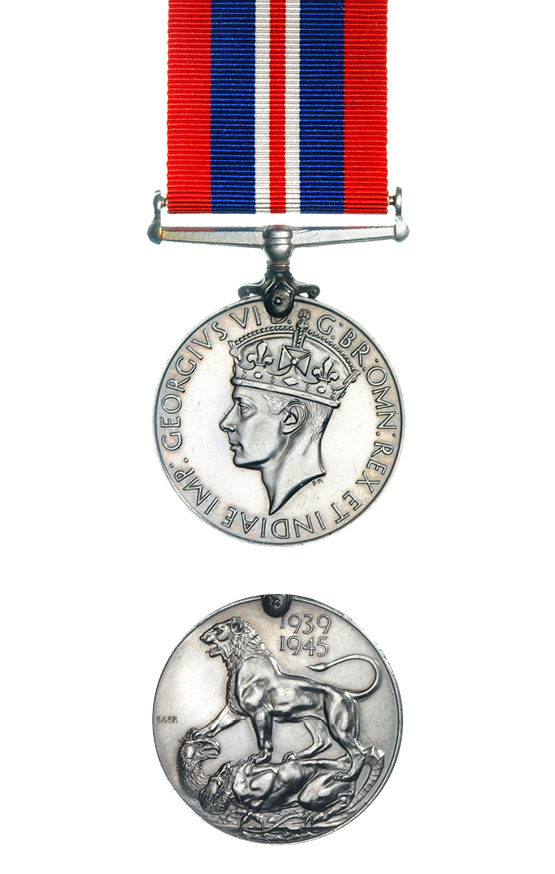
The War Medal 1939-1945

The War Medal 1939-45 was awarded across the British Commonwealth to all full-time members of the Armed Forces in the Second World War for 28 days service between 3 September 1939 and 2 September 1945, irrespective of where they were serving. The ribbon is the red, white, and blue of the (British) Union Flag. There is a narrow central red stripe with a narrow white stripe on either side. There are broad red stripes at either edge, the two intervening stripes being blue.

A bronze oak leaf on the medal ribbon denotes that the recipient was Mentioned in Despatches. To be Mentioned in Despatches a member of the armed forces had their name mentioned in an official report, written by a superior officer, and sent to a higher command. The report would describe the individual’s gallant or meritorious action in the face of the enemy.

New Zealand Special Service Medal (Nuclear Testing)

The New Zealand Special Service Medal (Nuclear Testing) was awarded to personnel who were part of an official New Zealand Government presence at atmospheric nuclear tests between 1956 and 1973. This includes naval personnel who served in HMNZ Ships Pukaki and Rotoiti at Operation Grapple (British nuclear weapon tests in the Pacific), in 1957-58, as well as those aboard RNZN vessels sent to protest French nuclear tests at Mururoa Atoll in July 1973. The medal is gilt. The obverse of the medal features a representation of the New Zealand Coat of Arms. The reverse features a representation of a bouquet of New Zealand flora, composed of fern fronds and sprigs of blossom of pohutukawa, manuka, kowhai and Mt Cook lilies with a scroll inscribed “For Special Service”.  The ribbon is 32mm in width with an orange-yellow central stripe with Crimson, red, white and black stripes. The central stripe of the ribbon represents the core of the nuclear explosion fireball and stripes either side allude to the red luminous spherical wave formation radiating from it. The black represents the destruction caused by the explosion.