Ref.no. ABX 0126 No known copyright restrictions.
Rank:
Chief Petty Officer Motor Mechanic (RNVR); Captain (NZA)
Birth date:
15.02.1897
Birth Place:
Boston, Massachusetts, United States of America
Service Number:
MB1871 (RNVR); C/1086; 617487 (NZA)
Date Joined:
14.10.1916 (RNVR); February 1939 (NZA)
Date Discharged:
22.03.1919 (RNVR); 05.11.1945 (NZA)
Death date:
14.07.1974
Place of death:
Auckland, New Zealand
Display No. 2I

DRYLAND, Oswald Albert

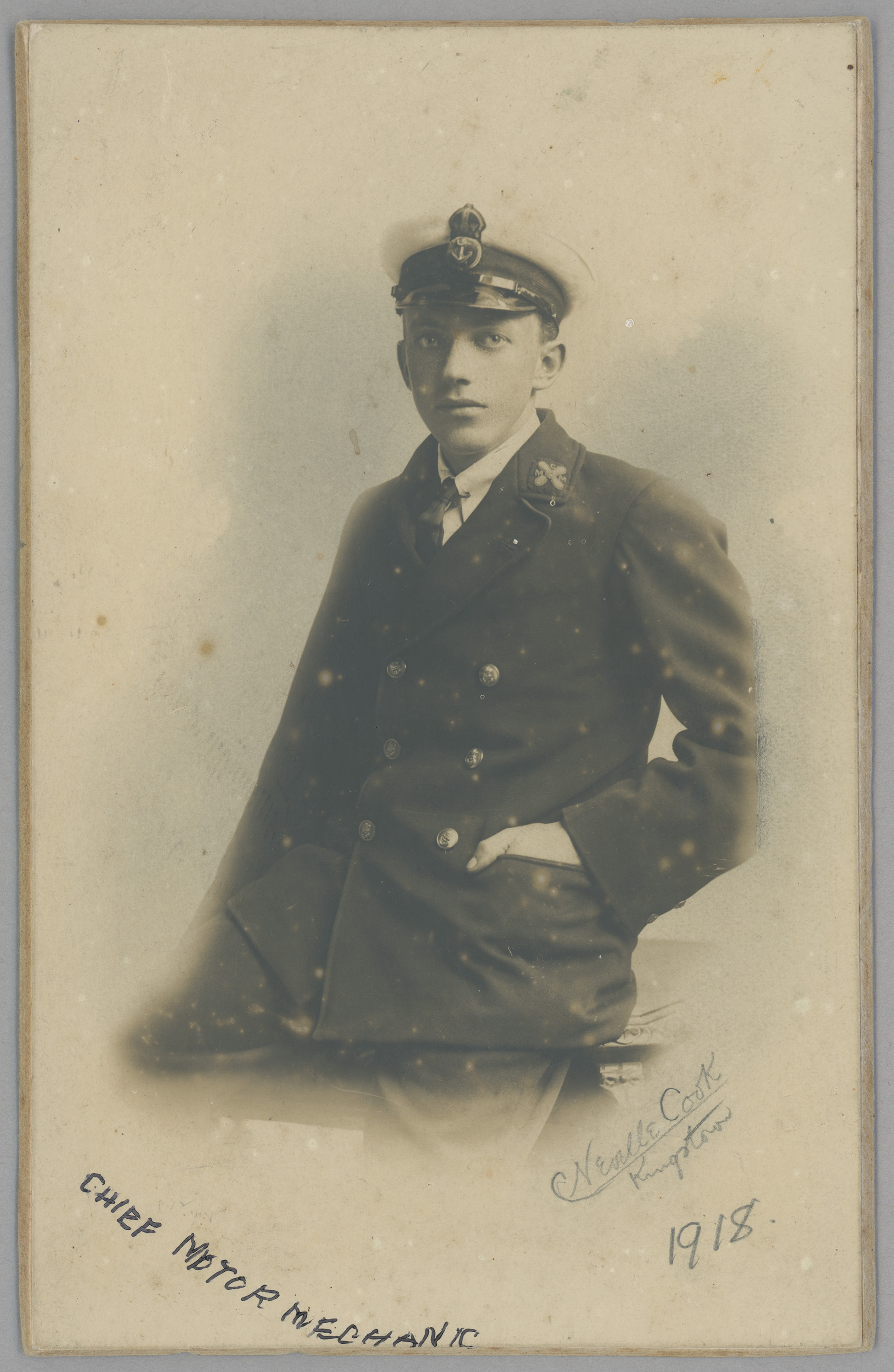
Oswald Dryland enlisted in Auckland in 1916 for service in the Royal Navy Motor Boat Patrol Service. He trained in HMS Hermione at Southampton. Dryland served as a motor mechanic in motor launches used by the patrol service. He was primarily based out of HMS Boadicea II, an Auxiliary Patrol base at Dublin, but is also listed as being attached to Motor Launch 247 out of HMS Dreel Castle, Falmouth Naval Base, Cornwall. He subsequently served in the 9th Coast Regiment, New Zealand Artillery during the Second World War.

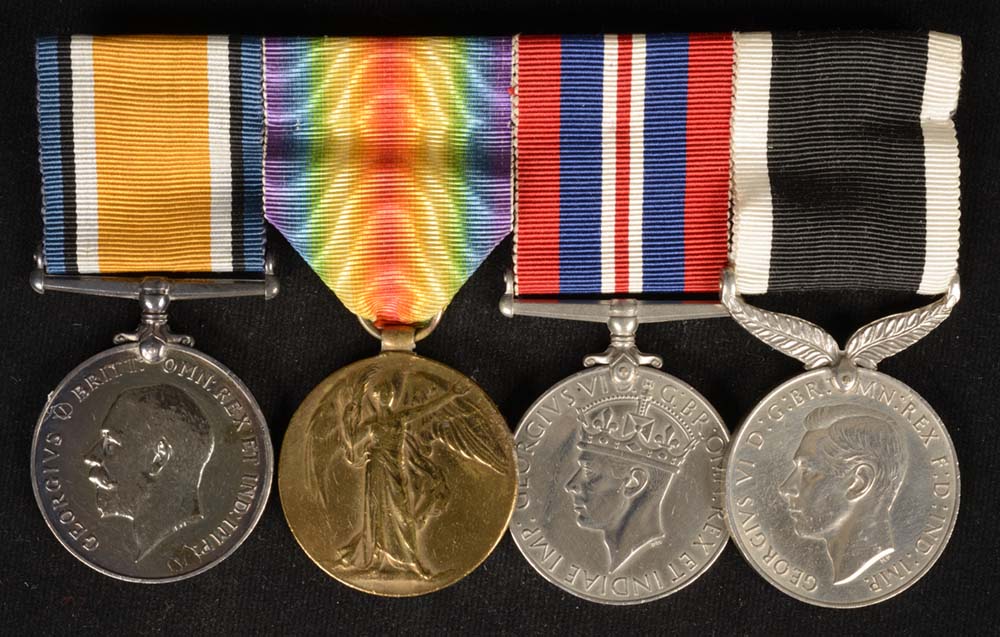
The War Medal 1939-1945, The British War Medal, The Victory Medal, The New Zealand War Service Medal

Awarded medal(s)

Medal Description [Left to Right]:

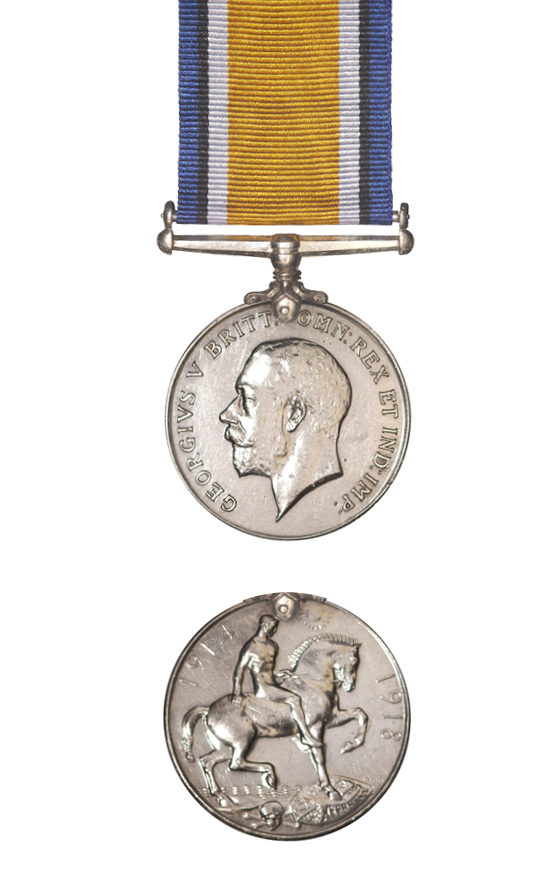
The British War Medal

The British War Medal was instituted in 1919 to recognise the successful conclusion of the First World War (1914-1918). Its coverage was later extended to recognise service until 1920, recognising mine clearing operations at sea, and participation in operations in North and South Russia, the eastern Baltic, Siberia, the Black Sea and the Caspian Sea.

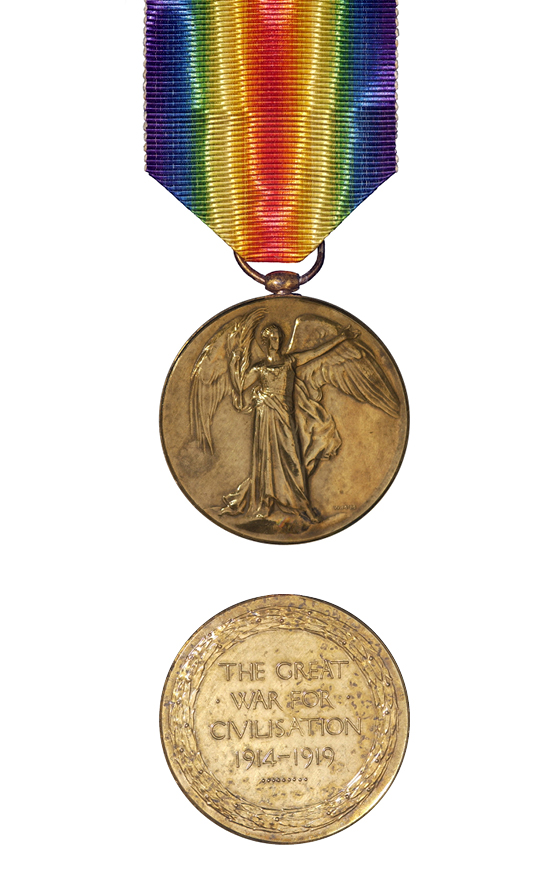
The Victory Medal

The Victory Medal was awarded in the First World War to all those who had already qualified for the 1914 Star or the 1914-15 Star, and to most persons who had already qualified for the British War Medal. The Victory Medal was awarded to all New Zealand troops serving overseas, except for those who arrived in Samoa after 30 August 1914 and those serving in Great Britain only. It has a unique double rainbow ribbon.

A bronze spray of oak leaves on the medal ribbon denotes that the recipient was Mentioned in Despatches during the period that the medal recognises. To be Mentioned in Despatches a member of the armed forces has had their name mentioned in an official report, written by a superior officer, and sent to a higher command. The report would describe the individual’s gallant or meritorious action in the face of the enemy.

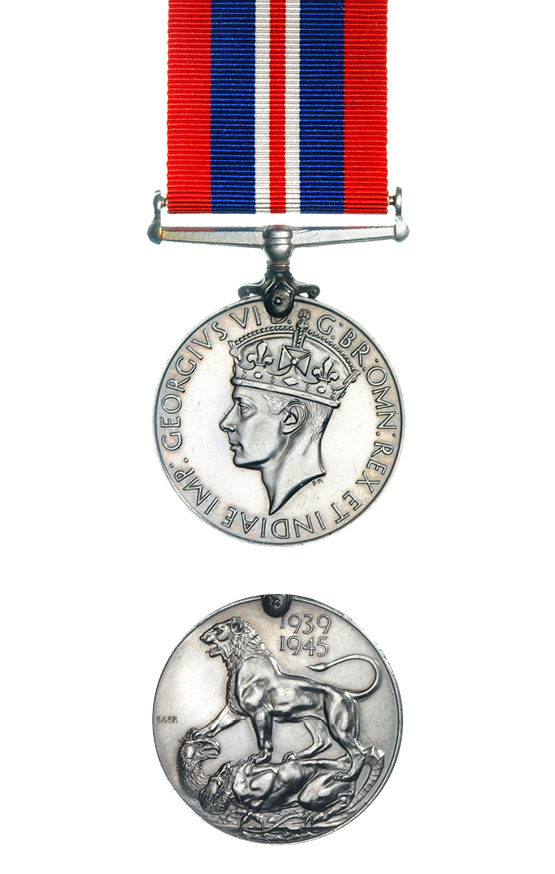
The War Medal 1939-1945

The War Medal 1939-45 was awarded across the British Commonwealth to all full-time members of the Armed Forces in the Second World War for 28 days service between 3 September 1939 and 2 September 1945, irrespective of where they were serving. The ribbon is the red, white, and blue of the (British) Union Flag. There is a narrow central red stripe with a narrow white stripe on either side. There are broad red stripes at either edge, the two intervening stripes being blue.

A bronze oak leaf on the medal ribbon denotes that the recipient was Mentioned in Despatches. To be Mentioned in Despatches a member of the armed forces had their name mentioned in an official report, written by a superior officer, and sent to a higher command. The report would describe the individual’s gallant or meritorious action in the face of the enemy.

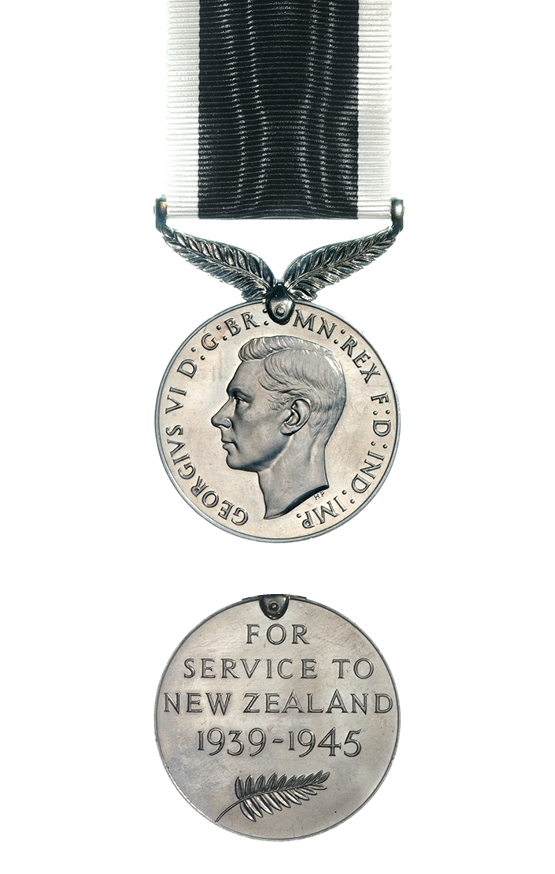
The New Zealand War Service Medal

The New Zealand War Service Medal was awarded for 28 days’ full time service or six months’ part time service in the Second World War in any of the New Zealand Armed Forces including the Reserves, Naval Auxiliary Patrol Service, or Home Guard, between 3 September 1939 and 2 September 1945.