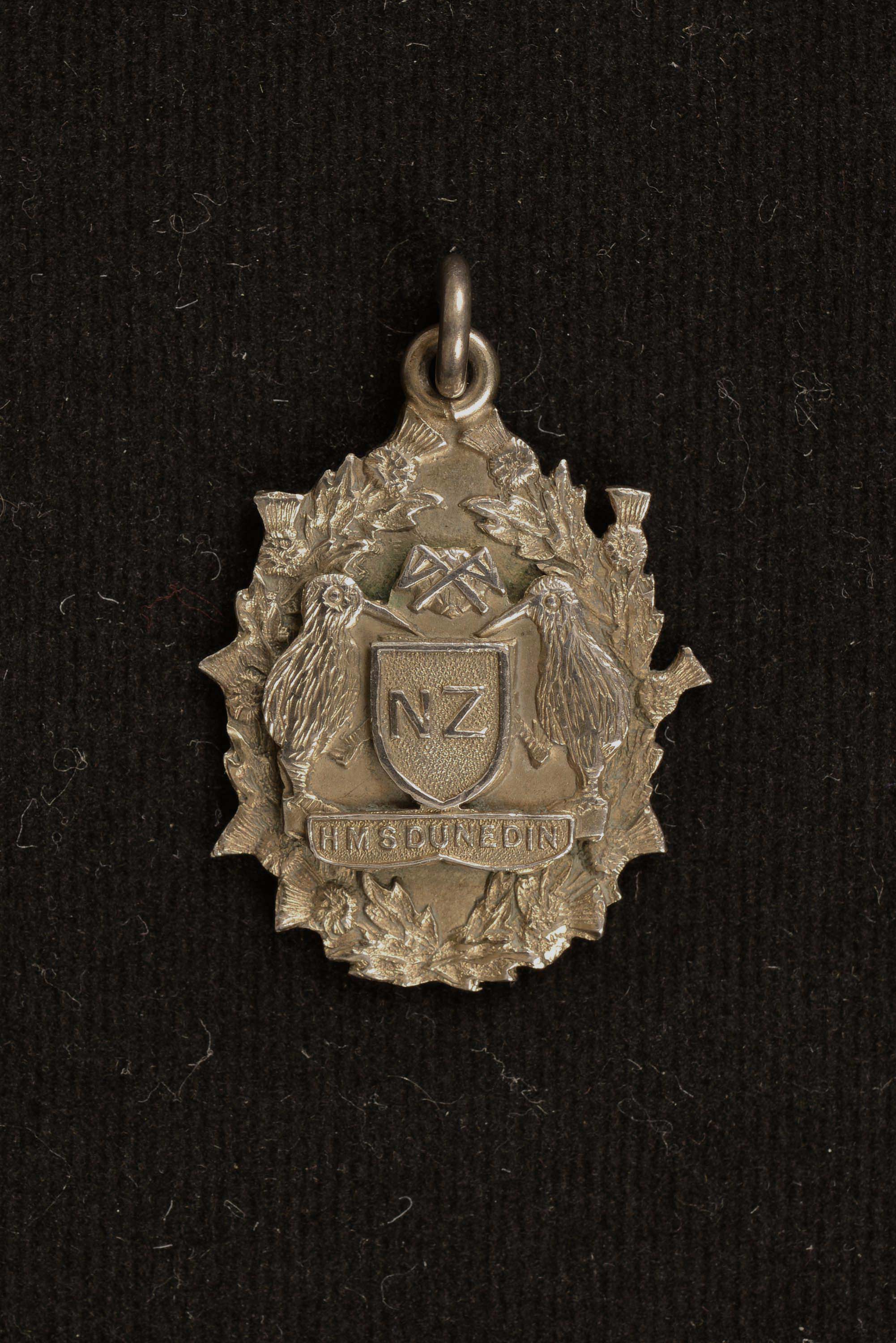
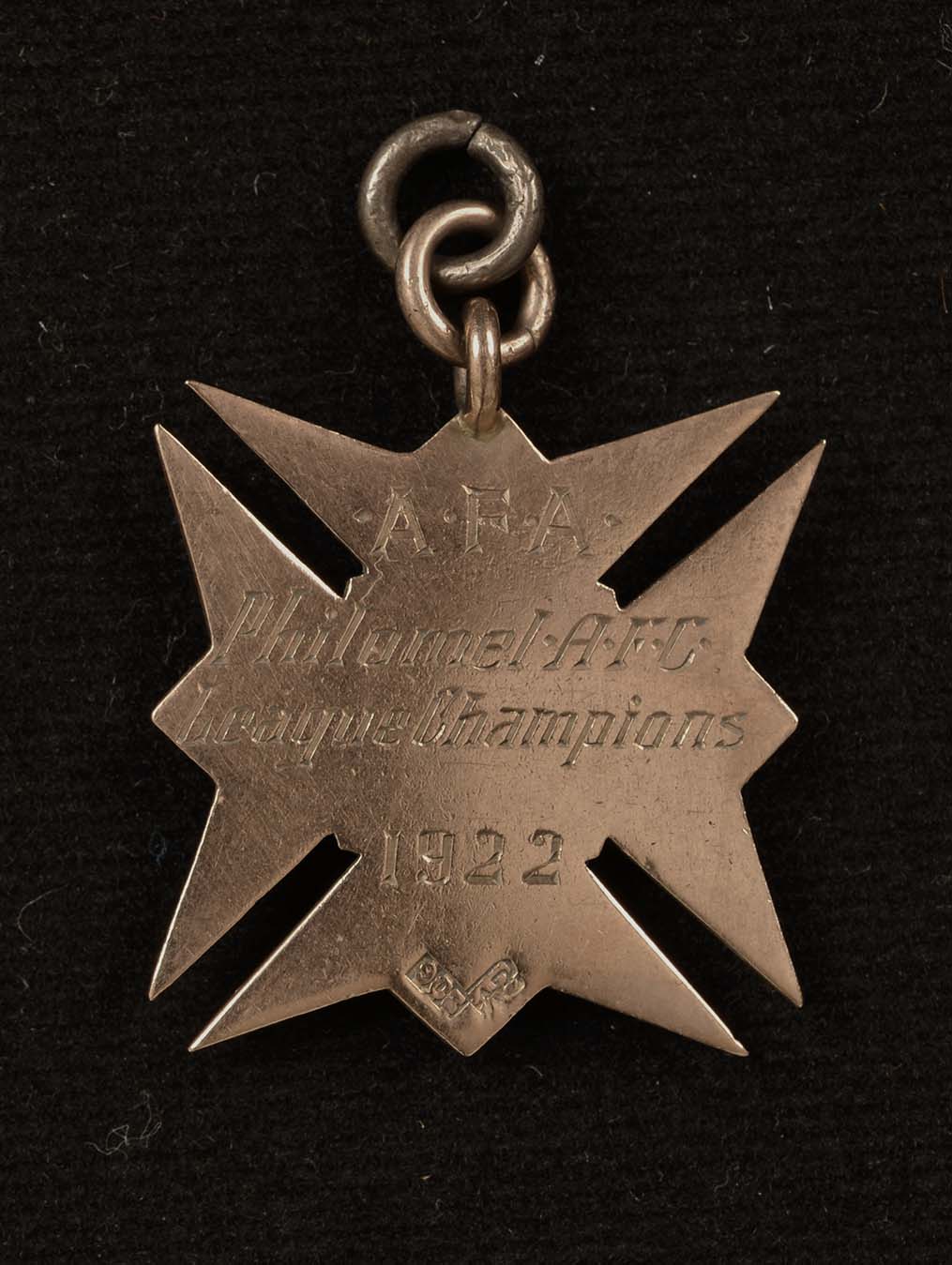
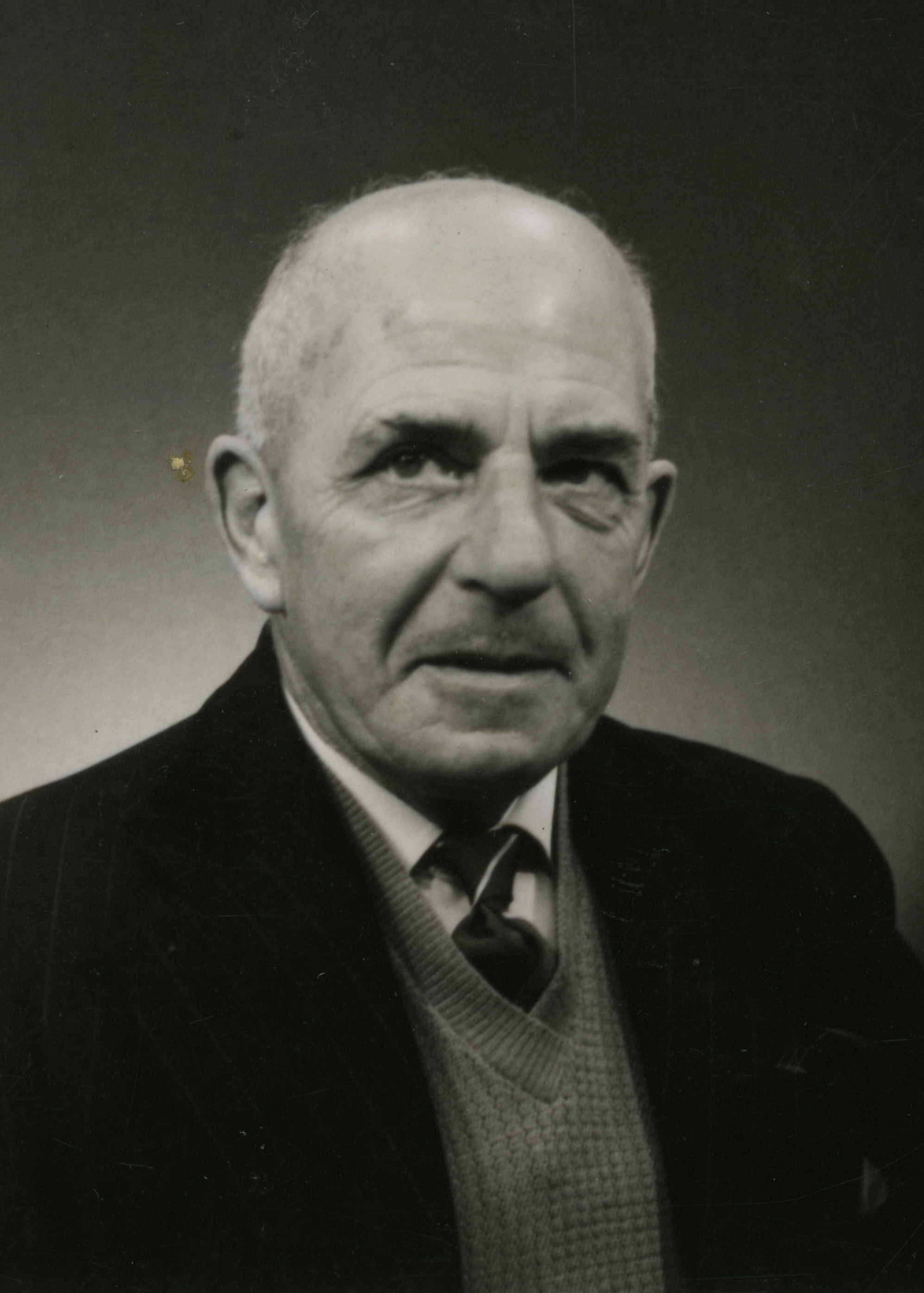
Ref.no. Portrait of Walter Doree courtesy of the Doree family. Image may be subject to copyright restrictions
Rank:
Chief Petty Officer Stoker
Birth date:
30.07.1888
Birth Place:
Glasgow, Lanarkshire, United Kingdom
Service Number:
310610
Date Joined:
06.08.1906
Date Discharged:
27.09.1928

Display No. 5A

DOREE, Walter Newton

Walter Doree joined the Royal Navy in 1906 as a Stoker 2nd Class, training at the Devonport Naval Barracks, HMS Vivid II. At the outbreak of the First World War, Doree was serving in HMS Suffolk which was operating out of the North America and West Indies Station. Suffolk continued to patrol the Atlantic for German commerce raiders, protecting British shipping in the area. In July 1916 he was posted to Royal Naval Barracks Bermuda and continued to serve in the Atlantic in HM Ships Caesar and Highflyer until the end of the war.

After the war, Doree returned to the United Kingdom before transferring to the New Zealand Division in 1921. He travelled to New Zealand in HMS Chatham, and decided to serve out his term in New Zealand. He served in the depot ship HMS Philomel and the cruiser HMS Dunedin where he was promoted to Chief Petty Officer Stoker in January 1928. He was discharged ashore in 1928 but re-enlisted during the Second World War, serving ashore for a number of years.

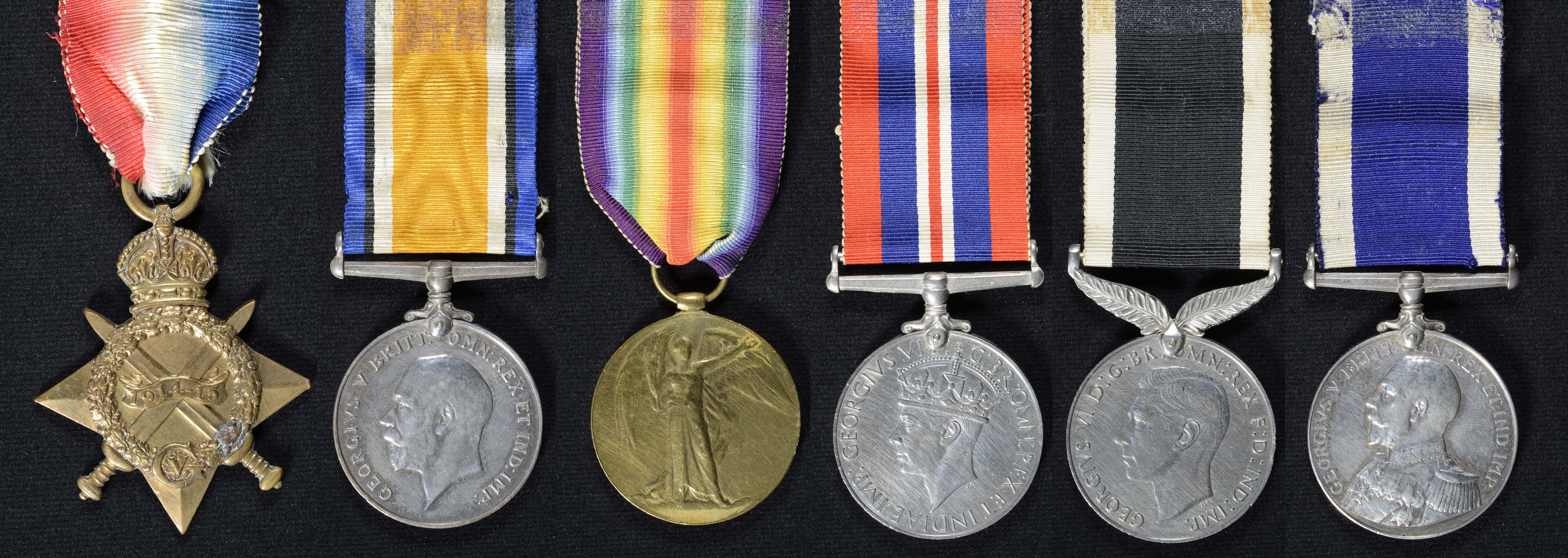
The 1914-1915 Star, The British War Medal, The Victory Medal, The War Medal 1939-1945, The New Zealand War Service Medal, Royal Naval Long Service and Good Conduct Medal

Awarded medal(s)

Medal Description [Left to Right]:

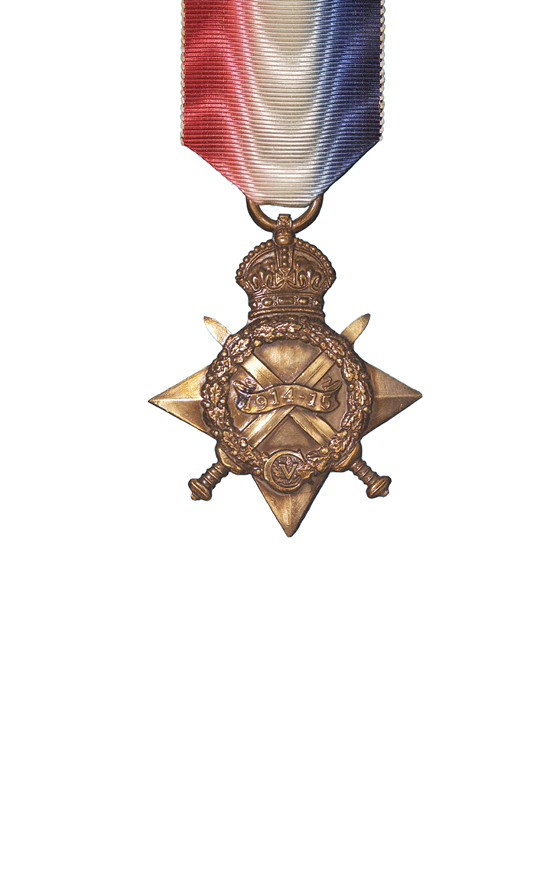
The 1914-1915 Star

The 1914-15 Star was awarded to servicemen and servicewomen who served in the First World War between 5 August 1914 and 31 December 1915 in any “theatre of war”, provided they had not qualified for the 1914 Star. This included service at Gallipoli between 25 April 1915 and 31 December 1915, service in Egypt between 5 November 1914 and 31 December 1915, and service during the capture of German Samoa on 29 August 1914. Those eligible for the medal must have “served on the establishment of a unit in a theatre of war” during the relevant dates of operations in that area. The ribbon’s red, white and blue shaded and watered bands represent the flag of the United Kingdom.

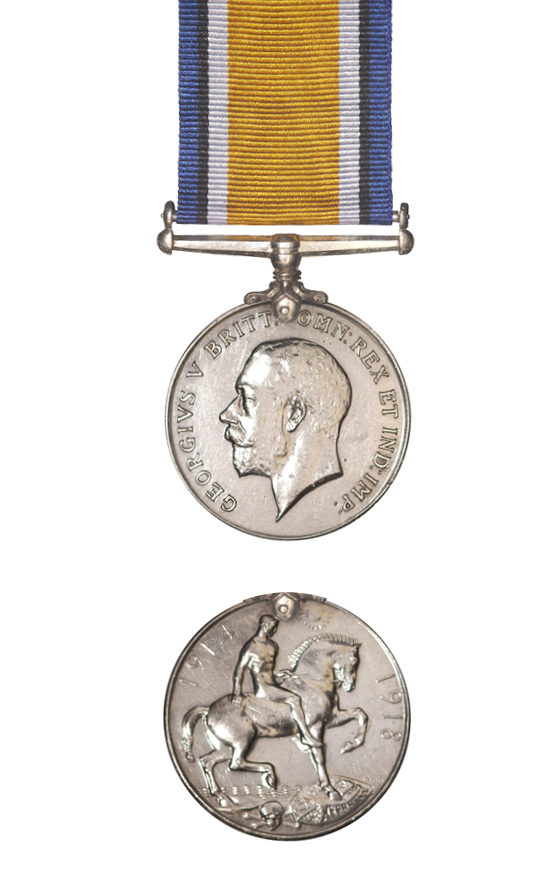
The British War Medal

The British War Medal was instituted in 1919 to recognise the successful conclusion of the First World War (1914-1918). Its coverage was later extended to recognise service until 1920, recognising mine clearing operations at sea, and participation in operations in North and South Russia, the eastern Baltic, Siberia, the Black Sea and the Caspian Sea.

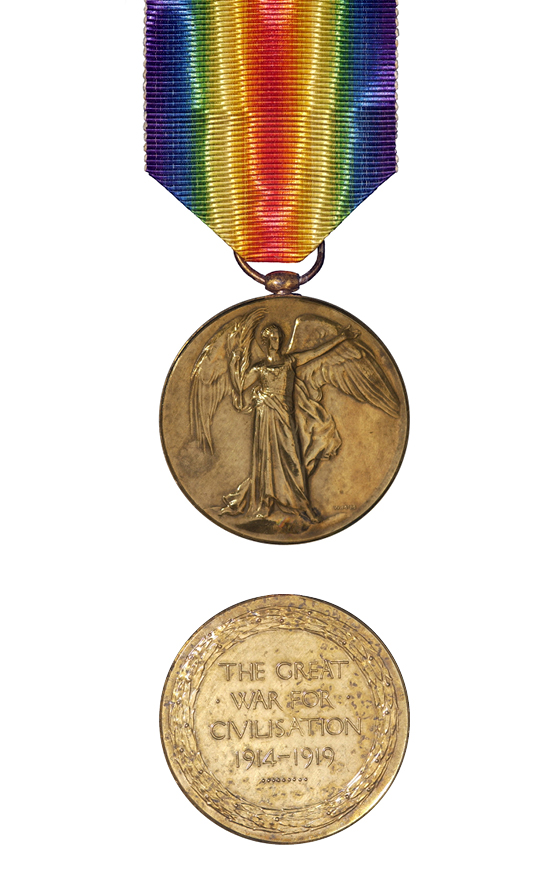
The Victory Medal

The Victory Medal was awarded in the First World War to all those who had already qualified for the 1914 Star or the 1914-15 Star, and to most persons who had already qualified for the British War Medal. The Victory Medal was awarded to all New Zealand troops serving overseas, except for those who arrived in Samoa after 30 August 1914 and those serving in Great Britain only. It has a unique double rainbow ribbon.

A bronze spray of oak leaves on the medal ribbon denotes that the recipient was Mentioned in Despatches during the period that the medal recognises. To be Mentioned in Despatches a member of the armed forces has had their name mentioned in an official report, written by a superior officer, and sent to a higher command. The report would describe the individual’s gallant or meritorious action in the face of the enemy.

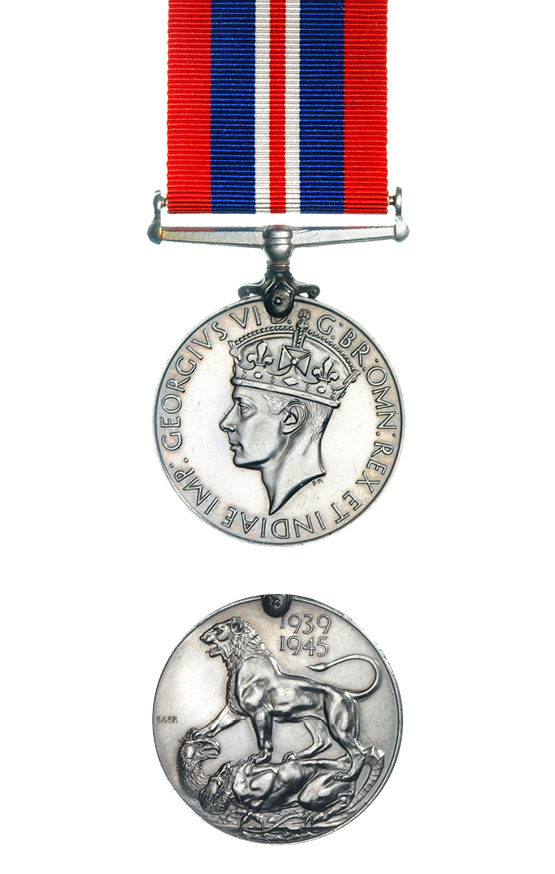
The War Medal 1939-1945

The War Medal 1939-45 was awarded across the British Commonwealth to all full-time members of the Armed Forces in the Second World War for 28 days service between 3 September 1939 and 2 September 1945, irrespective of where they were serving. The ribbon is the red, white, and blue of the (British) Union Flag. There is a narrow central red stripe with a narrow white stripe on either side. There are broad red stripes at either edge, the two intervening stripes being blue.

A bronze oak leaf on the medal ribbon denotes that the recipient was Mentioned in Despatches. To be Mentioned in Despatches a member of the armed forces had their name mentioned in an official report, written by a superior officer, and sent to a higher command. The report would describe the individual’s gallant or meritorious action in the face of the enemy.
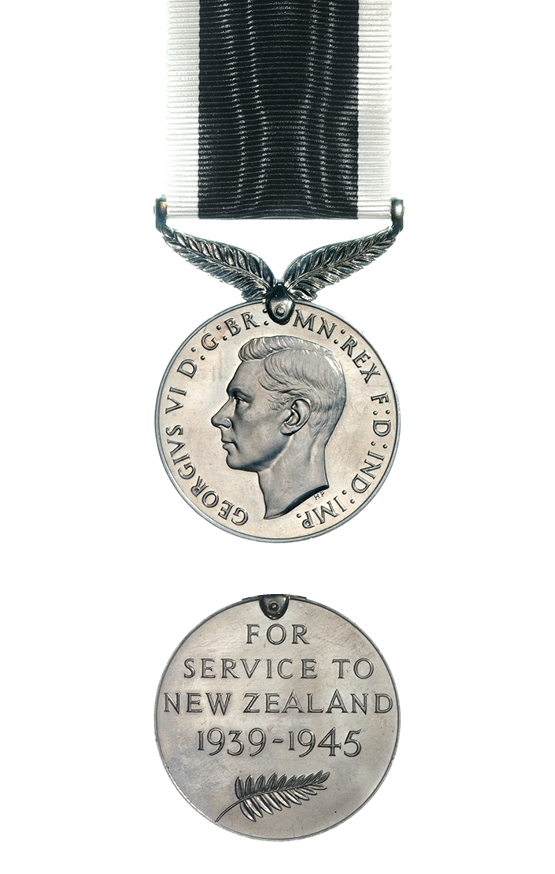
The New Zealand War Service Medal

The New Zealand War Service Medal was awarded for 28 days’ full time service or six months’ part time service in the Second World War in any of the New Zealand Armed Forces including the Reserves, Naval Auxiliary Patrol Service, or Home Guard, between 3 September 1939 and 2 September 1945.

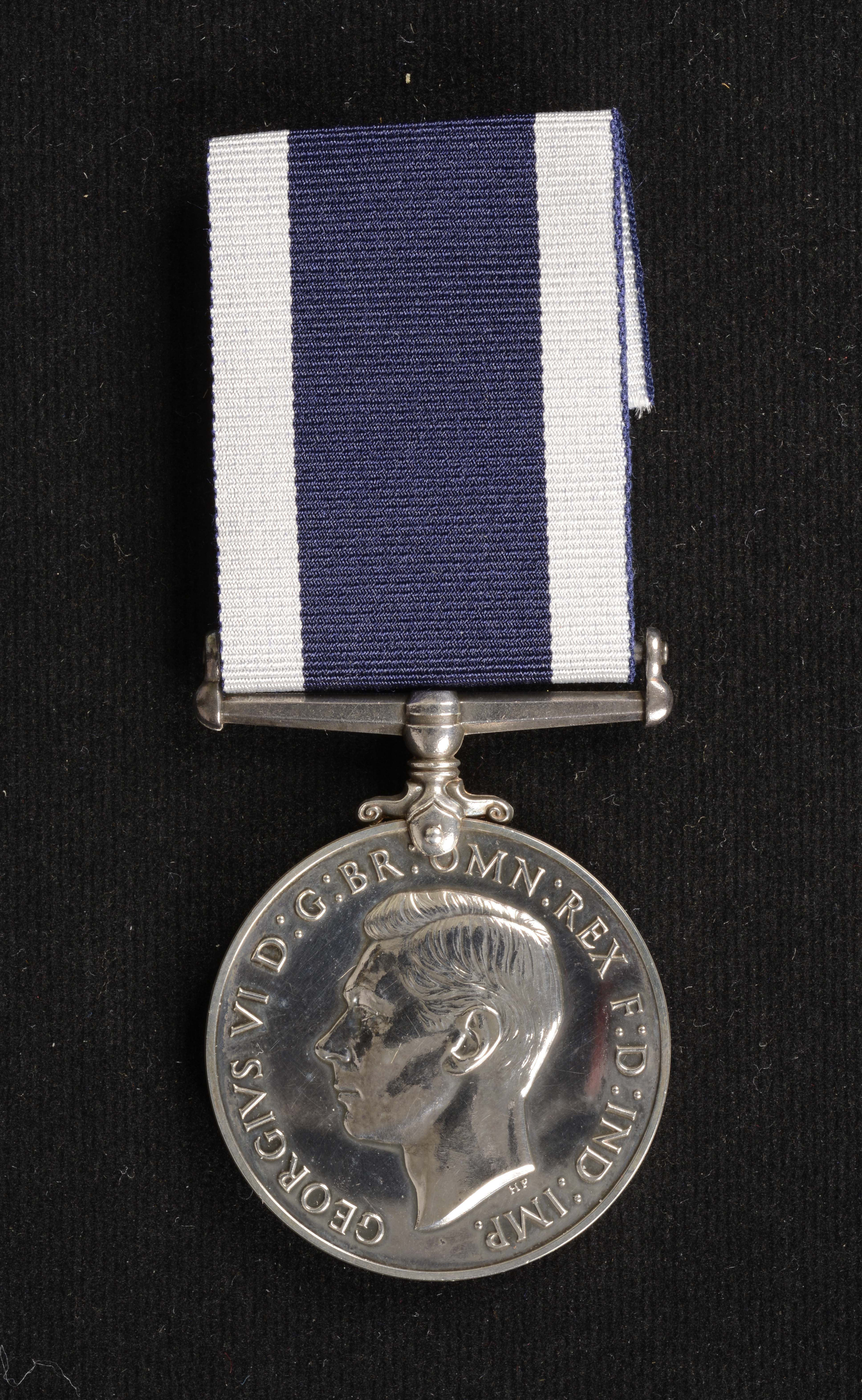
Royal Naval Long Service and Good Conduct Medal

Awarded to ratings who have served a minimum of 15 years in the Royal Navy (previously 21 or 10 years), the first version of this medal was instituted in 1831 and it is still issued to Royal Navy personnel today. It features the reigning monarch’s head on the obverse and HMS Victory on the reverse with the recipient’s details engraved or impressed on the edge of the medal. This medal was also issued to eligible personnel serving in the New Zealand Division of the Royal Navy from 1921-1941 and then to Royal New Zealand Navy personnel from 1941-1981. In 1985 a New Zealand Royal Navy Long Service and Good Conduct Medal was introduced bearing the exact same design.

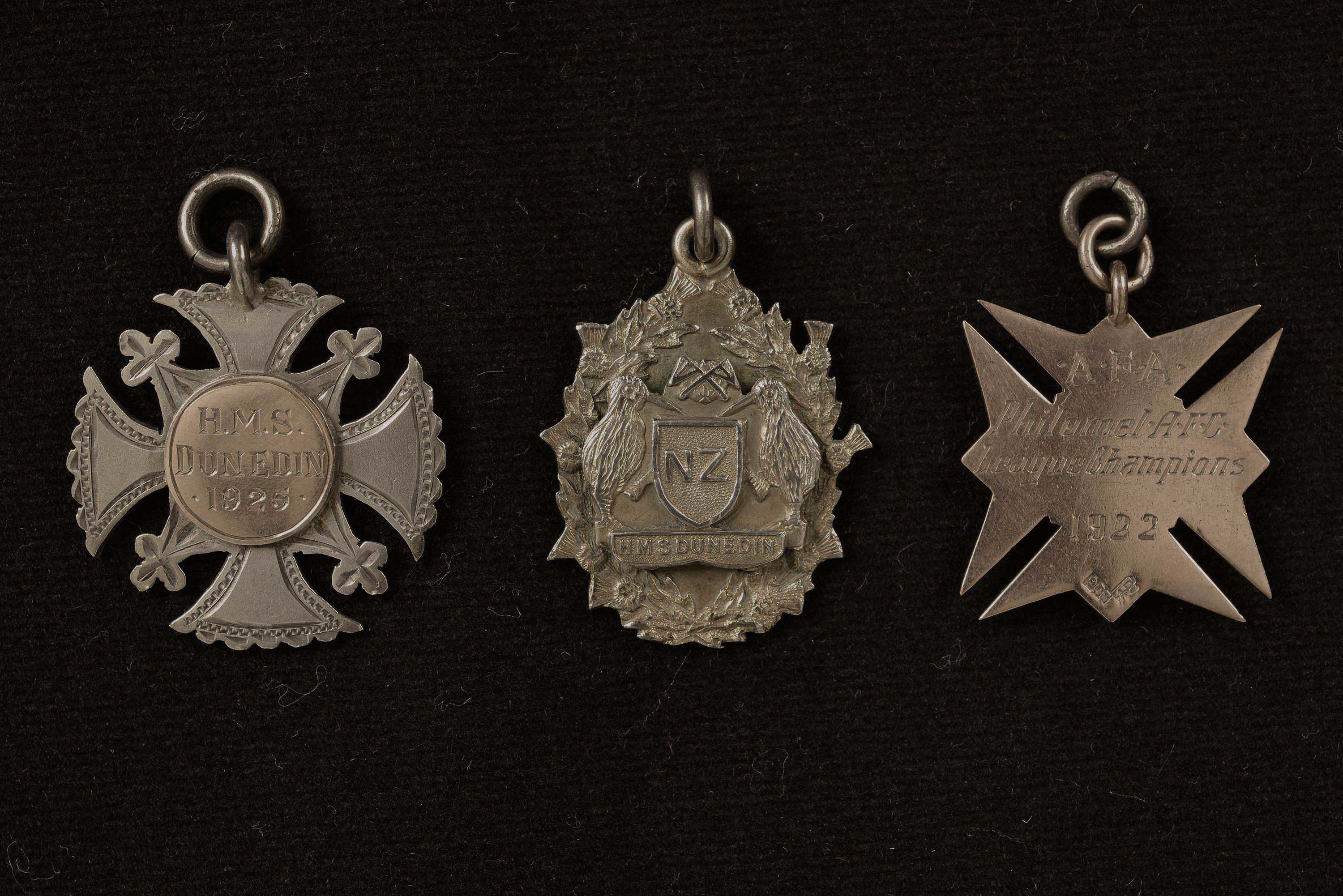
Special interest medal(s)

Display No. 27M

Medal Description [Left to Right]:

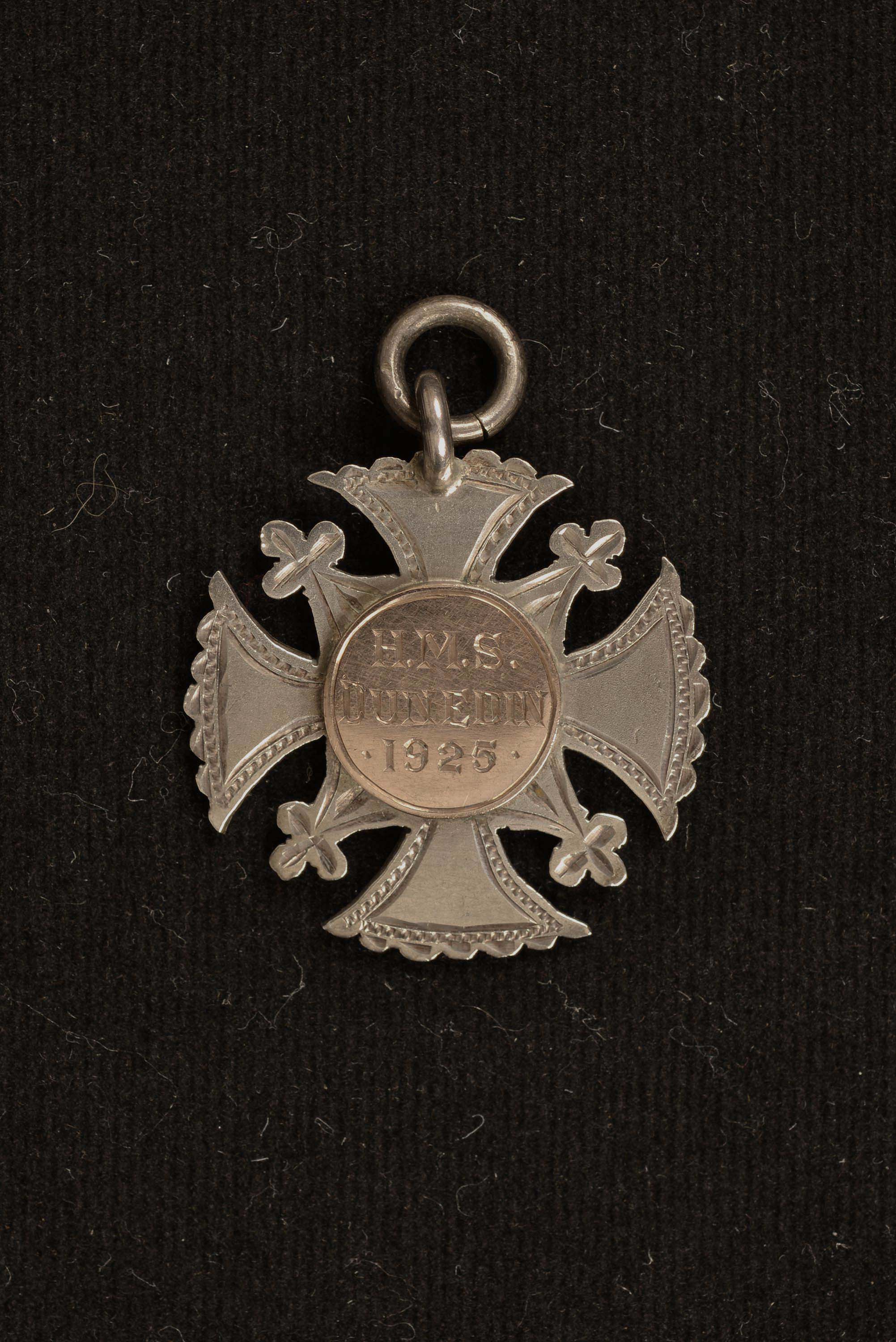
Sports Medallion for Rugby

Medallion for Inter Part Rugby Chief Petty Officers, HMS Dunedin 1925.

Sports Medallion for Soccer

Sports medallion awarded to the winners of the Chief Petty Officer’s Soccer Inter Part 1926, HMS Dunedin.

Sports Medallion for Football

Sports medallion awarded to the Auckland Football Association Philomel Auckland Football Club Champions 1922.