profile-image-holder
Rank:
Yeoman of Signals (NZD); Leading Signalman (RNZN)
Birth date:
01.09.1899
Birth Place:
Elton, Huntingtonshire, United Kingdom
Service Number:
J48671 (RN); NZD66 (NZD)
Date Joined:
21.01.1916 (RN); 01.10.1923 (NZD); 28.01.1941 (RNZN)
Date Discharged:
30.09.1923 (RN); 26.09.1928 (NZD); 16.04.1946 (RNZN)
Death date:
10.02.1981
Place of death:
Auckland, New Zealand

Display No. 13A

DAVISON, William

William ‘Willie’ Davison joined the Royal Navy as a Boy 2nd Class in January 1916. He qualified as a signalman in the training establishments HMS Impregnable and Ganges. From 1917 until the end of the war, he was posted to HMS King George V which was operating in the North Sea. Davison continued to serve in King George V until 1920 when he joined HMS Chatham. With Chatham he transferred to the New Zealand Division of the Royal Navy in 1923, where he primarily served in HMS Dunedin and was on board while the ship was deployed to Samoa in response to the Mau Movement. His service term expired in 1928 and he transferred the Naval Volunteer Reserve as a Yeoman of Signals. He was later awarded the Royal Naval Volunteer Decoration in recognition of his long service and good conduct.

In January 1941 Davison was remobilised ‘until the end of the present emergency’. He was initially posted ashore in HMNZS Philomel before serving in HMNZS Achilles which had joined the Solomon campaign. On 5 January 1943 during a bombardment of Munda island, Achilles was hit by Japanese aircraft and a bomb exploded on the X-turret killing 13 men. Later that year Davison joined HMNZS Gambia where he served until December 1944. He then served ashore in HMNZS Cook, and was discharged from service in 1946 as a Leading Signalman.

The British War Medal, The 1939-1945 Star, The Atlantic Star, The Pacific Star, The War Medal 1939-1945, The New Zealand War Service Medal, Royal Fleet Reserve Long Service and Good Conduct Medal

Awarded medal(s)

Medal Description [Left to Right]:

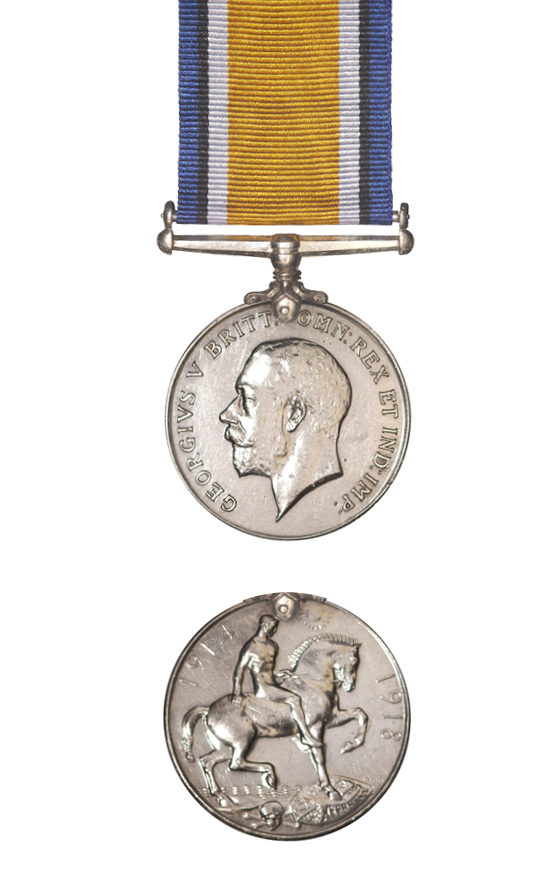
The British War Medal

The British War Medal was instituted in 1919 to recognise the successful conclusion of the First World War (1914-1918). Its coverage was later extended to recognise service until 1920, recognising mine clearing operations at sea, and participation in operations in North and South Russia, the eastern Baltic, Siberia, the Black Sea and the Caspian Sea.

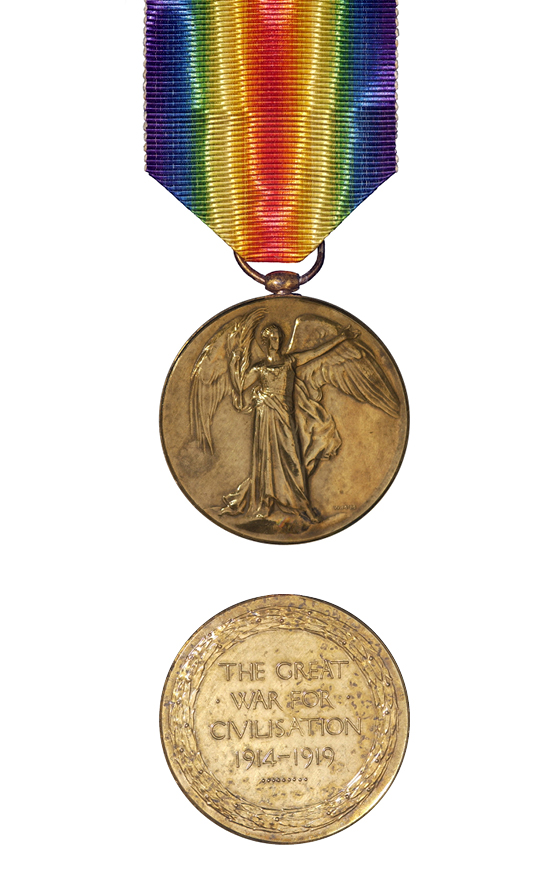
The Victory Medal

The Victory Medal was awarded in the First World War to all those who had already qualified for the 1914 Star or the 1914-15 Star, and to most persons who had already qualified for the British War Medal. The Victory Medal was awarded to all New Zealand troops serving overseas, except for those who arrived in Samoa after 30 August 1914 and those serving in Great Britain only. It has a unique double rainbow ribbon.

A bronze spray of oak leaves on the medal ribbon denotes that the recipient was Mentioned in Despatches during the period that the medal recognises. To be Mentioned in Despatches a member of the armed forces has had their name mentioned in an official report, written by a superior officer, and sent to a higher command. The report would describe the individual’s gallant or meritorious action in the face of the enemy.


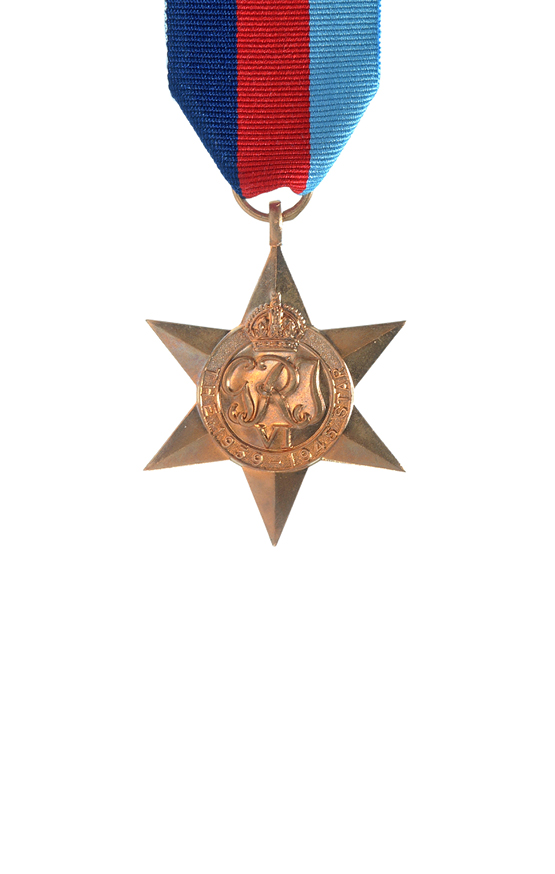
The 1939-1945 Star

The 1939-45 Star is the first in a series of eight campaign stars instituted in 1945 to recognise service in World War Two. The ribbon has three equal vertical stripes of dark blue, red and light blue. The dark blue stripe symbolises the service of the Navy and the Merchant Navy, the red stripe symbolises the service of the Army, and the light blue stripe symbolises the service of the Air Force. The equal width bands represent the equal contributions of the three service arms towards victory. The ribbon was devised by King George VI. Two clasps could be awarded with this medal: ‘Battle of Britain’ and ‘Bomber Command’. Only aircrew would qualify for these clasps although a small number of Fleet Air Arm naval pilots flew for the air force and would be eligible for the ‘Battle of Britain’ clasp.

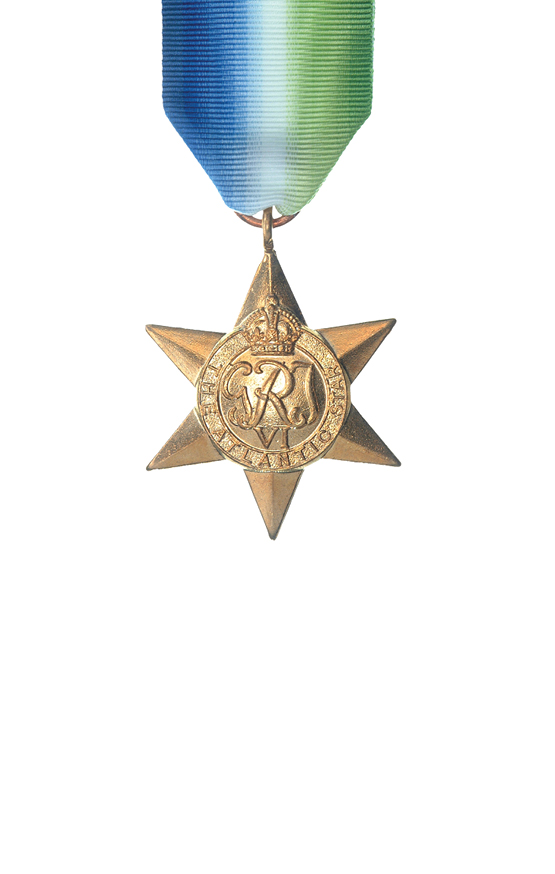
The Atlantic Star

The Atlantic Star was awarded for service during the Second World War. It was instituted to commemorate the Battle of the Atlantic the longest continuous military campaign in the Second World War running from 3 September, 1939 – 8 May, 1945. Six months naval service or four months air service in the Atlantic, United Kingdom (‘home’) waters or North Russian waters was normally required. The ribbon is watered silk coloured blue, white and green, symbolising service in the oceans. Two clasps could be awarded with this medal: ‘France and Germany’ and ‘Air Crew Europe’. Personnel issued the Atlantic Star who then qualified for either the France and Germany and the Air Crew Europe Stars were awarded a clasp in respect of the second only (as only one clasp could be worn on the star).

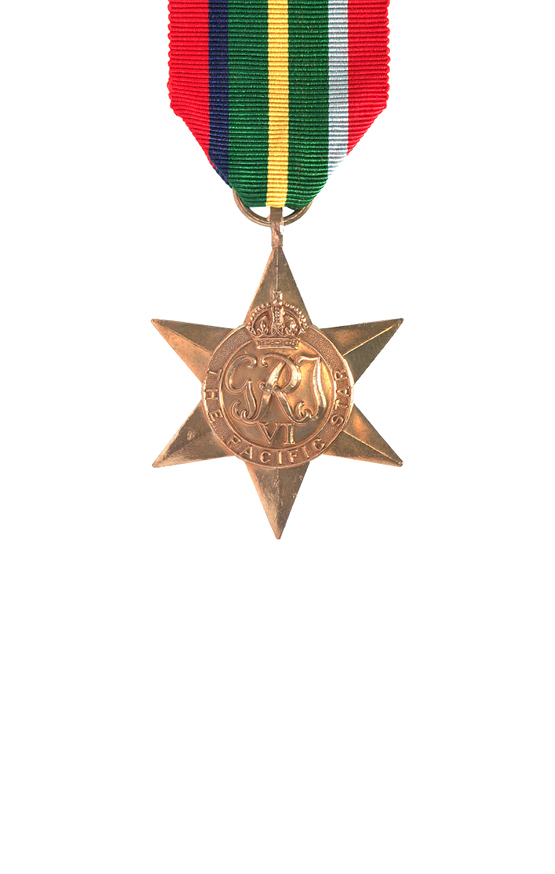
The Pacific Star

The Pacific Star was awarded in the Second World War for operational service in the Pacific between 8 December 1941 and 2 September 1945.  This medal was also awarded for certain specified service in China, Hong Kong, Malaya and Sumatra: between 8 December 1941 and 25 December 1941 (for Hong Kong); between 8 December 1941 and 15 February 1942 (for China and Malaya); and between 8 December 1941 and 23 March 1942 (for Sumatra). The centre of the ribbon is dark green (symbolising the jungle) with a central yellow stripe (symbolising the beaches). On the outer edges are wide stripes of red (representing the Army), with narrow stripes of dark blue and light blue (representing the Navy and Air Force) between the stripes of dark green and red. A ‘Burma’ clasp could be awarded with this medal. Personnel qualifying for both the Pacific and Burma Stars were awarded the first star but only a clasp in respect of the second.

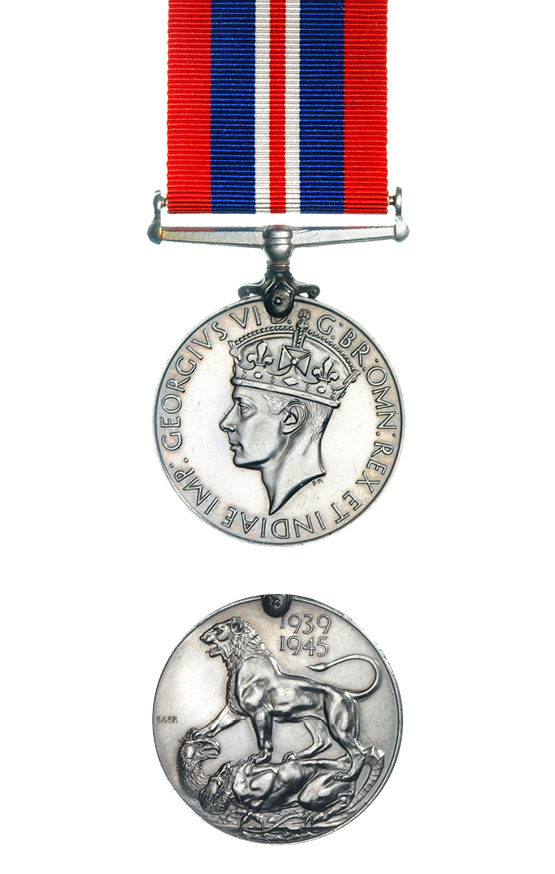
The War Medal 1939-1945

The War Medal 1939-45 was awarded across the British Commonwealth to all full-time members of the Armed Forces in the Second World War for 28 days service between 3 September 1939 and 2 September 1945, irrespective of where they were serving. The ribbon is the red, white, and blue of the (British) Union Flag. There is a narrow central red stripe with a narrow white stripe on either side. There are broad red stripes at either edge, the two intervening stripes being blue.

A bronze oak leaf on the medal ribbon denotes that the recipient was Mentioned in Despatches. To be Mentioned in Despatches a member of the armed forces had their name mentioned in an official report, written by a superior officer, and sent to a higher command. The report would describe the individual’s gallant or meritorious action in the face of the enemy.
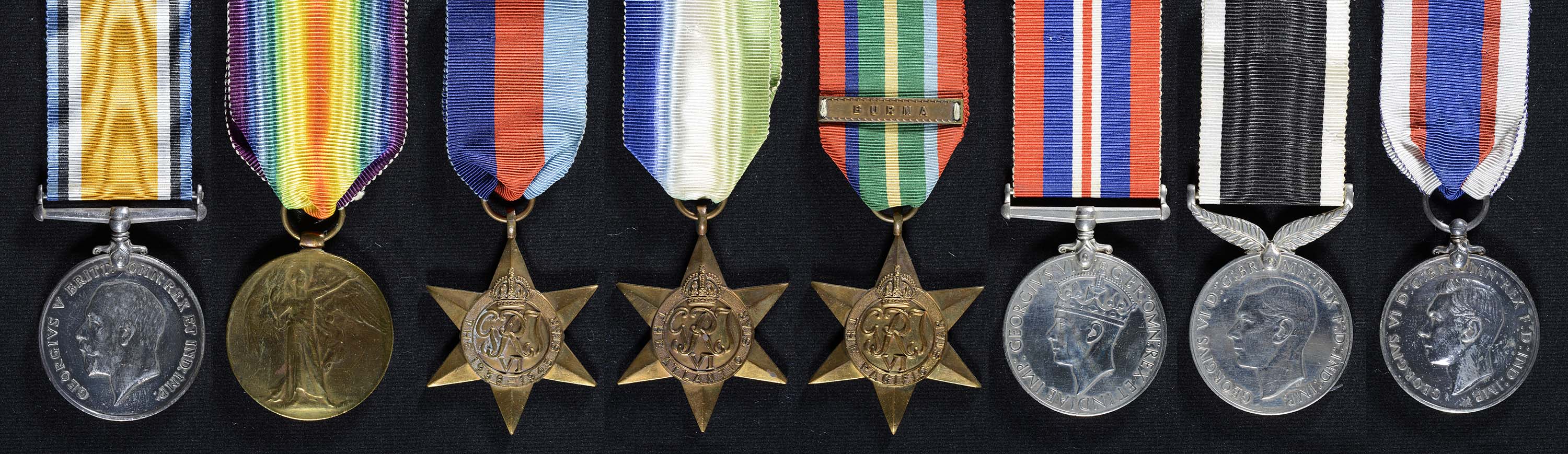
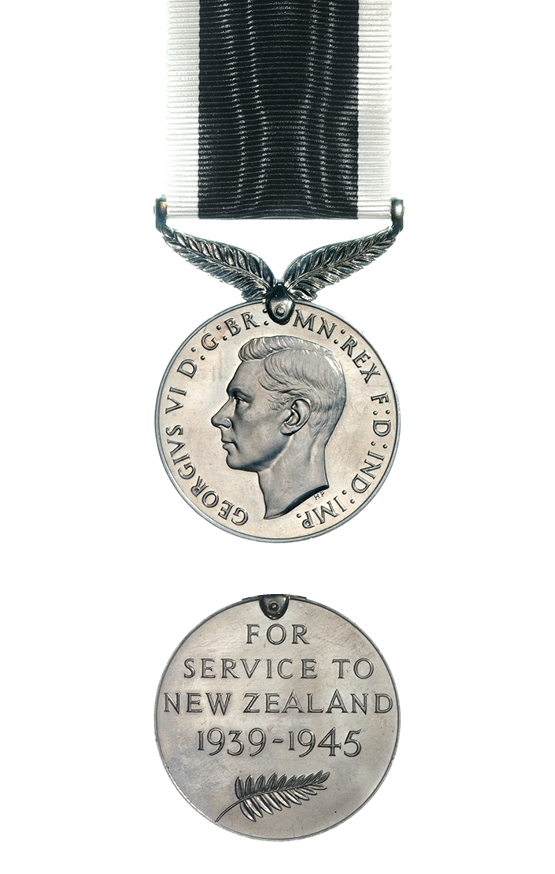
The New Zealand War Service Medal

The New Zealand War Service Medal was awarded for 28 days’ full time service or six months’ part time service in the Second World War in any of the New Zealand Armed Forces including the Reserves, Naval Auxiliary Patrol Service, or Home Guard, between 3 September 1939 and 2 September 1945.

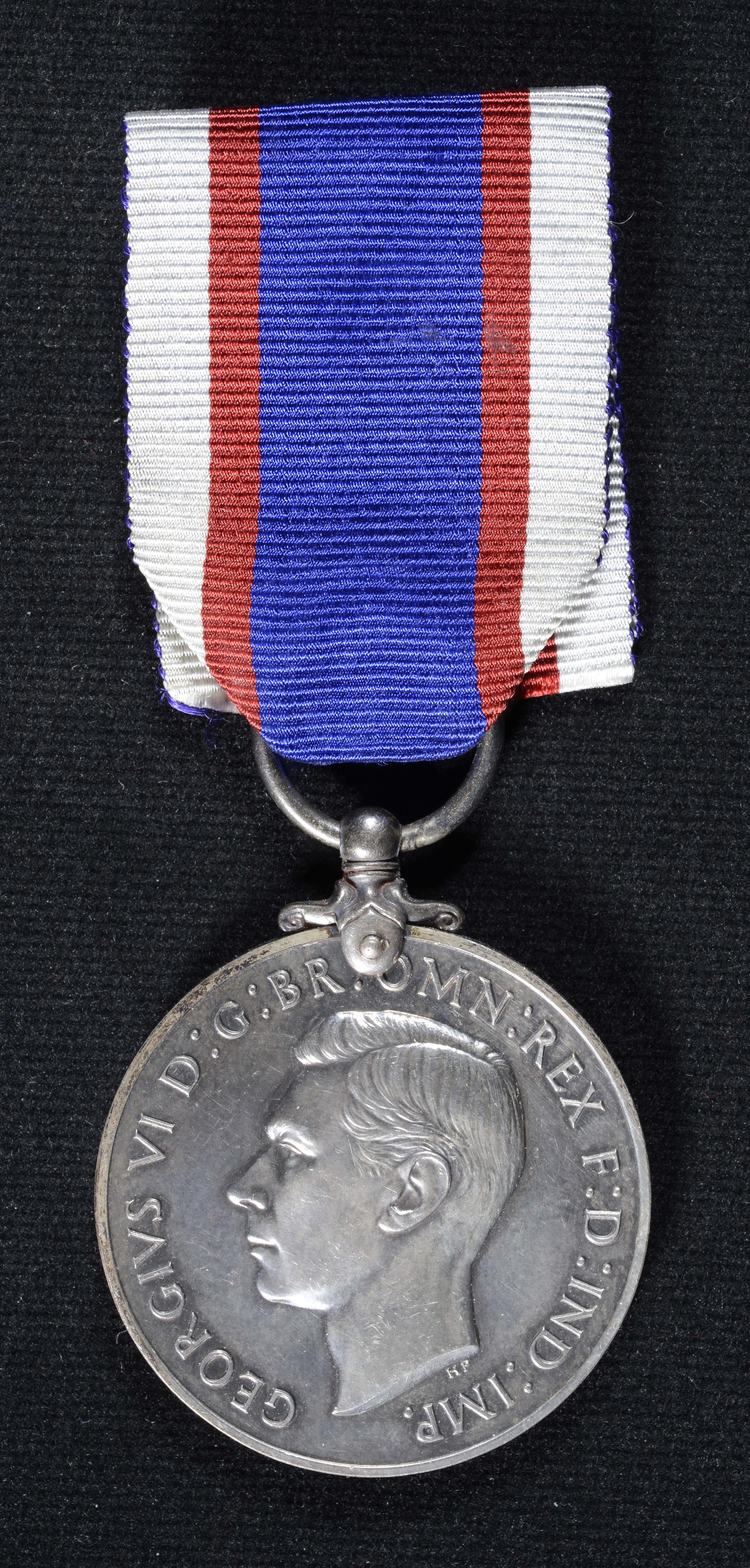
Royal Fleet Reserve Long Service and Good Conduct Medal

Awarded to ratings of the Royal Fleet Reserve (NZ) for twelve years’ efficient service.