Display No. 14J
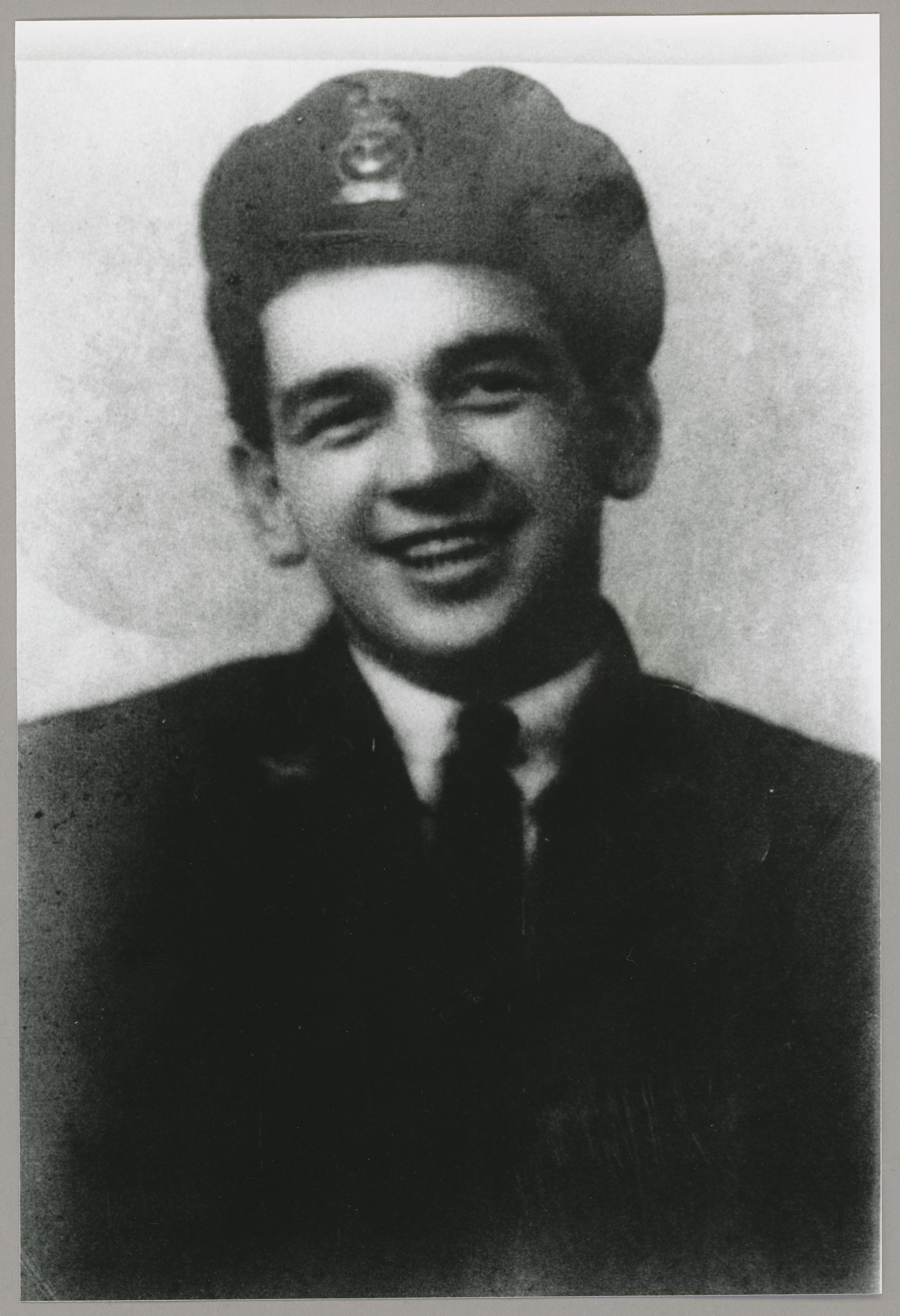
CHIVERS, Edgar Frank
Edgar Chivers volunteered to join the Royal Naval Volunteer Reserve for service in the Royal Naval Auxiliary Patrol in the First World War. He departed New Zealand in the troop ship SS Willochra and arrived in the United Kingdom in late 1916. He attended training before being assigned to Motor Launches that operated in the English channel and the North Sea. He spent time on the motor launch ML 533 in early 1918 before being transferred to HMS Arrogant. Chivers volunteered for service during the raids on Zeebrugge and Ostend in April 1918 (it is unclear which port he served at). He also volunteered for the second raid on Ostend in early May 1918. He was on ML 276 which towed ML 532 back to Dover despite having 55 holes in it’s hull. Chivers was injured during the raid. He was awarded a Distinguished Service Medal (DSM) for volunteering for dangerous rescue work during the second operation. He was also awarded a Mentioned in Despatches (MiD). He spent the rest of the war on Motor Launches before returning to New Zealand in 1919.
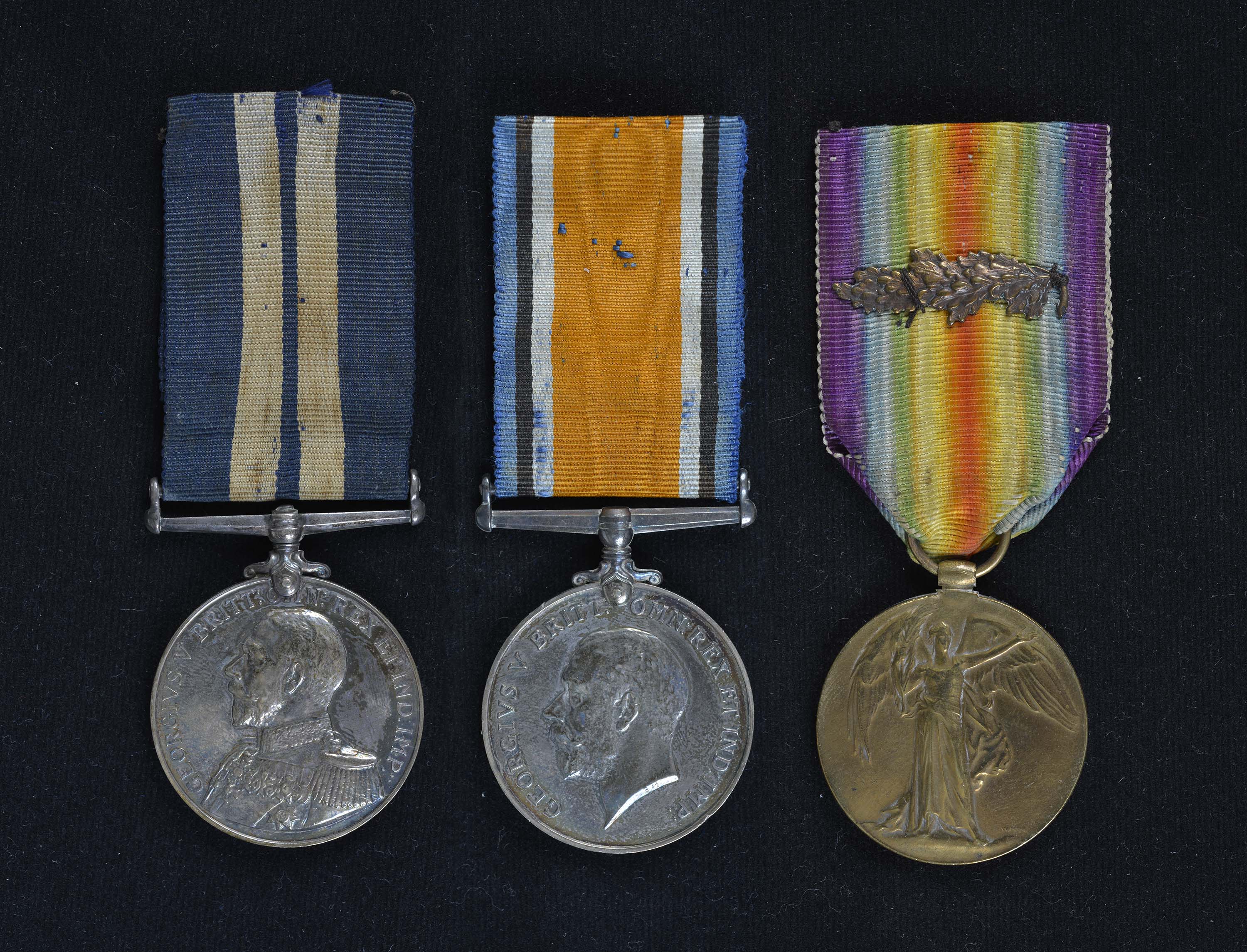
Awarded medal(s)
Medal Description [Left to Right]:
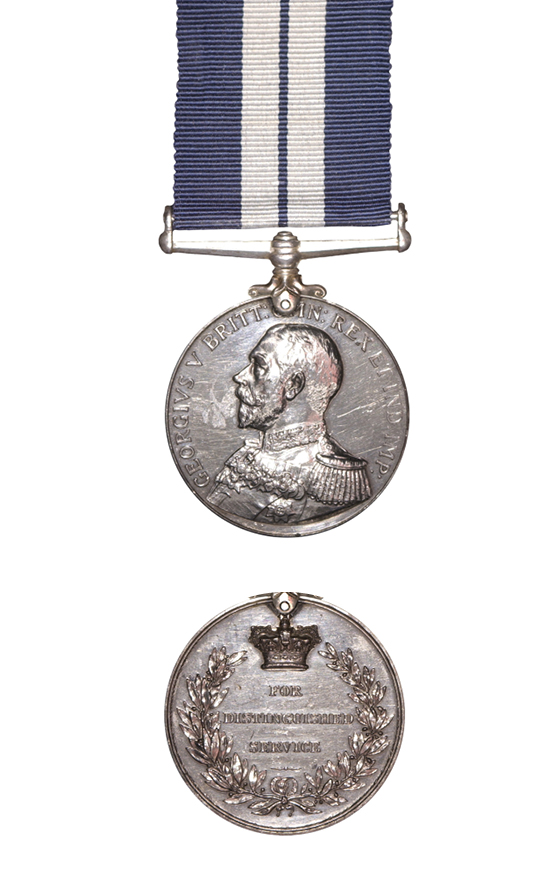
The Distinguished Service Medal (DSM)

The Distinguished Service Medal (DSM) was instituted in 1914 for senior and junior ratings of the Navy. It was awarded for acts of bravery in the face of the enemy for which the award of the Conspicuous Gallantry Medal was not considered appropriate. It was replaced in 1999 by the New Zealand Gallantry Decoration. The ribbon has three equal stripes: dark blue, white and dark blue with a thin dark blue stripe down the centre of the white stripe.
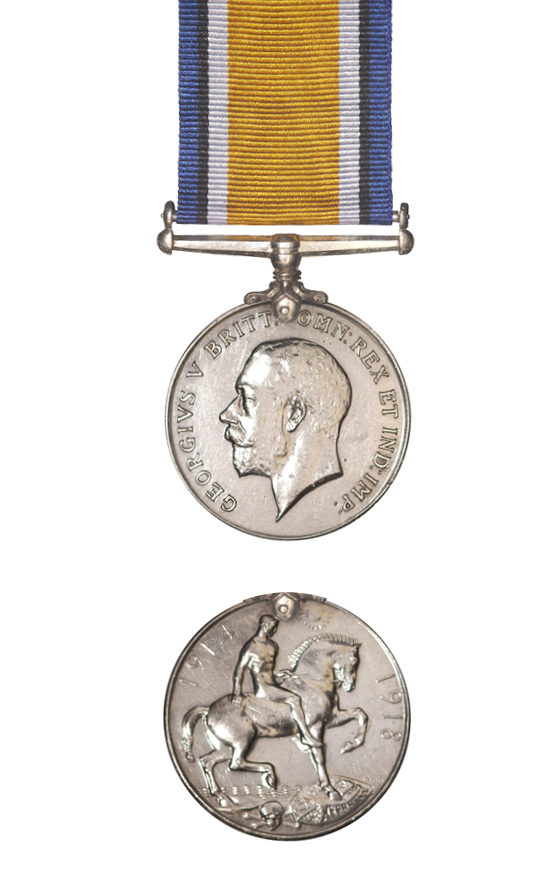
The British War Medal

The British War Medal was instituted in 1919 to recognise the successful conclusion of the First World War (1914-1918). Its coverage was later extended to recognise service until 1920, recognising mine clearing operations at sea, and participation in operations in North and South Russia, the eastern Baltic, Siberia, the Black Sea and the Caspian Sea.
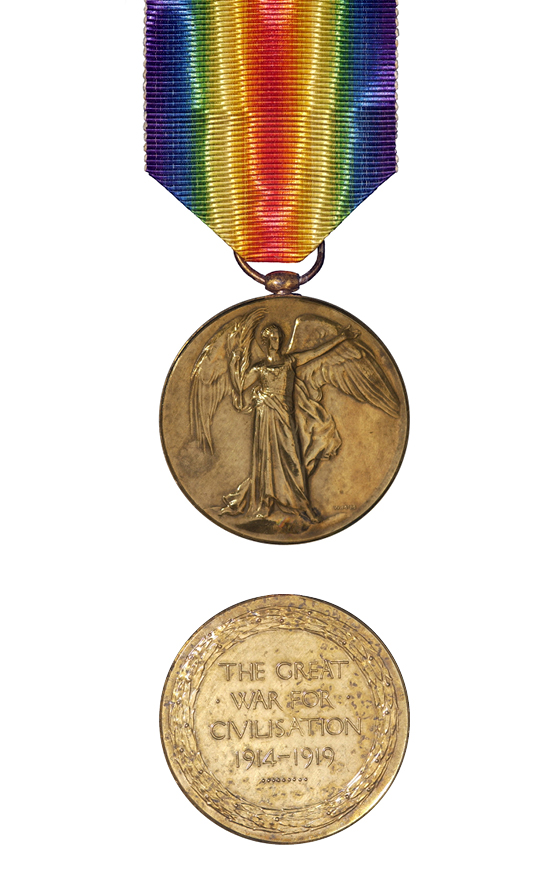
The Victory Medal

The Victory Medal was awarded in the First World War to all those who had already qualified for the 1914 Star or the 1914-15 Star, and to most persons who had already qualified for the British War Medal. The Victory Medal was awarded to all New Zealand troops serving overseas, except for those who arrived in Samoa after 30 August 1914 and those serving in Great Britain only. It has a unique double rainbow ribbon.
A bronze spray of oak leaves on the medal ribbon denotes that the recipient was Mentioned in Despatches during the period that the medal recognises. To be Mentioned in Despatches a member of the armed forces has had their name mentioned in an official report, written by a superior officer, and sent to a higher command. The report would describe the individual’s gallant or meritorious action in the face of the enemy.