Rank:
Chief Petty Officer
Birth date:
25.05.1925
Service Number:
P/JX389224
Death date:
19.05.1981
Place of death:
Upper Hutt, New Zealand

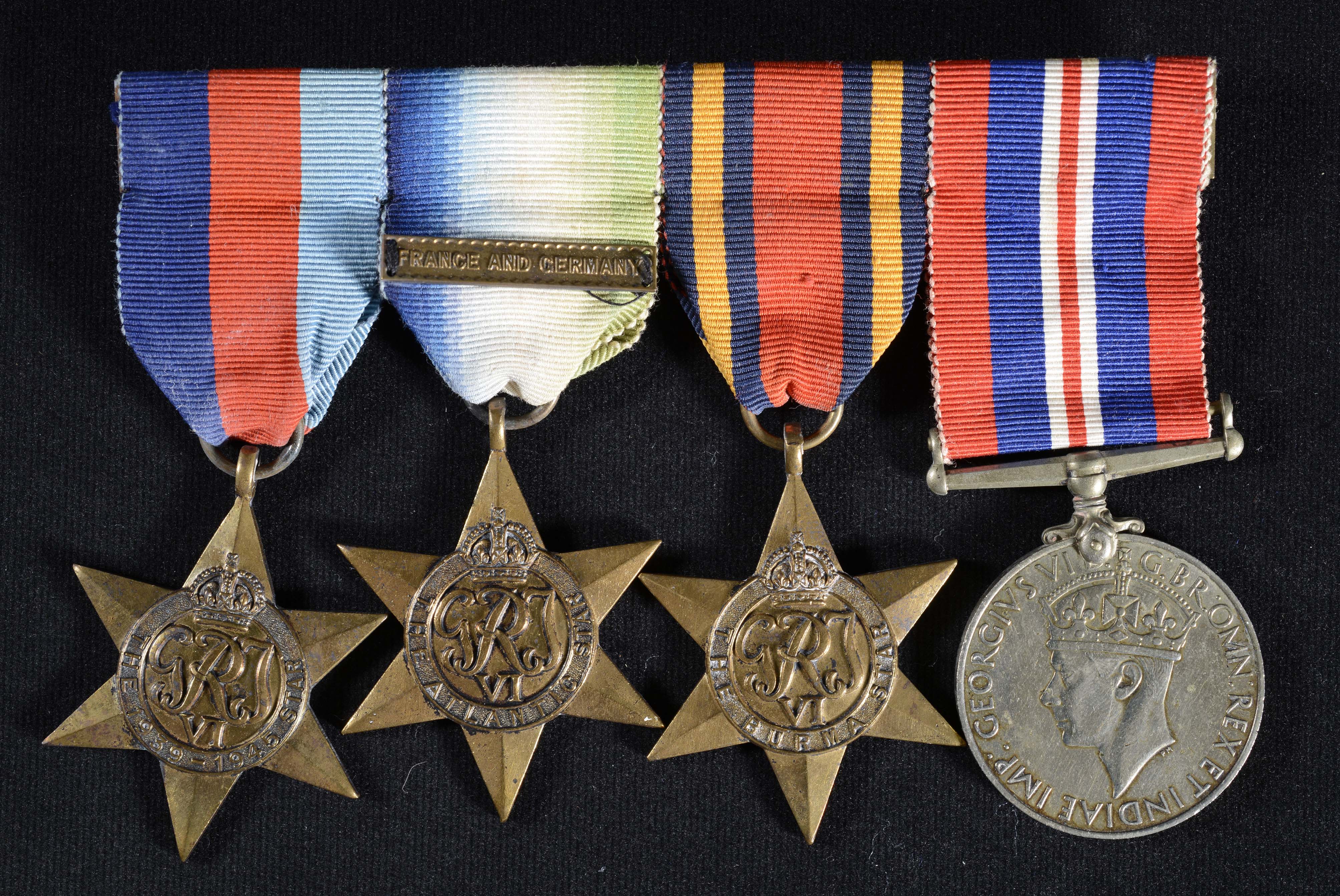
Thomas Cavanagh served in the Royal Navy as a frogman/diver during the Second World War. He served in the Atlantic and was awarded the France and Germany clasp for his service in Royal Navy ships supporting the war in North Western Europe sometime between the Normandy Landings and Victory in Europe Day. He also served in the Burma campaign against Japanese forces.
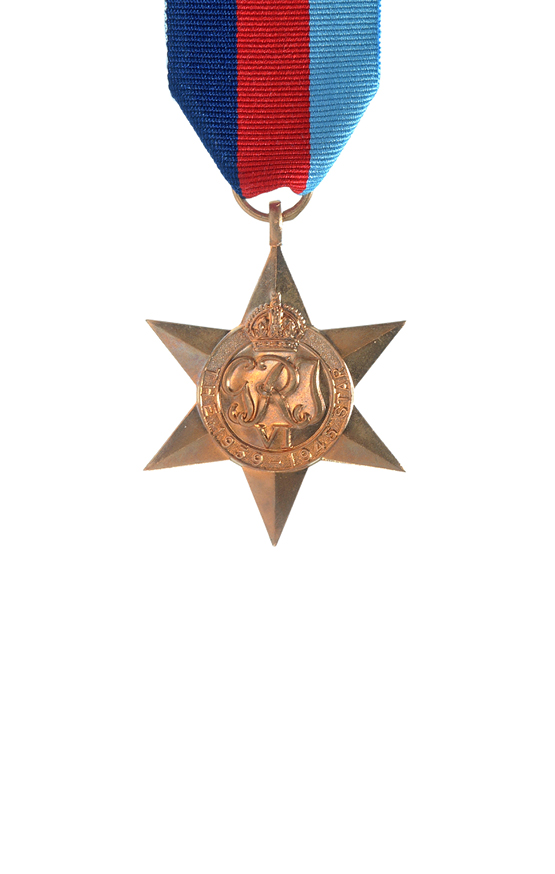
The 1939-45 Star is the first in a series of eight campaign stars instituted in 1945 to recognise service in World War Two. The ribbon has three equal vertical stripes of dark blue, red and light blue. The dark blue stripe symbolises the service of the Navy and the Merchant Navy, the red stripe symbolises the service of the Army, and the light blue stripe symbolises the service of the Air Force. The equal width bands represent the equal contributions of the three service arms towards victory. The ribbon was devised by King George VI. Two clasps could be awarded with this medal: ‘Battle of Britain’ and ‘Bomber Command’. Only aircrew would qualify for these clasps although a small number of Fleet Air Arm naval pilots flew for the air force and would be eligible for the ‘Battle of Britain’ clasp.
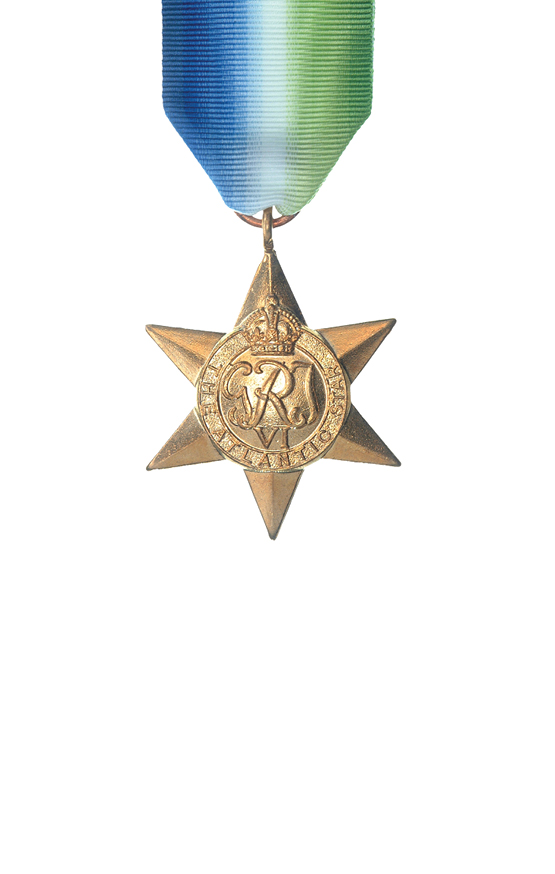
The Atlantic Star was awarded for service during the Second World War. It was instituted to commemorate the Battle of the Atlantic the longest continuous military campaign in the Second World War running from 3 September, 1939 – 8 May, 1945. Six months naval service or four months air service in the Atlantic, United Kingdom (‘home’) waters or North Russian waters was normally required. The ribbon is watered silk coloured blue, white and green, symbolising service in the oceans. Two clasps could be awarded with this medal: ‘France and Germany’ and ‘Air Crew Europe’. Personnel issued the Atlantic Star who then qualified for either the France and Germany and the Air Crew Europe Stars were awarded a clasp in respect of the second only (as only one clasp could be worn on the star).
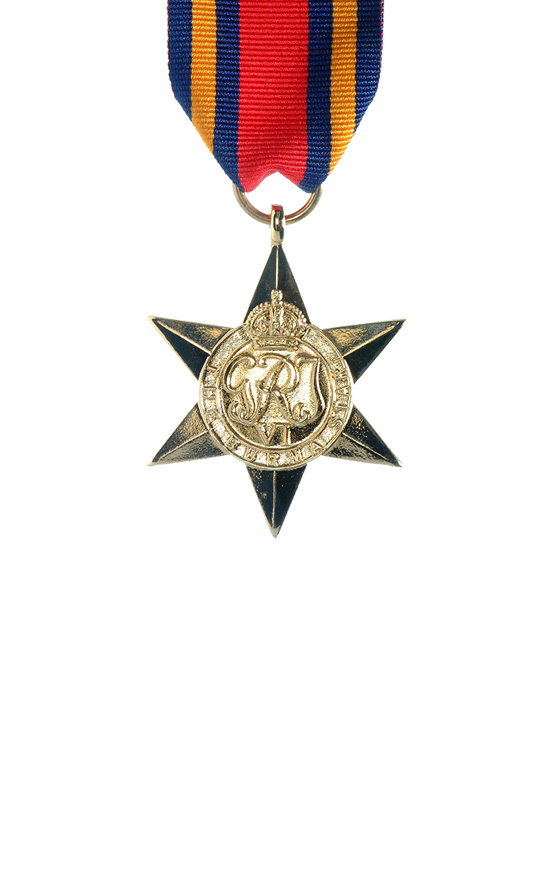
The Burma Star was awarded for service in the Second World War in the Burma campaign, from 11 December 1941 to 2 September 1945. The centre of the ribbon is red (representing the Commonwealth forces) with outer stripes of dark blue (representing the British forces). The dark blue bands each have at their centres a stripe of bright orange (symbolising the sun). A ‘Pacific’ clasp could be awarded with this medal. Personnel qualifying for both the Pacific and Burma Stars were awarded the first star but only a clasp in respect of the second.
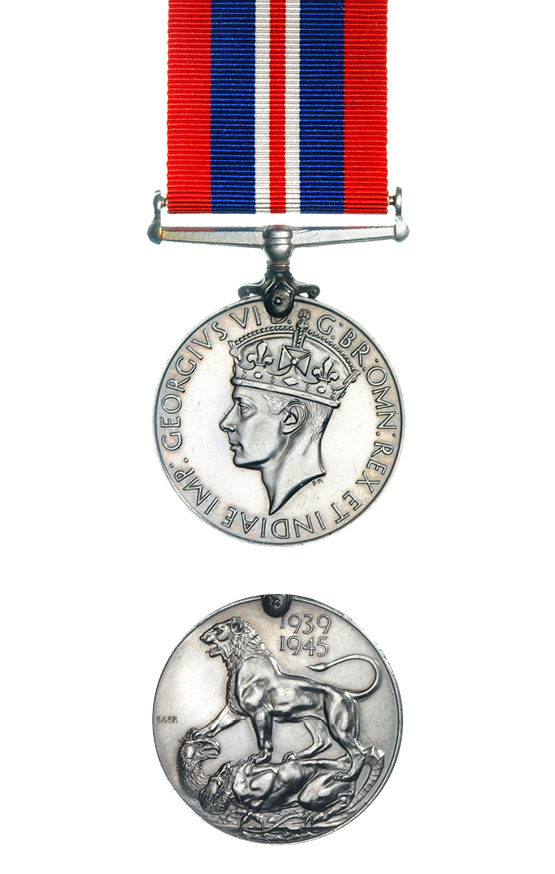
The War Medal 1939-45 was awarded across the British Commonwealth to all full-time members of the Armed Forces in the Second World War for 28 days service between 3 September 1939 and 2 September 1945, irrespective of where they were serving. The ribbon is the red, white, and blue of the (British) Union Flag. There is a narrow central red stripe with a narrow white stripe on either side. There are broad red stripes at either edge, the two intervening stripes being blue.
A bronze oak leaf on the medal ribbon denotes that the recipient was Mentioned in Despatches. To be Mentioned in Despatches a member of the armed forces had their name mentioned in an official report, written by a superior officer, and sent to a higher command. The report would describe the individual’s gallant or meritorious action in the face of the enemy.