Display No. 12D
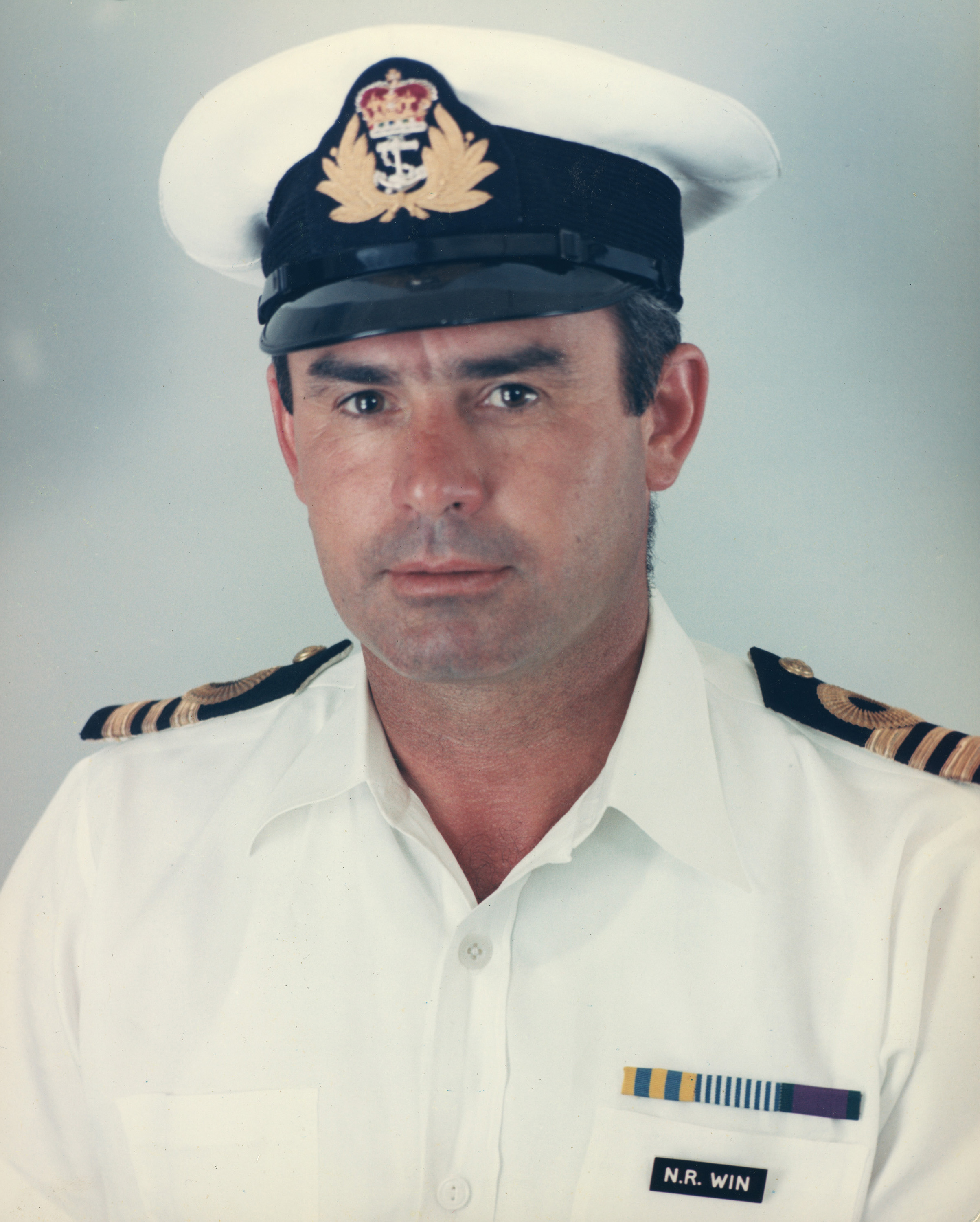
WIN, Neville Ross
Neville Win joined the Royal New Zealand Navy in 1947 as a Boy Seaman. After training in HMNZS Tamaki he joined the crew of HMNZS Bellona. In September 1949, he was posted to HMNZS Pukaki where he was promoted to Able Seaman. After a year further training in HMAS Rushcutter in Australia and HMNZS Philomel, Win was posted to HMNZS Hawea. In February 1951, Hawea was deployed to the Korean War as part of the United Nations Task Force. In September 1951, Win was transferred to HMNZS Rotoiti also based in Korean waters, when the ship returned home later that year. After several years of postings to Rushcutter, Philomel, and Tamaki, Win joined the crew of HMNZS Black Prince. He served in Black Prince for eighteen months, before being selected for promotion to officer in early 1955. Win attended advance course training in the United Kingdom for three years, before returning to New Zealand with the rank of Acting Sub-Lieutenant.
In January 1958, he was again posted to Rotoiti. Win was also attached to Pukaki in 1961 before undertaking further training in navigation, and a two year exchange with the Royal Navy in HMS Appleton. Win returned to New Zealand in July 1964, as a Base Navigation Direction Officer and spent a year on board HMNZS Otago as a Navigation Officer. He also spent a year serving in HMNZS Blackpool in 1966. Win was attached to Philomel for a year as a Staff Officer (Operations), and as Base Navigation Direction Officer. In September 1968, Win became Director of Operations in HMNZS Wakefield in Wellington. Win was Executive Officer on board HMNZS Waikato in July 1969. He then commanded HMNZS Taranaki in December 1970, before commanding Waikato in June 1971. In 1973 Win was the Assistant Head and Royal New Zealand Navy Liaison Officer in Canberra. He returned to Wakefield in August 1977 to serve as Director of Operations, reaching the rank of Captain in 1979. He retired in 1982 after thirty five years of service.
Awarded medal(s)
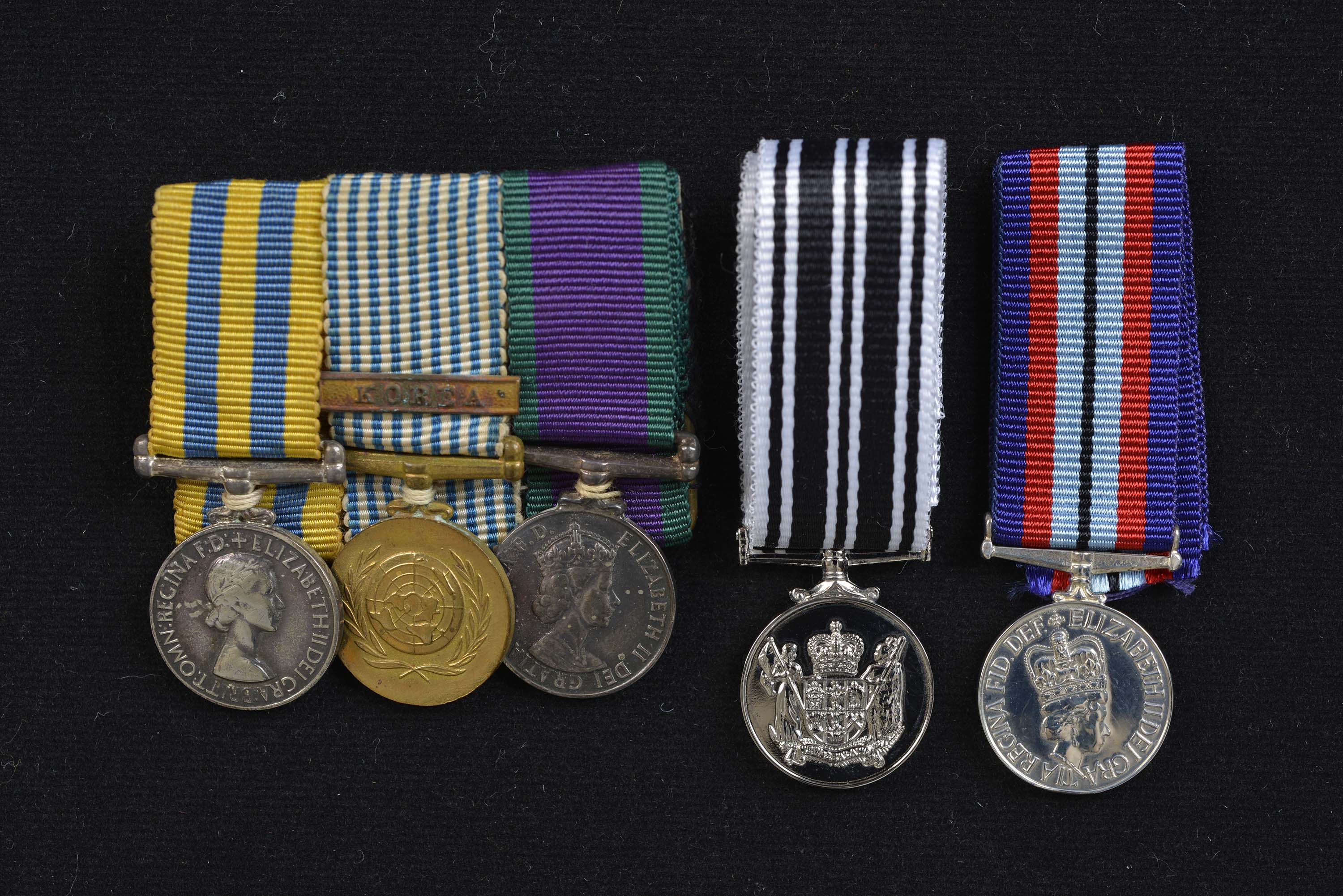
Medal Description [Left to Right]:
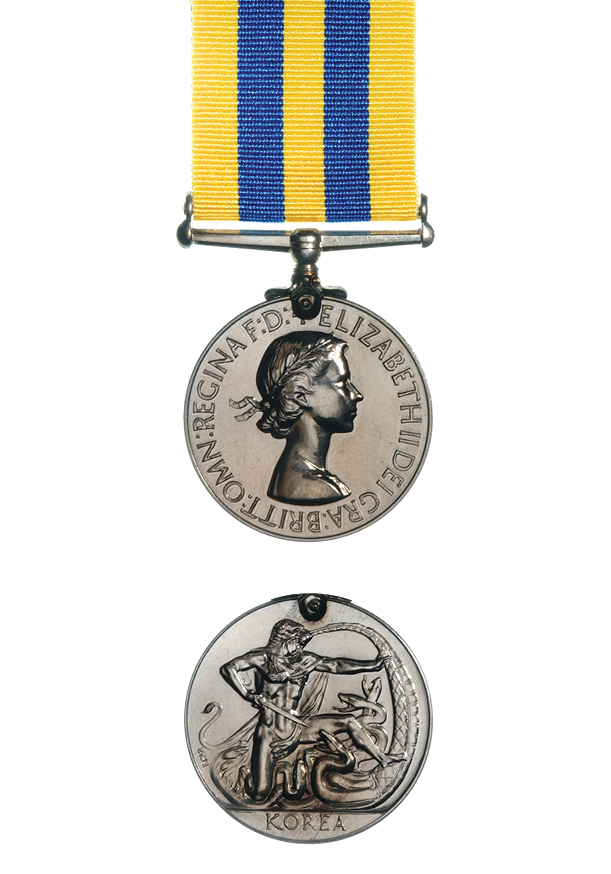
The Korea Medal

This medal was instituted in 1951, to recognise the service of Commonwealth troops in the Korean War between 2 July 1950 and 27 July 1953. It is sometimes referred to as the Queen’s Korea Medal to differentiate it from the United Nations Korea Medal. For naval forces, qualification is 28 days or more afloat in the operational area or at least one day of shore duty. The medal’s reverse features Hercules wrestling the Hydra – a symbolic representation of communism. The ribbon has alternating yellow and blue stripes. Blue represents the United Nations.
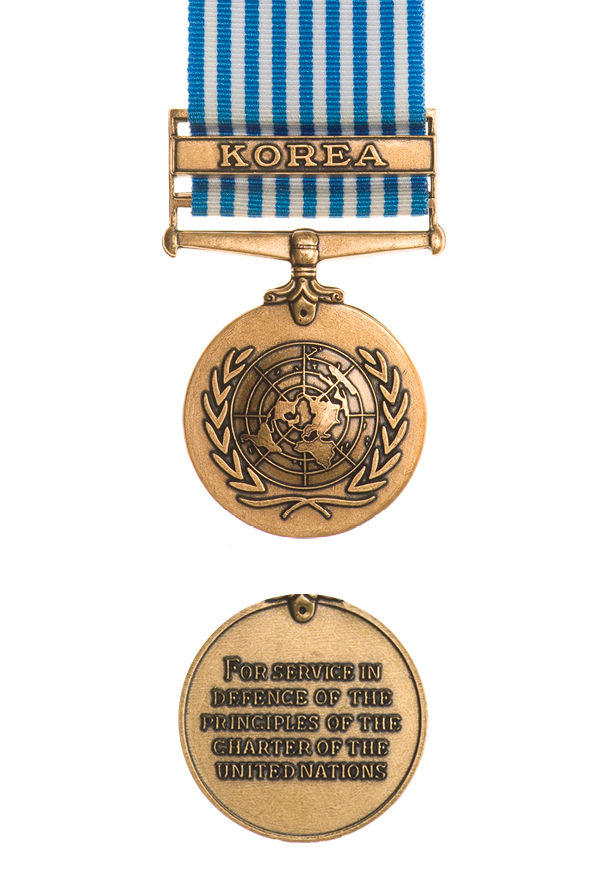
United Nations Medal Korea

The United Nations Medal (Korea) was awarded for service during the Korean War and the year following the armistice (July 1950 to July 1954). It was the first international award created by the United Nations and features the UN emblem of a projection map of the world between two olive branches. The medal recognises the service of all military troops participating as part of the UN forces in Korea and was manufactured in the language of each country. It was also awarded to a limited range of civilians whose organisations were certified by the United Nations Commander-in-Chief as having directly supported military operations in Korea between 1950 and 1954.
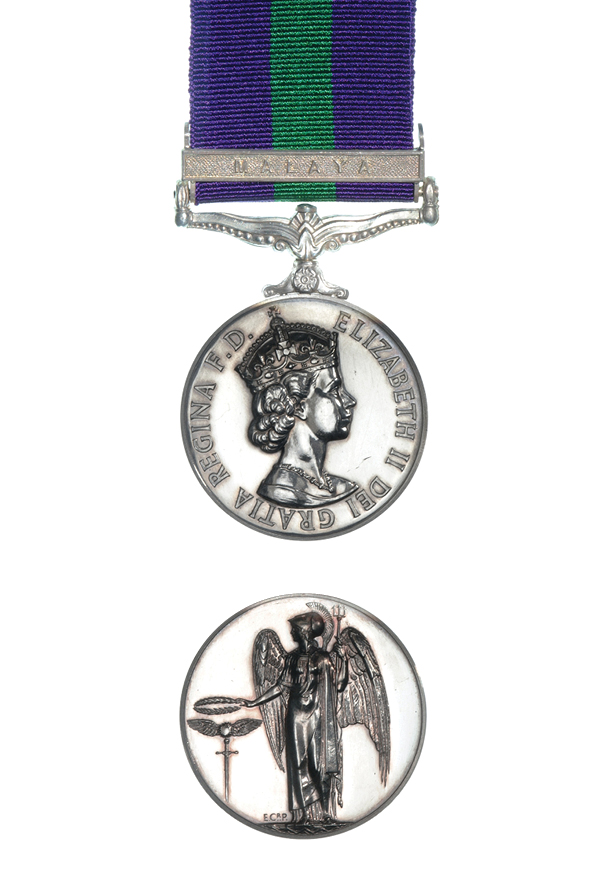
The General Service Medal 1918-1962

The General Service Medal (GSM) 1918 – 62 was instituted in 1918, to recognise service in minor Army and Air Force operations for which no separate medal was intended.
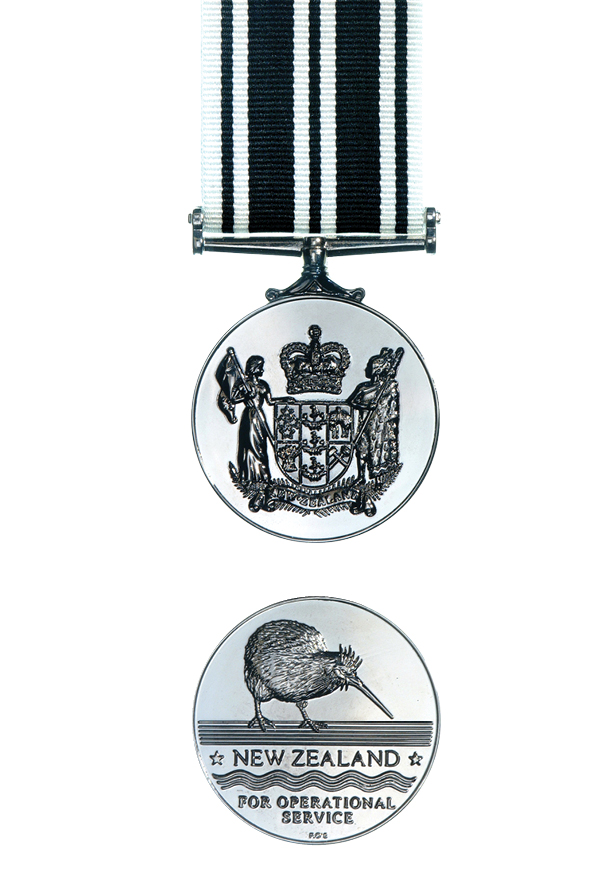
The New Zealand Operational Service Medal

The New Zealand Operational Service Medal (NZOSM) was instituted in 2002 to recognise New Zealanders (military and civilians) who have served since the end of the Second World War. The NZOSM provides recognition for those who have earned a campaign medal or completed 7 days or more of operational service since 3 September 1945. It is awarded once only to an individual, regardless of how many times he or she has deployed on operations. The medal features the New Zealand Coat of Arms on the obverse and a kiwi on the reverse. The ribbon is black and white stripes, representative of New Zealand’s national colours.
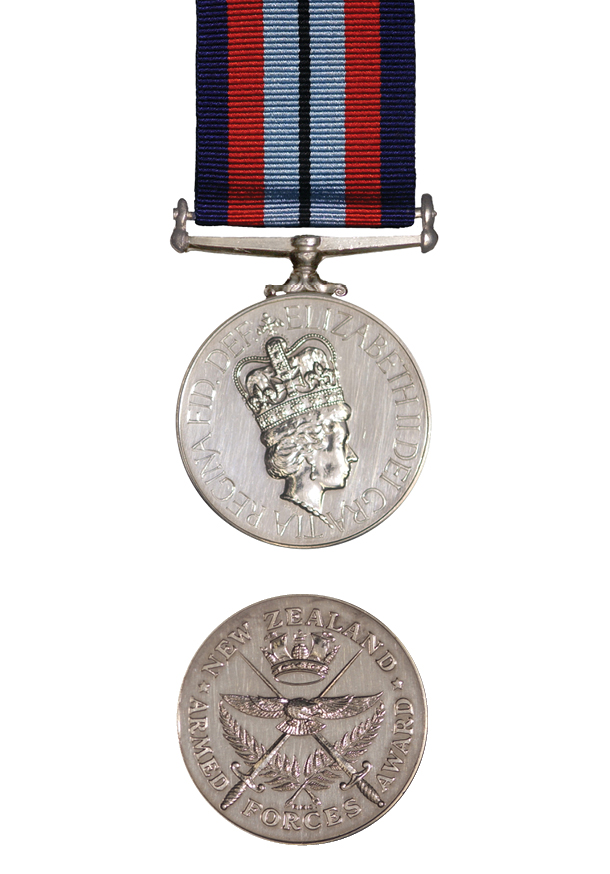
New Zealand Armed Forces Award
A long service decoration for Regular Force Officers of the New Zealand Defence Force. Established in 1985, it was originally presented for 15 years of unblemished service. In August 2020 the criteria was modified to be awarded for 14 years service. The medal ribbon colours of dark blue, crimson and light blue represent the three Services (Navy, Army and Air Force) with a black central stripe symbolising New Zealand. The ribbon of the award was designed by Mr Phillip O’Shea, New Zealand Herald of Arms Extraordinary.
Special interest medal(s)
Display No. 27N
Medal Description [Left to Right]:
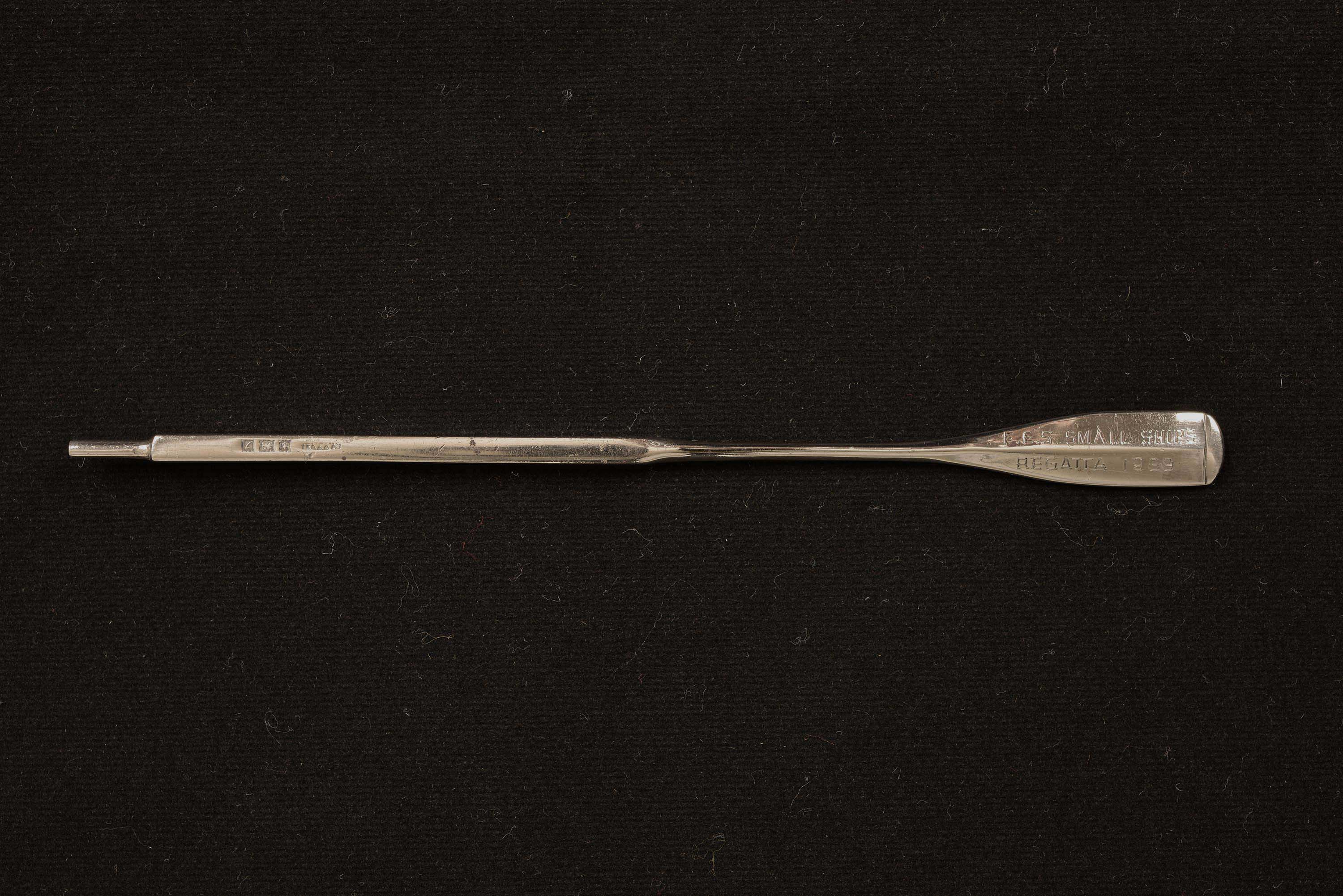
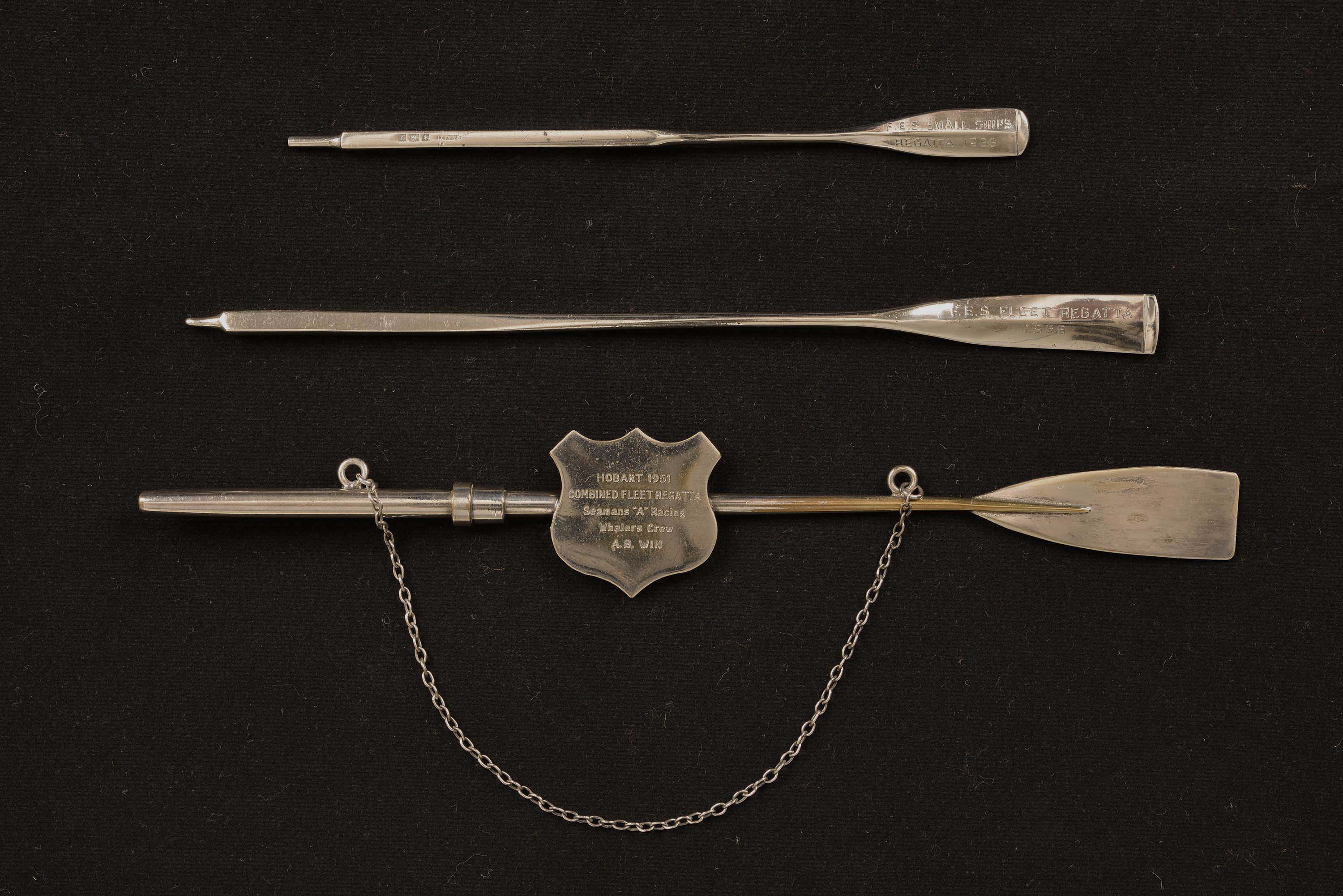
Silver Oar Small Ships Regatta

Silver oar awarded at the FES Small ships regatta in 1958.
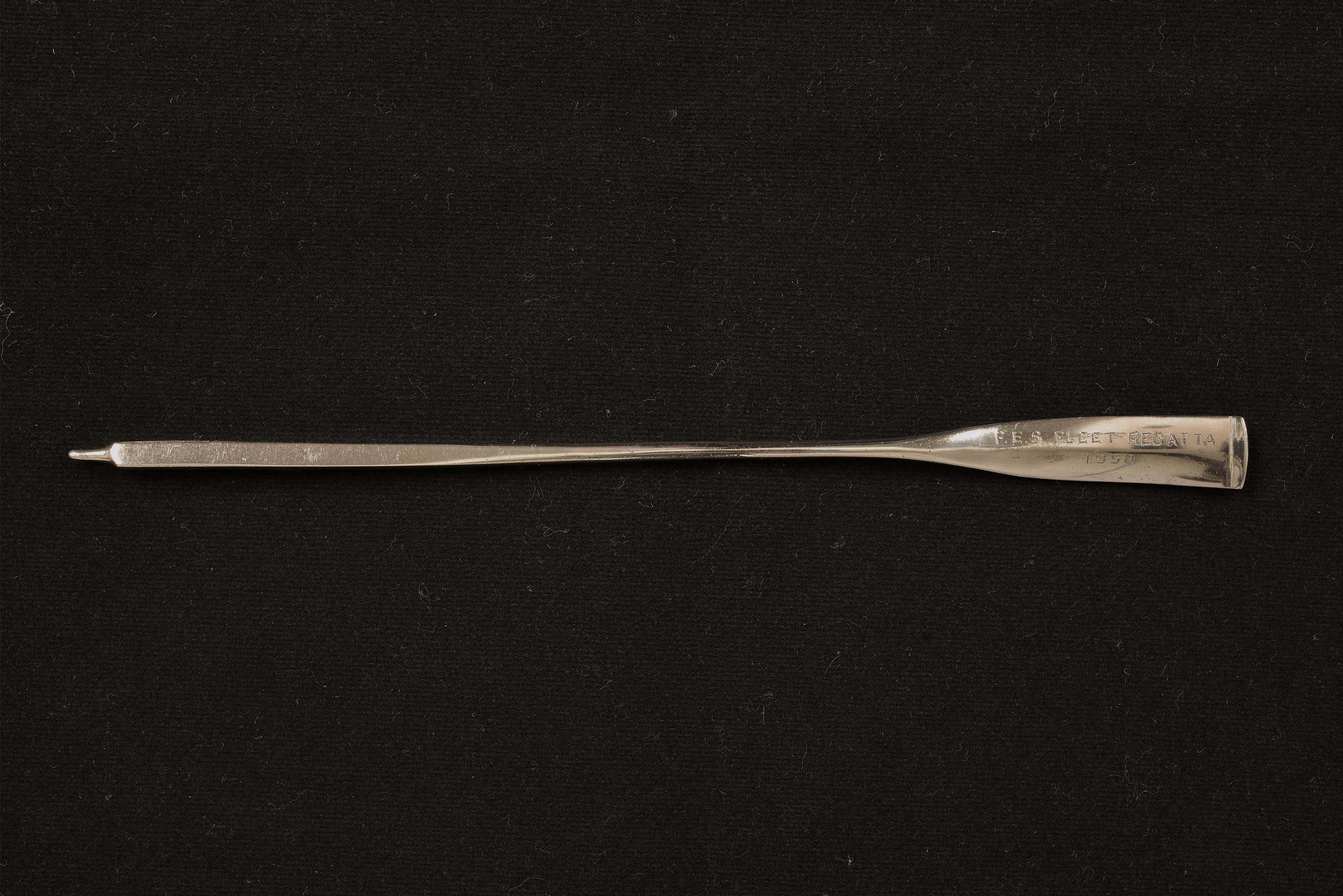
Silver Oar Fleet Regatta

Silver oar awarded at the FES Fleet Regatta in 1958.
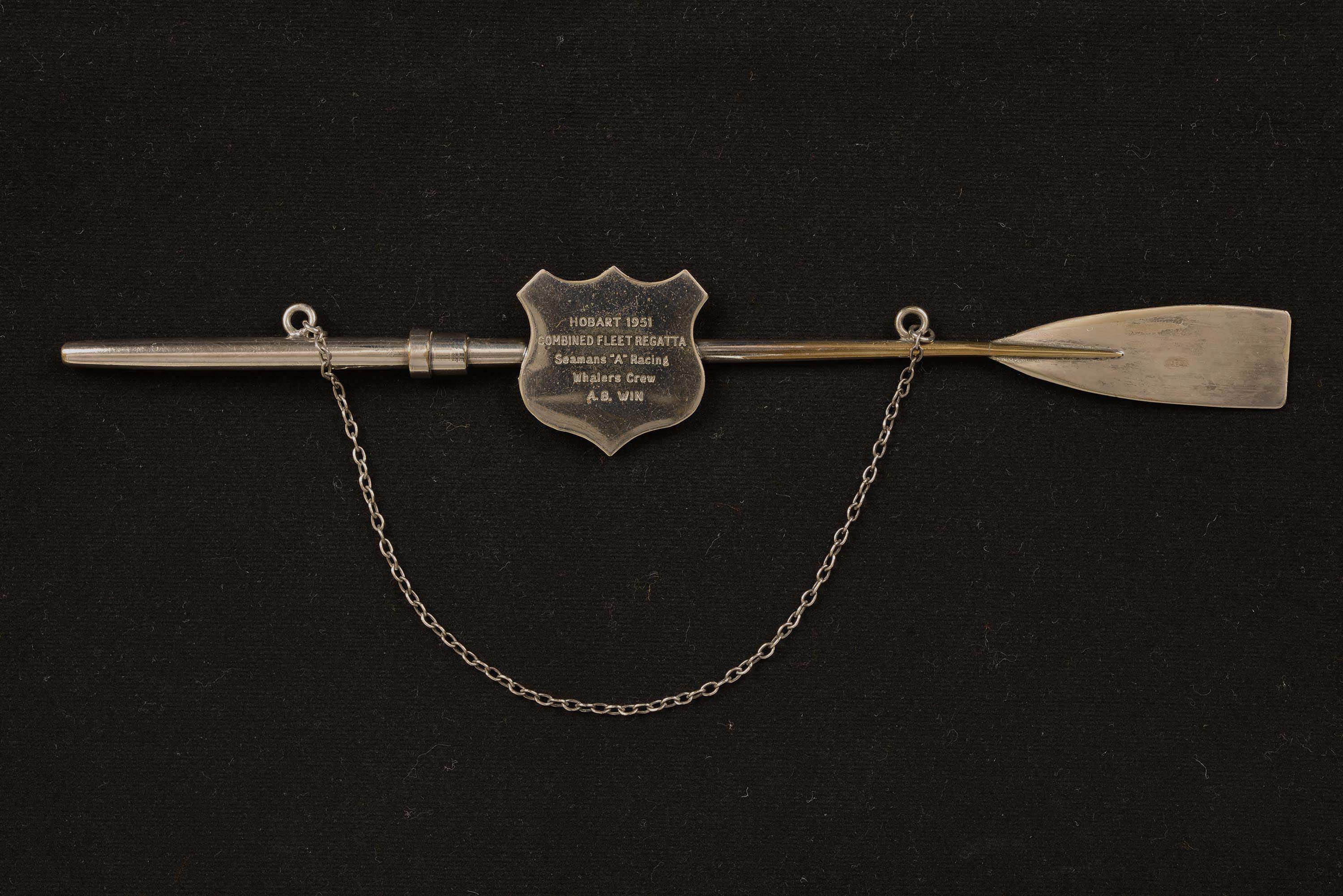
Silver Oar Combined Fleet Regatta

Silver oar awarded at the Combined Fleet Regatta for Seaman ‘A’ Racing Whalers crew in Hobart, Tasmania in 1951.