Display No. 5I
PARTEL, Hunter John
Hunter Partel joined the Otago Division of the Royal Naval Volunteer Reserve (RNVR) in May 1935 as an Ordinary Seaman. During his time in the RNVR he trained and served in HM Ships Wakakura and Leander.
At the outbreak of the Second World War, Partel was mobilised and transferred to the shore establishment HMS Philomel in Auckland. He was then posted to the staff of the Naval Officer Commanding Dunedin where he served until September 1942.
Partel then served in the minesweepers HMNZ Ships Scarba and Sanda, which regularly conducted minesweeping and antisubmarine escorts and patrols around the Hauraki Gulf and Bay of Islands. In January 1944, Partel joined the crew of HMNZS Achilles going on to serve in the Eastern Fleet and then the British Pacific Fleet in the final actions of the Pacific War.
In October 1945, Partel returned to New Zealand and served in HMNZS Tui, which was deployed to help in the clearance of the Auckland minefields. Partel was discharged from the Navy in April 1946.
Awarded medal(s)
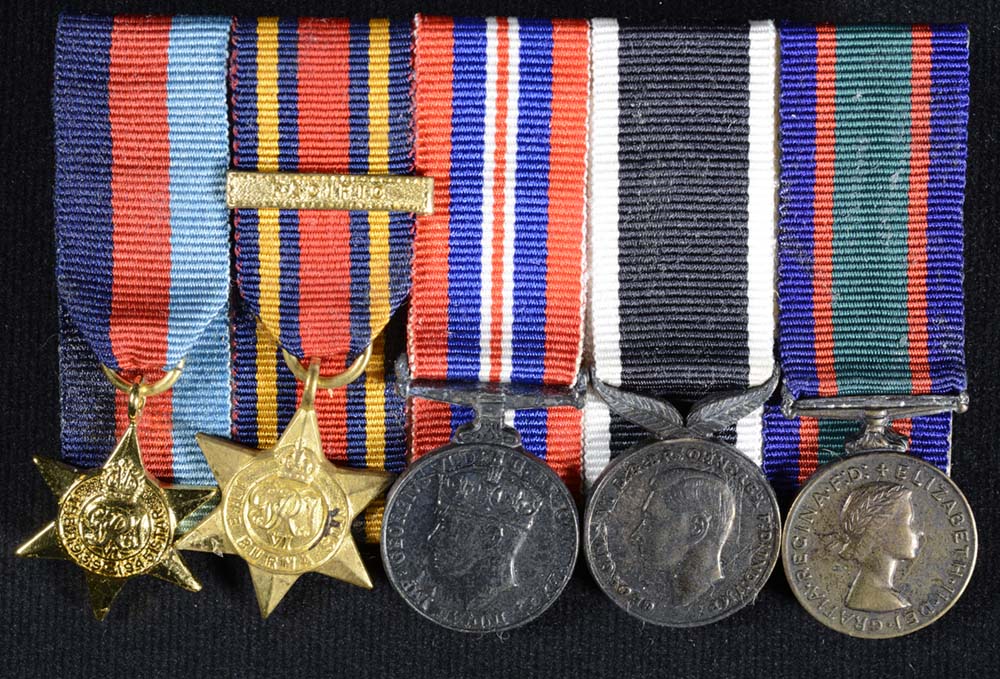
Medal Description [Left to Right]:
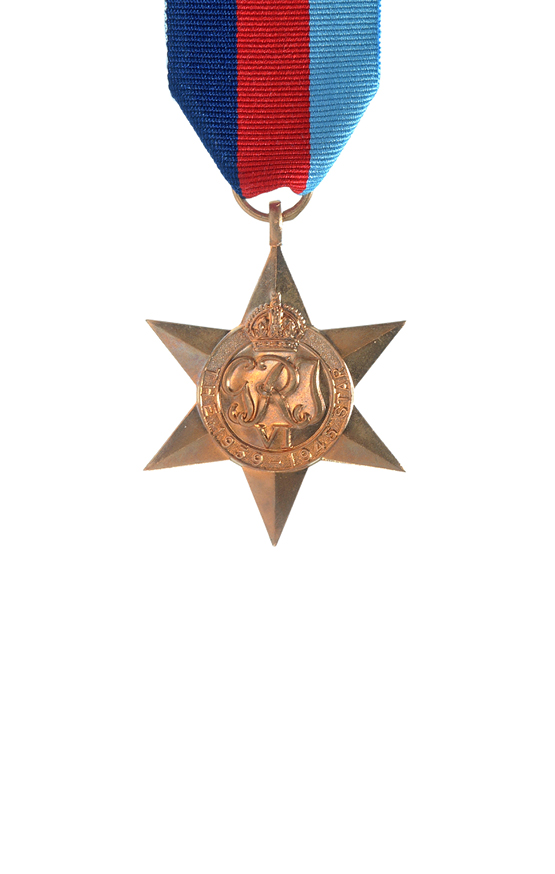
The 1939-1945 Star

The 1939-45 Star is the first in a series of eight campaign stars instituted in 1945 to recognise service in World War Two. The ribbon has three equal vertical stripes of dark blue, red and light blue. The dark blue stripe symbolises the service of the Navy and the Merchant Navy, the red stripe symbolises the service of the Army, and the light blue stripe symbolises the service of the Air Force. The equal width bands represent the equal contributions of the three service arms towards victory. The ribbon was devised by King George VI. Two clasps could be awarded with this medal: ‘Battle of Britain’ and ‘Bomber Command’. Only aircrew would qualify for these clasps although a small number of Fleet Air Arm naval pilots flew for the air force and would be eligible for the ‘Battle of Britain’ clasp.
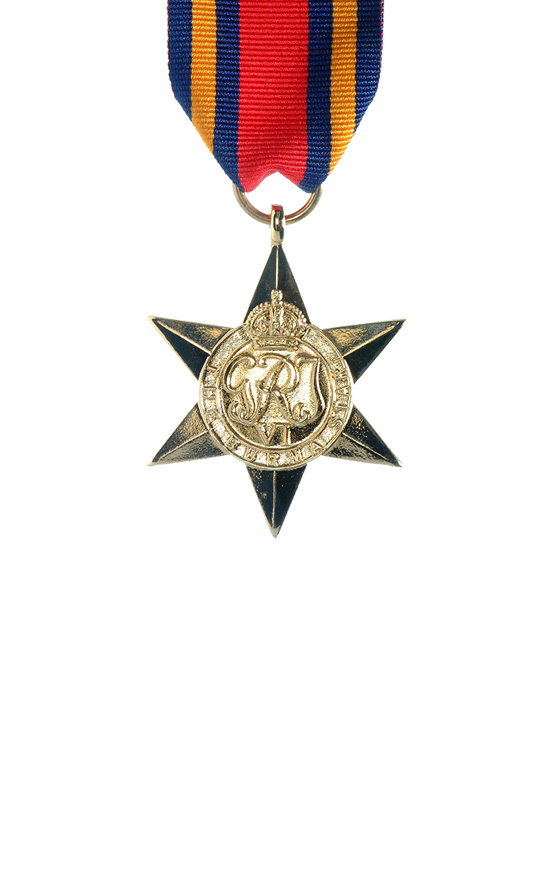
The Burma Star

The Burma Star was awarded for service in the Second World War in the Burma campaign, from 11 December 1941 to 2 September 1945. The centre of the ribbon is red (representing the Commonwealth forces) with outer stripes of dark blue (representing the British forces). The dark blue bands each have at their centres a stripe of bright orange (symbolising the sun). A ‘Pacific’ clasp could be awarded with this medal. Personnel qualifying for both the Pacific and Burma Stars were awarded the first star but only a clasp in respect of the second.
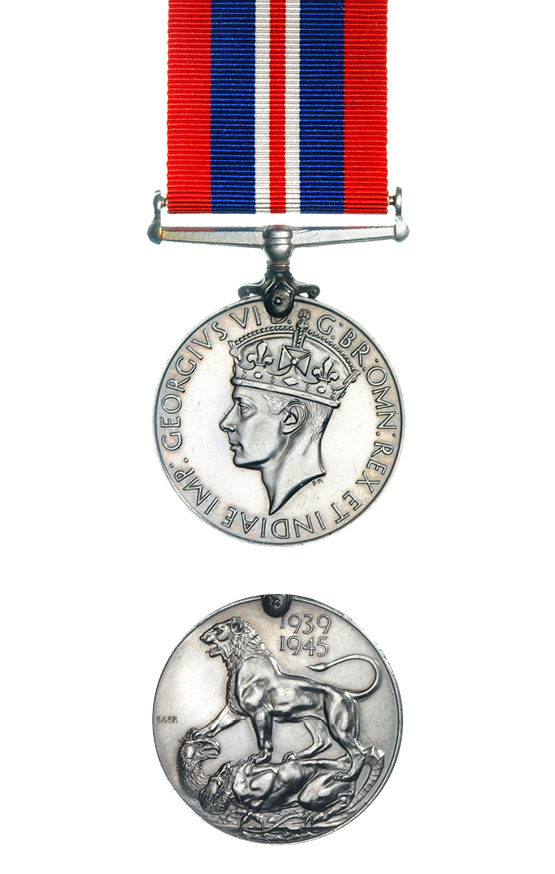
The War Medal 1939-1945

The War Medal 1939-45 was awarded across the British Commonwealth to all full-time members of the Armed Forces in the Second World War for 28 days service between 3 September 1939 and 2 September 1945, irrespective of where they were serving. The ribbon is the red, white, and blue of the (British) Union Flag. There is a narrow central red stripe with a narrow white stripe on either side. There are broad red stripes at either edge, the two intervening stripes being blue.
A bronze oak leaf on the medal ribbon denotes that the recipient was Mentioned in Despatches. To be Mentioned in Despatches a member of the armed forces had their name mentioned in an official report, written by a superior officer, and sent to a higher command. The report would describe the individual’s gallant or meritorious action in the face of the enemy.
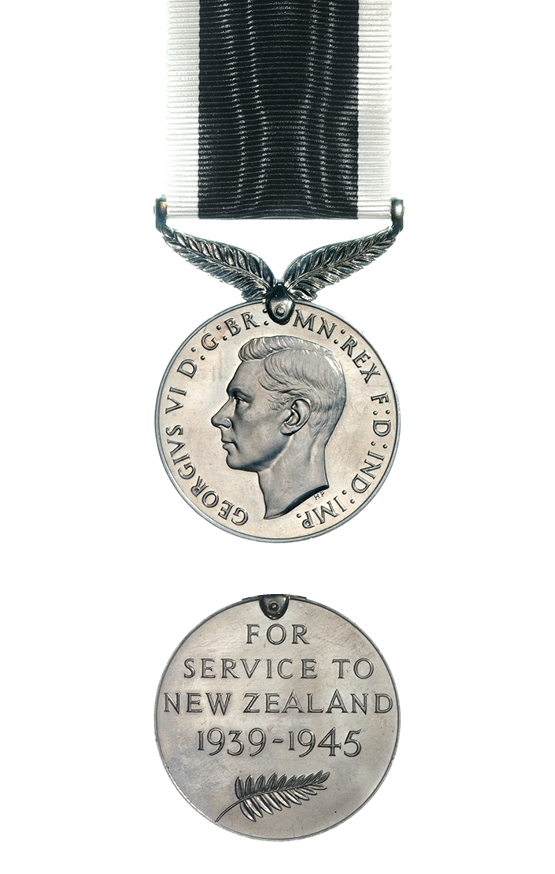
The New Zealand War Service Medal

The New Zealand War Service Medal was awarded for 28 days’ full time service or six months’ part time service in the Second World War in any of the New Zealand Armed Forces including the Reserves, Naval Auxiliary Patrol Service, or Home Guard, between 3 September 1939 and 2 September 1945.
Royal Naval Volunteer Reserve Long Service and Good Conduct Medal

A long service medal awarded to members of the Royal Naval Volunteer Reserve (RNVR). Established in 1909, the medal was awarded to petty officers and ratings who had served 12 or 15 years; war service counting double. The original medal was the same as that of the Royal Naval Reserve (RNR) long service medal with a plain green ribbon. In 1919 a new ribbon was introduced for the RNVR medal: blue edges with a wide central green stripe between narrow crimson stripes.
The same medal and ribbon was also issued to the Royal Naval Wireless Auxiliary Reserve from 1939. Versions with different ribbons were awarded to other Naval Reserve branches such as the Royal Naval Reserve (RNR), Royal Fleet Reserve (RFR), and the Royal Naval Auxiliary Sick Berth Reserve.
In 1957, the RNR and RNVR were merged and a new medal ribbon was issued, before the medal itself was replaced in the UK in 2000. However, New Zealand continued to award the medal with it being instituted in 1985 as the Royal New Zealand Naval Volunteer Reserve Long Service and Good Conduct Medal.