Display No. 18E
MARTINSON, Lincoln Campbell
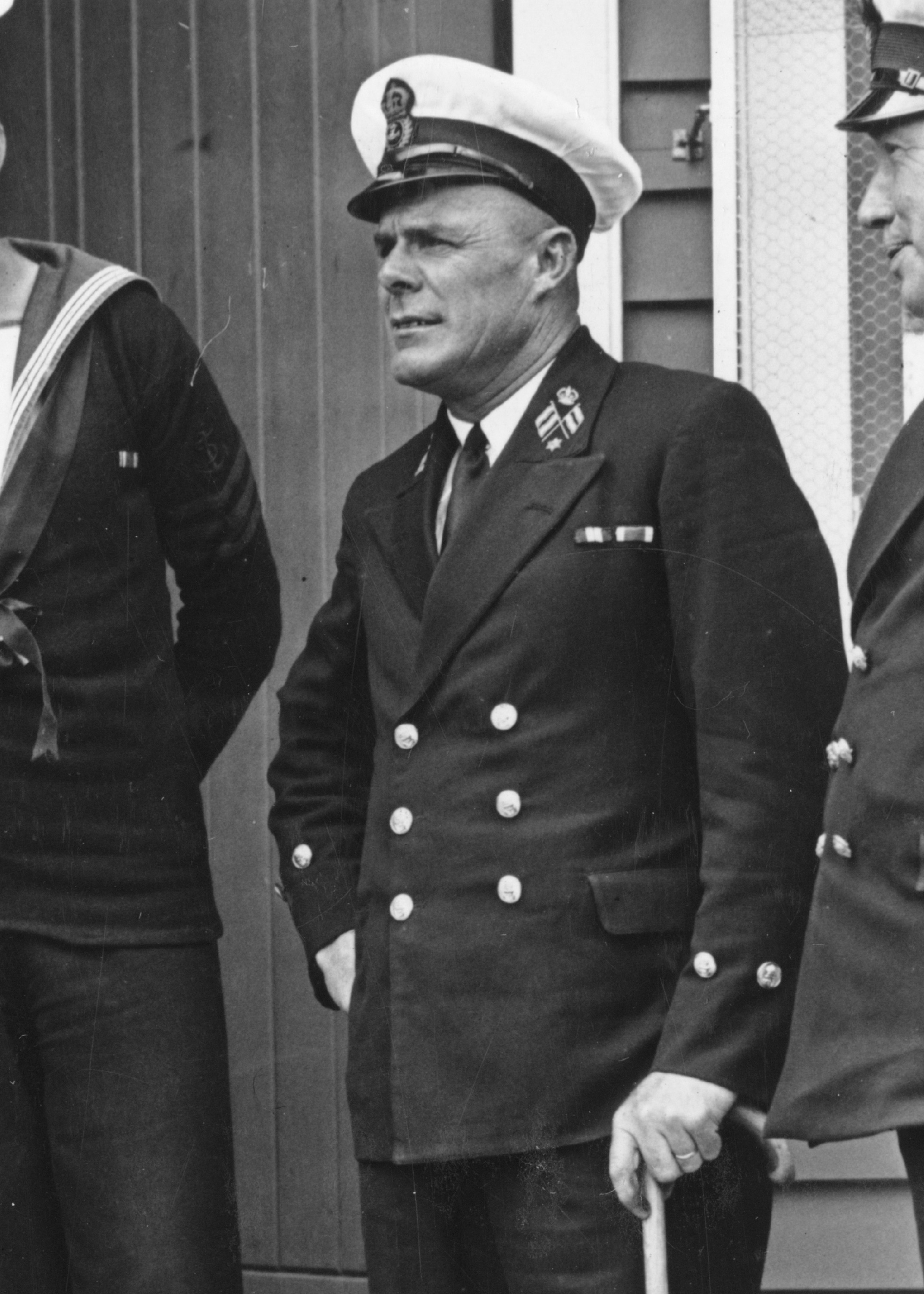
Lincoln ‘Bully’ Martinson joined the New Zealand Division of the Royal Navy as a Boy 2nd Class in 1921. As a Boy Signalman he joined the cruiser HMS Chatham in 1923, and was sent to the United Kingdom to undertake the course for Leading Signalman. Following the course he served in the battleships HM Ships Queen Elizabeth and Revenge before returning to New Zealand. Apart from short periods ashore, he spent most of the next ten years alternately in the cruisers HM Ships Dunedin and Diomede. In 1935 he was again sent to the United Kingdom, this time to undergo his Yeoman of Signals course. Following successful completion of this, he spent the next five years on secondment in HMS Barham and Hood, which included service during the Spanish Civil War.
Martinson joined the cruiser HMS Achilles in England in 1939 and was in that ship during the Battle of the River Plate. As the Chief Yeoman he was instrumental in the decision to fly the New Zealand national flag during the battle. He was badly wounded during the action, later losing his leg. As a result of his efforts during the action, Martinson was awarded the Distinguished Service Medal (DSM). Martinson’s DSM citation reads, ‘When seriously wounded and in great pain, he continued to inquire after the welfare of the V/S Department and wanted to know how his men were doing’. As an alternative to being discharged because of his wound, Martinson elected to remain in the Royal New Zealand Navy, training signalmen in HMNZS Philomel for the remainder of the war.
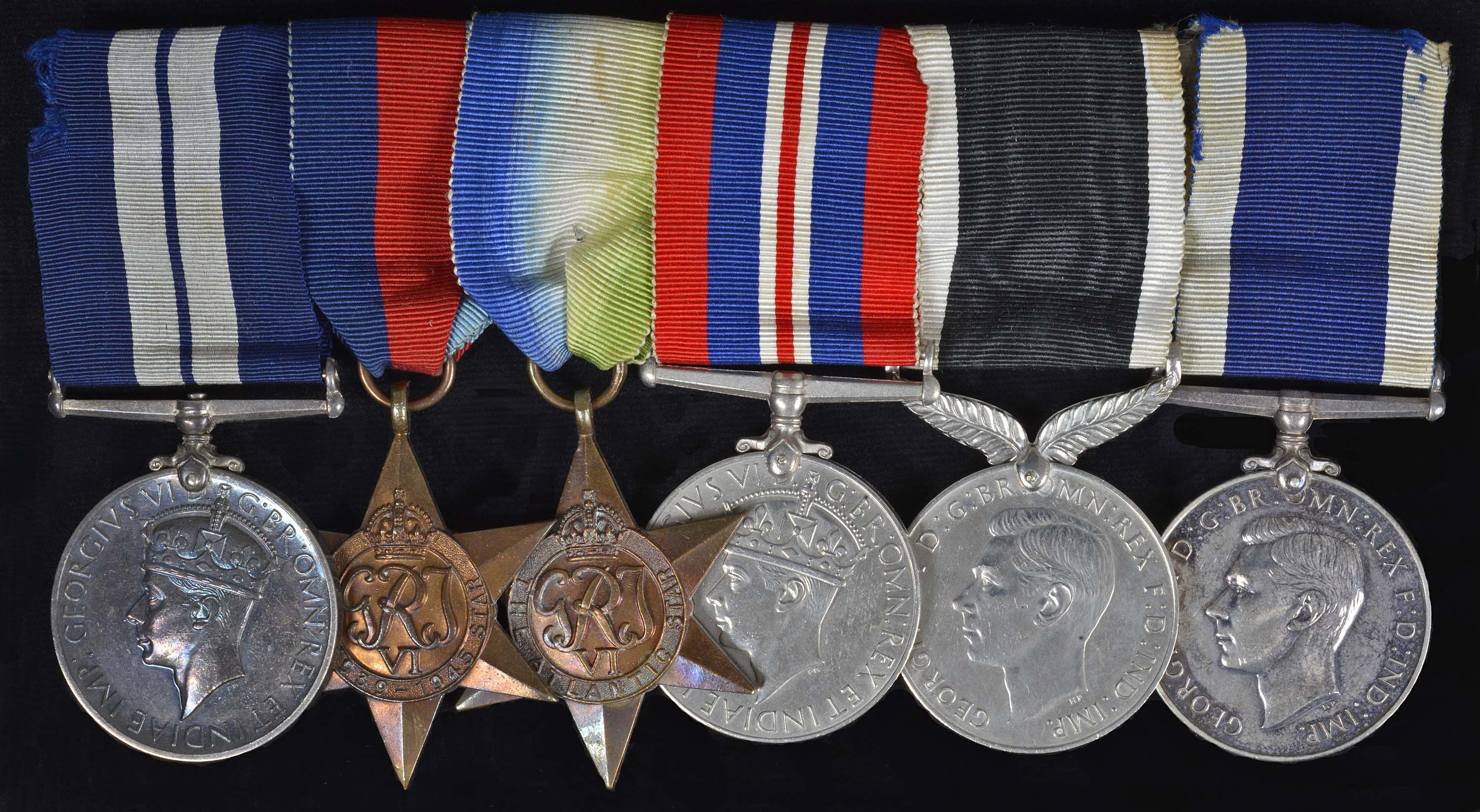
Awarded medal(s)
Medal Description [Left to Right]:
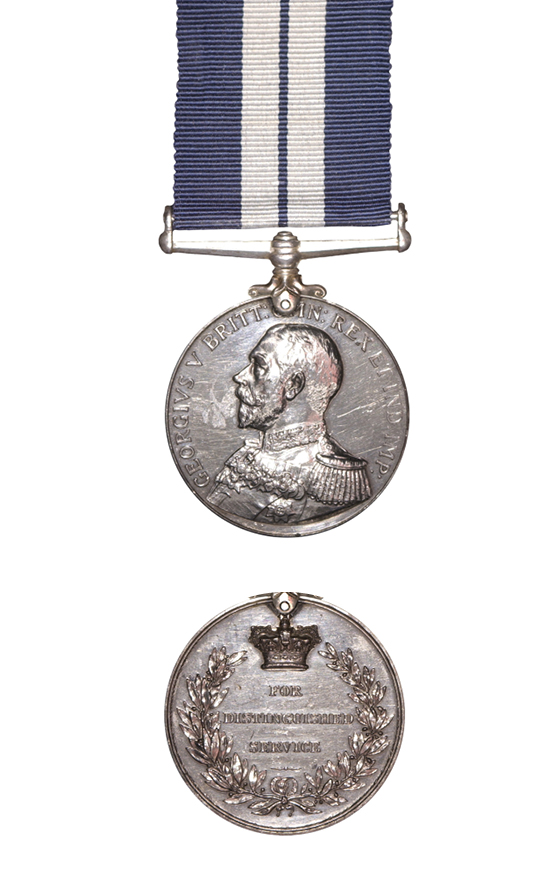
The Distinguished Service Medal (DSM)

The Distinguished Service Medal (DSM) was instituted in 1914 for senior and junior ratings of the Navy. It was awarded for acts of bravery in the face of the enemy for which the award of the Conspicuous Gallantry Medal was not considered appropriate. It was replaced in 1999 by the New Zealand Gallantry Decoration. The ribbon has three equal stripes: dark blue, white and dark blue with a thin dark blue stripe down the centre of the white stripe.
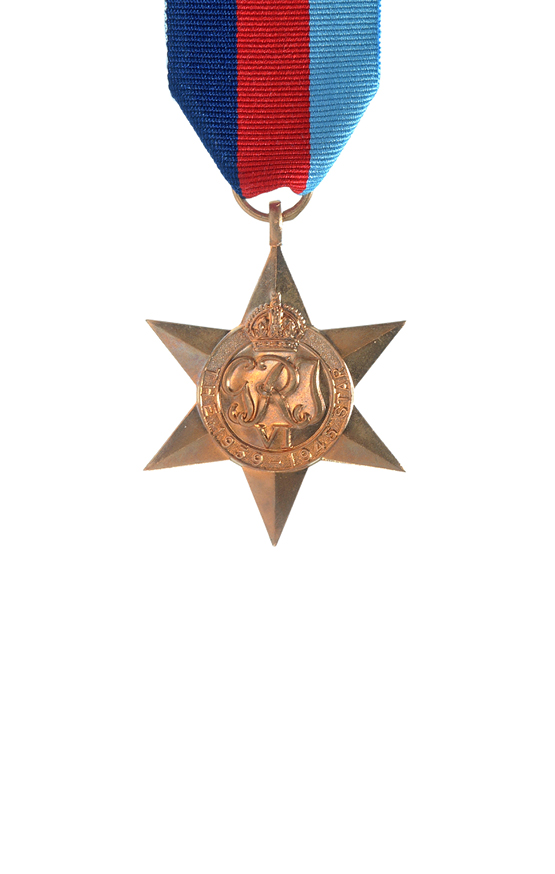
The 1939-1945 Star

The 1939-45 Star is the first in a series of eight campaign stars instituted in 1945 to recognise service in World War Two. The ribbon has three equal vertical stripes of dark blue, red and light blue. The dark blue stripe symbolises the service of the Navy and the Merchant Navy, the red stripe symbolises the service of the Army, and the light blue stripe symbolises the service of the Air Force. The equal width bands represent the equal contributions of the three service arms towards victory. The ribbon was devised by King George VI. Two clasps could be awarded with this medal: ‘Battle of Britain’ and ‘Bomber Command’. Only aircrew would qualify for these clasps although a small number of Fleet Air Arm naval pilots flew for the air force and would be eligible for the ‘Battle of Britain’ clasp.
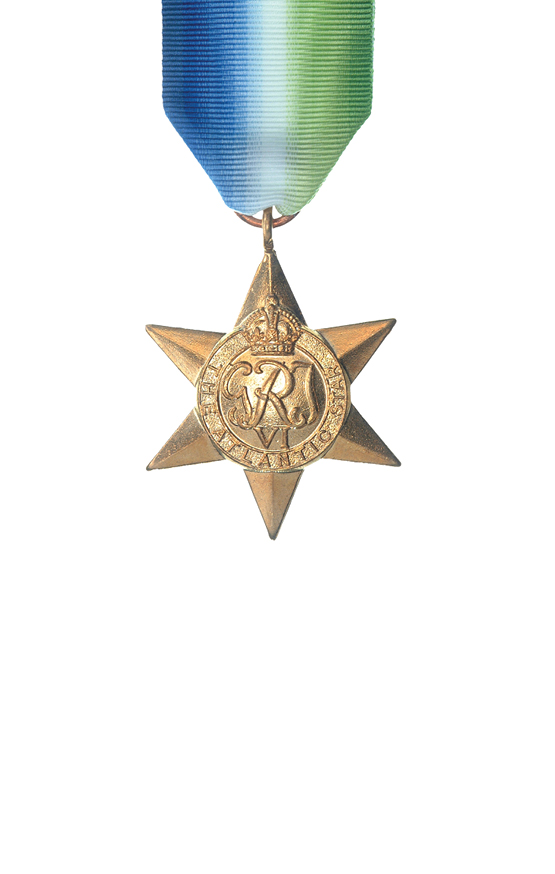
The Atlantic Star

The Atlantic Star was awarded for service during the Second World War. It was instituted to commemorate the Battle of the Atlantic the longest continuous military campaign in the Second World War running from 3 September, 1939 – 8 May, 1945. Six months naval service or four months air service in the Atlantic, United Kingdom (‘home’) waters or North Russian waters was normally required. The ribbon is watered silk coloured blue, white and green, symbolising service in the oceans. Two clasps could be awarded with this medal: ‘France and Germany’ and ‘Air Crew Europe’. Personnel issued the Atlantic Star who then qualified for either the France and Germany and the Air Crew Europe Stars were awarded a clasp in respect of the second only (as only one clasp could be worn on the star).
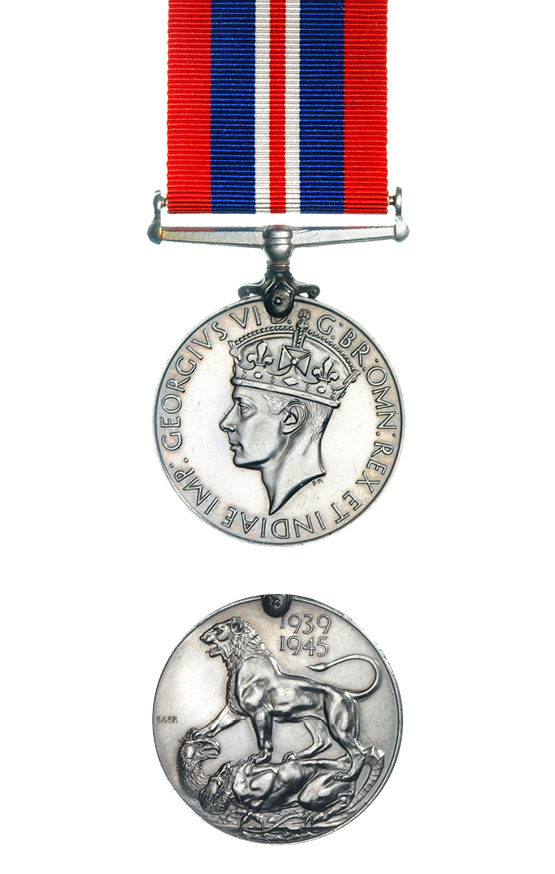
The War Medal 1939-1945

The War Medal 1939-45 was awarded across the British Commonwealth to all full-time members of the Armed Forces in the Second World War for 28 days service between 3 September 1939 and 2 September 1945, irrespective of where they were serving. The ribbon is the red, white, and blue of the (British) Union Flag. There is a narrow central red stripe with a narrow white stripe on either side. There are broad red stripes at either edge, the two intervening stripes being blue.
A bronze oak leaf on the medal ribbon denotes that the recipient was Mentioned in Despatches. To be Mentioned in Despatches a member of the armed forces had their name mentioned in an official report, written by a superior officer, and sent to a higher command. The report would describe the individual’s gallant or meritorious action in the face of the enemy.

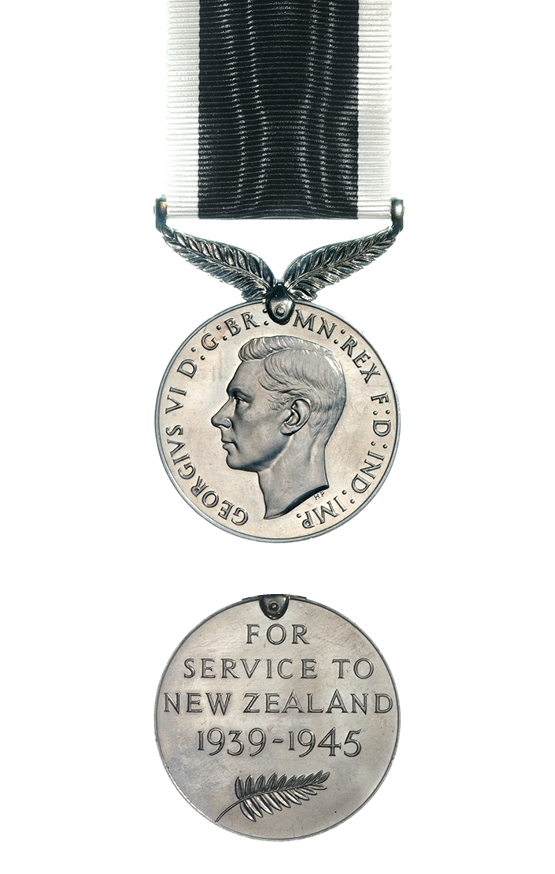
The New Zealand War Service Medal

The New Zealand War Service Medal was awarded for 28 days’ full time service or six months’ part time service in the Second World War in any of the New Zealand Armed Forces including the Reserves, Naval Auxiliary Patrol Service, or Home Guard, between 3 September 1939 and 2 September 1945.
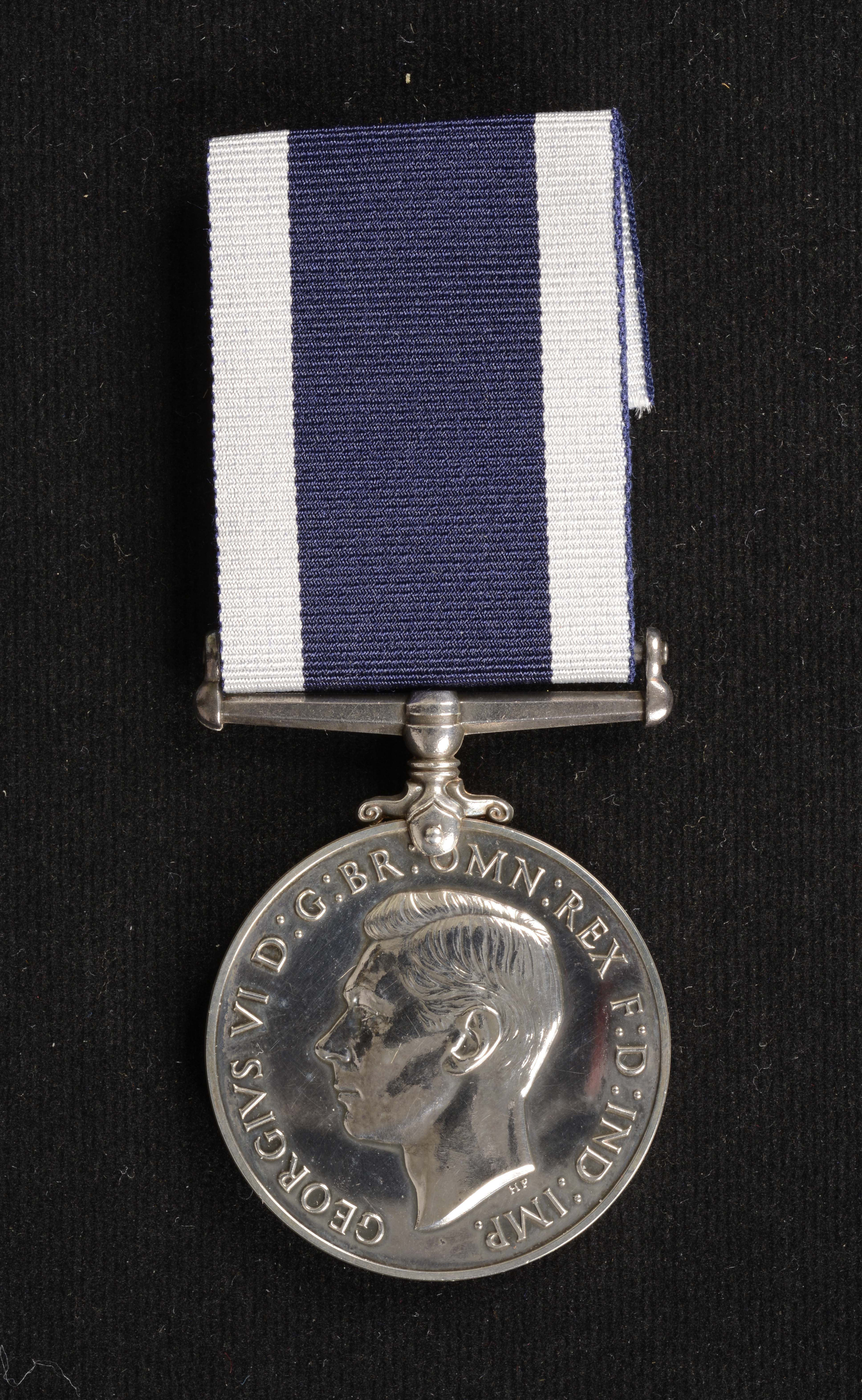
Royal Naval Long Service and Good Conduct Medal

Awarded to ratings who have served a minimum of 15 years in the Royal Navy (previously 21 or 10 years), the first version of this medal was instituted in 1831 and it is still issued to Royal Navy personnel today. It features the reigning monarch’s head on the obverse and HMS Victory on the reverse with the recipient’s details engraved or impressed on the edge of the medal. This medal was also issued to eligible personnel serving in the New Zealand Division of the Royal Navy from 1921-1941 and then to Royal New Zealand Navy personnel from 1941-1981. In 1985 a New Zealand Royal Navy Long Service and Good Conduct Medal was introduced bearing the exact same design.