Ref.no. 2006.749.22.1 Image may be subject to copyright restrictions.
Rank:
Engine Room Artificer 1st Class
Birth date:
18.01.1926
Birth Place:
Temuka, New Zealand
Service Number:
NZ11496
Date Joined:
12.05.1947
Date Discharged:
14.05.1967
Death date:
24.06.1992
Place of death:
Auckland, New Zealand

Display No. 4G

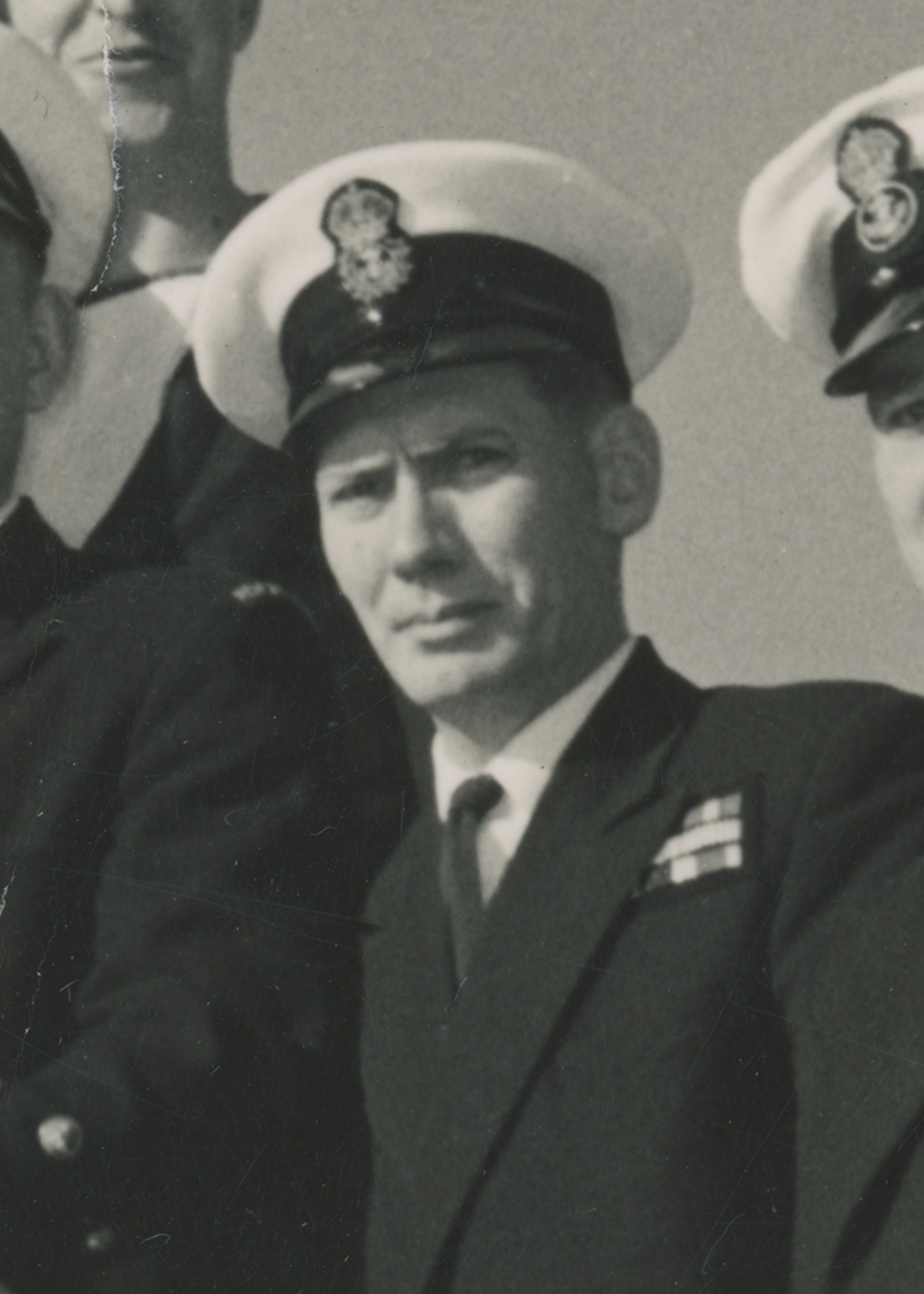
HOARE, Winton Cecil Alexander

Winton Hoare trained as an apprentice mechanic (fitter and turner) with the Royal New Zealand Air Force towards the end of the Second World War. Hoare then joined the Royal New Zealand Navy (RNZN) in May 1947, as an Acting Engine Room Artificer 4th Class. He trained in HMNZS Tamaki before serving at sea on board numerous RNZN vessels including in HMNZ Ships Bellona, Black Prince, Pukaki, Rotoiti, and Kiwi.

At the outbreak of the Korean War, Hoare was posted to HMNZS Rotoiti which was sent to Korea and was employed in shore bombardments, patrolling, and landing raiding parties. Hoare returned to Korea in the late 1950s again in Rotoiti, which was part of the Far East Strategic Reserve, protecting Commonwealth interests in South East Asia. In the 1950s and 1960s, Hoare served in HMNZ Ships Endeavour I and Endeavour II, travelling to Antarctica on several occasions on board these vessels.

He was awarded a Long Service and Good Conduct medal and was discharged in 1967 after completing twenty years of service.

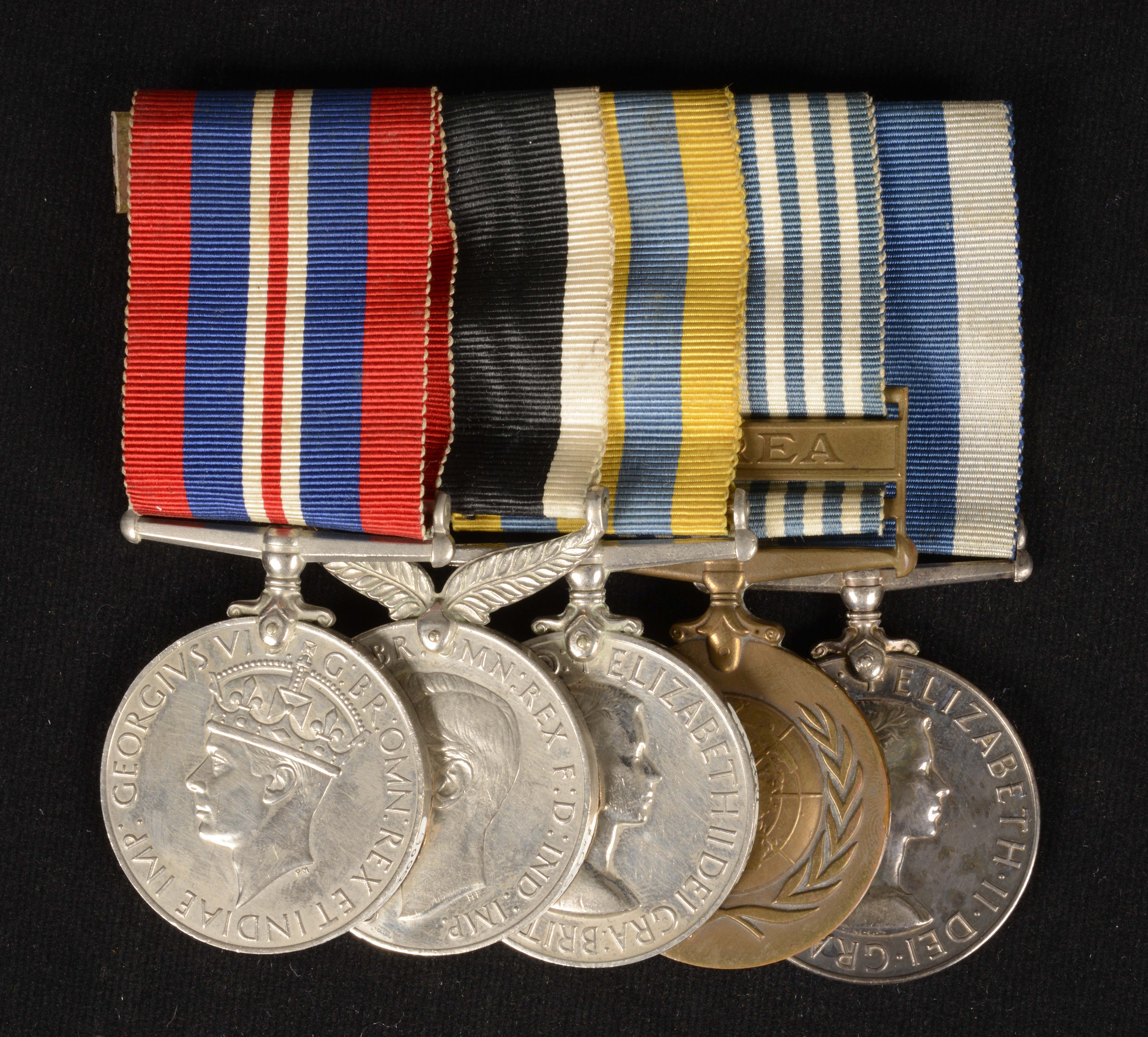
The War Medal 1939-1945, The New Zealand War Service Medal, The Korea Medal, United Nations Medal Korea, Royal Naval Long Service and Good Conduct Medal

Awarded medal(s)

Medal Description [Left to Right]:

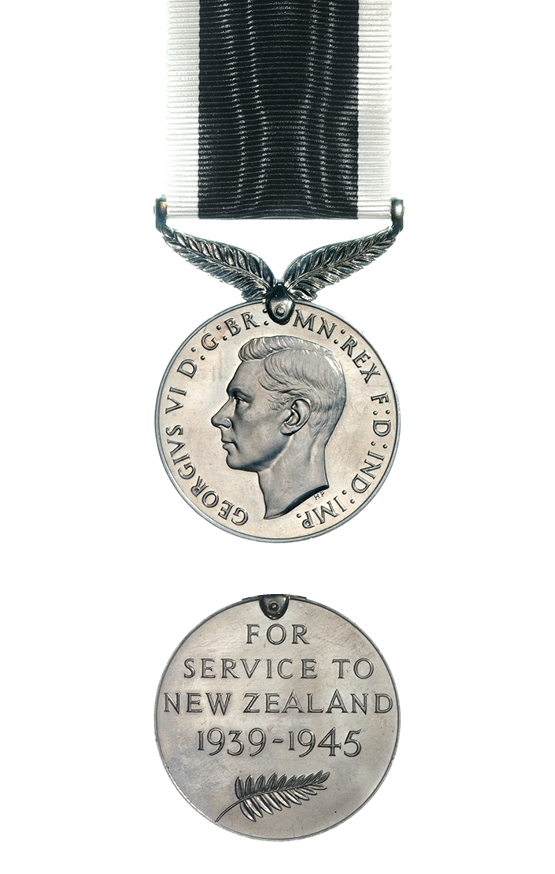
The War Medal 1939-1945

The War Medal 1939-45 was awarded across the British Commonwealth to all full-time members of the Armed Forces in the Second World War for 28 days service between 3 September 1939 and 2 September 1945, irrespective of where they were serving. The ribbon is the red, white, and blue of the (British) Union Flag. There is a narrow central red stripe with a narrow white stripe on either side. There are broad red stripes at either edge, the two intervening stripes being blue.

A bronze oak leaf on the medal ribbon denotes that the recipient was Mentioned in Despatches. To be Mentioned in Despatches a member of the armed forces had their name mentioned in an official report, written by a superior officer, and sent to a higher command. The report would describe the individual’s gallant or meritorious action in the face of the enemy.

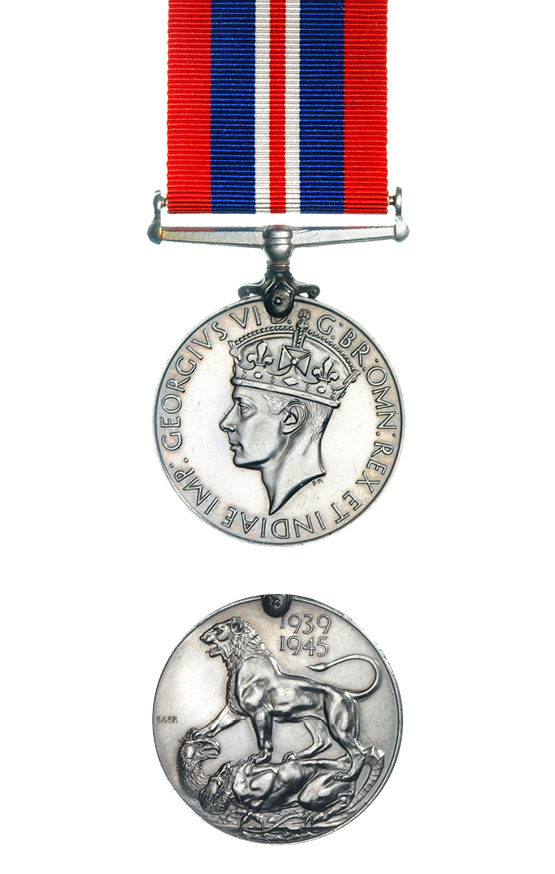
The New Zealand War Service Medal

The New Zealand War Service Medal was awarded for 28 days’ full time service or six months’ part time service in the Second World War in any of the New Zealand Armed Forces including the Reserves, Naval Auxiliary Patrol Service, or Home Guard, between 3 September 1939 and 2 September 1945.

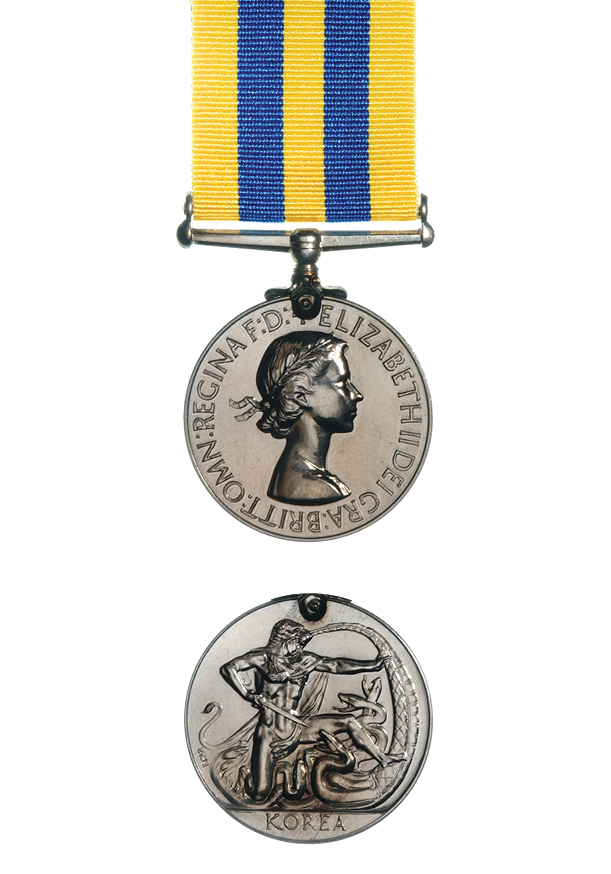
The Korea Medal

This medal was instituted in 1951, to recognise the service of Commonwealth troops in the Korean War between 2 July 1950 and 27 July 1953. It is sometimes referred to as the Queen’s Korea Medal to differentiate it from the United Nations Korea Medal. For naval forces, qualification is 28 days or more afloat in the operational area or at least one day of shore duty. The medal’s reverse features Hercules wrestling the Hydra – a symbolic representation of communism. The ribbon has alternating yellow and blue stripes. Blue represents the United Nations.

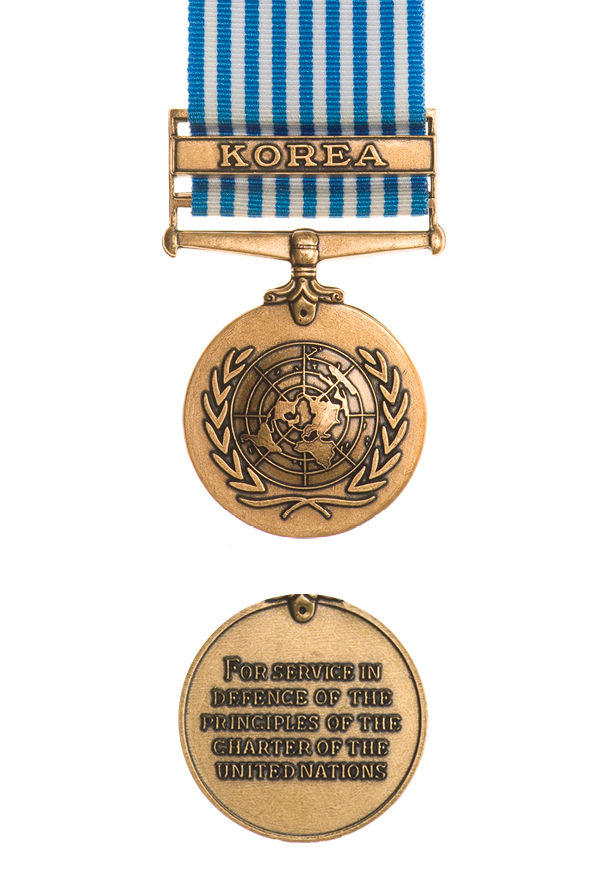
United Nations Medal Korea

The United Nations Medal (Korea) was awarded for service during the Korean War and the year following the armistice (July 1950 to July 1954). It was the first international award created by the United Nations and features the UN emblem of a projection map of the world between two olive branches. The medal recognises the service of all military troops participating as part of the UN forces in Korea and was manufactured in the language of each country. It was also awarded to a limited range of civilians whose organisations were certified by the United Nations Commander-in-Chief as having directly supported military operations in Korea between 1950 and 1954.

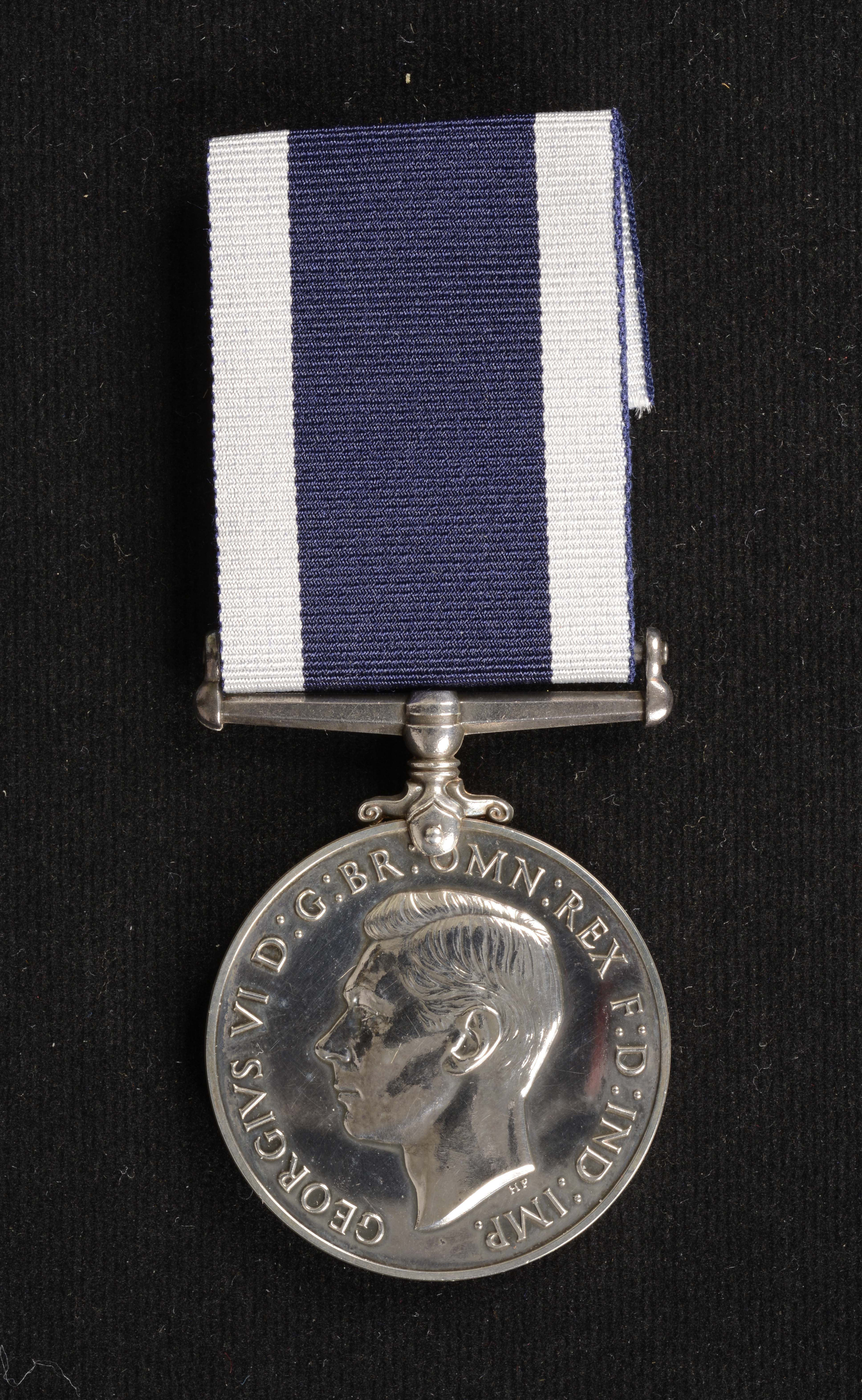
Royal Naval Long Service and Good Conduct Medal

Awarded to ratings who have served a minimum of 15 years in the Royal Navy (previously 21 or 10 years), the first version of this medal was instituted in 1831 and it is still issued to Royal Navy personnel today. It features the reigning monarch’s head on the obverse and HMS Victory on the reverse with the recipient’s details engraved or impressed on the edge of the medal. This medal was also issued to eligible personnel serving in the New Zealand Division of the Royal Navy from 1921-1941 and then to Royal New Zealand Navy personnel from 1941-1981. In 1985 a New Zealand Royal Navy Long Service and Good Conduct Medal was introduced bearing the exact same design.