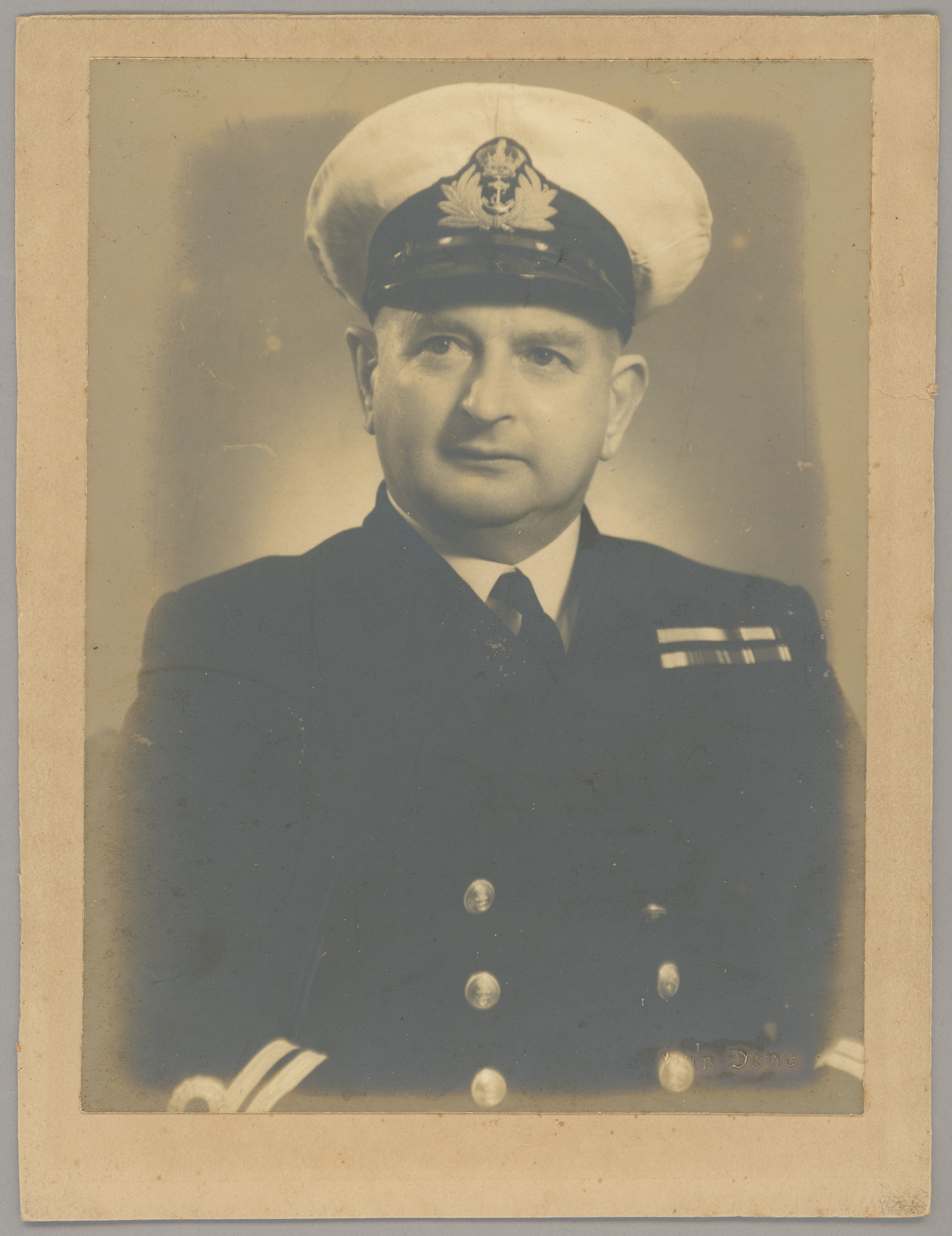
Ref.no. 2006.748.10.136 Image may be subject to copyright restrictions.
Rank:
Lieutenant
Post nominals:
MBE
Birth date:
15.08.1890
Birth Place:
Woodville, New Zealand
Service Number:
ANF679
Date Joined:
1906
Death date:
19.10.1974

Robert Greening joined the Australasian Squadron of the Royal Navy in 1906 as a Boy 2nd Class. He served on the armoured cruiser HMS Powerful before going to the United Kingdom in 1909 as an Able Seaman to undertake specialist torpedo training in HMS Excellent. Afterwards he was posted to serve in several battleships, culminating in 1912 with his posting to the battlecruiser HMS New Zealand in which he visited the ship’s namesake country. He later transferred to the cruiser HMS Pyramus of the Australian Squadron, taking part in operations such as escorting the New Zealand occupation force to Samoa and the Expeditionary Force to Egypt, as well as blockading actions against the German cruiser Königsberg off East Africa. He spent most of the First World War serving in British submarines.
He then served in the New Zealand Division of the Royal Navy for three years on the cruiser HMS Chatham and the depot ship HMS Philomel. He then reverted back to the Royal Navy, serving again in submarines until he transferred permanently to the New Zealand Division in 1935. He then served at the shore establishment HMS Philomel until retiring in 1940, early in the Second World War. However, he almost immediately rejoined the Navy being involved in the equipping of defensively armed merchant ships and the armed merchant cruiser HMS Monowai. Later he was involved in the setting up of the Navy’s mine warfare organisation, laying minefields and disposal of any washed ashore. In 1942 he was appointed in charge of the Defensively Equipped Merchant Ship Organisation. In 1941 he was created a Member of the Most Excellent Order of the British Empire by the New Zealand Government.
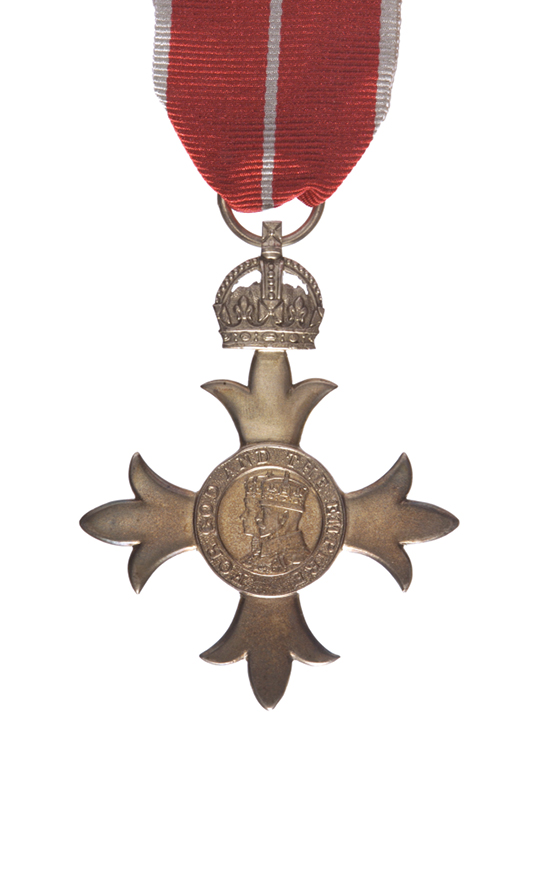
Established by King George V in 1917 for services to the British Empire. The Order has five classes: Knight and Dame Grand Cross (GBE), Knight Commander and Dame Commander (KBE / DBE), Commander (CBE), Officer (OBE) and Member (MBE). The MBE badge is in frosted silver. In December 1918, the Order was split into two divisions: a Civil Division for civilian recipients; and a Military Division for awards to commissioned officers and warrant officers for distinguished service in action. The insignia of the Civil and Military Divisions is distinguished only by the ribbon, the military award having a narrow central stripe. Prior to the introduction of the New Zealand Order of Merit in 1996, the Order of the British Empire was the most common honour awarded to New Zealand military personnel.
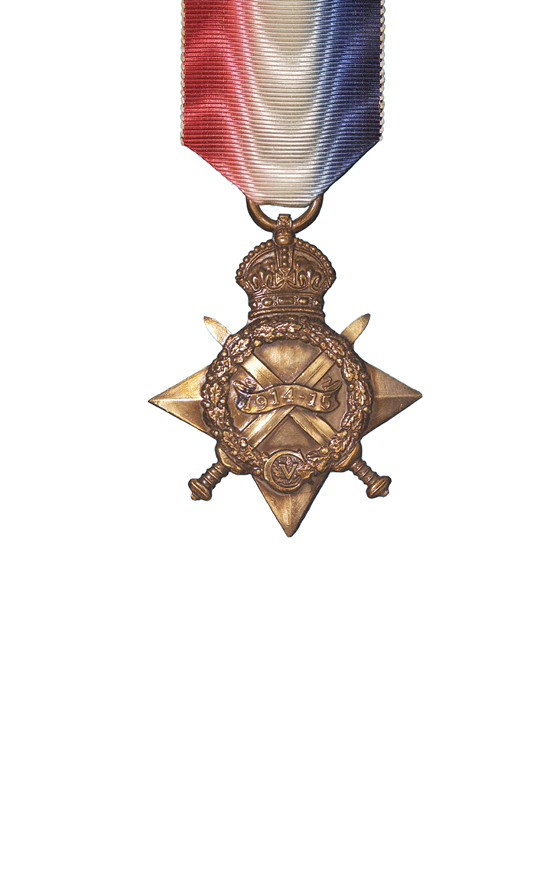
The 1914-15 Star was awarded to servicemen and servicewomen who served in the First World War between 5 August 1914 and 31 December 1915 in any “theatre of war”, provided they had not qualified for the 1914 Star. This included service at Gallipoli between 25 April 1915 and 31 December 1915, service in Egypt between 5 November 1914 and 31 December 1915, and service during the capture of German Samoa on 29 August 1914. Those eligible for the medal must have “served on the establishment of a unit in a theatre of war” during the relevant dates of operations in that area. The ribbon’s red, white and blue shaded and watered bands represent the flag of the United Kingdom.
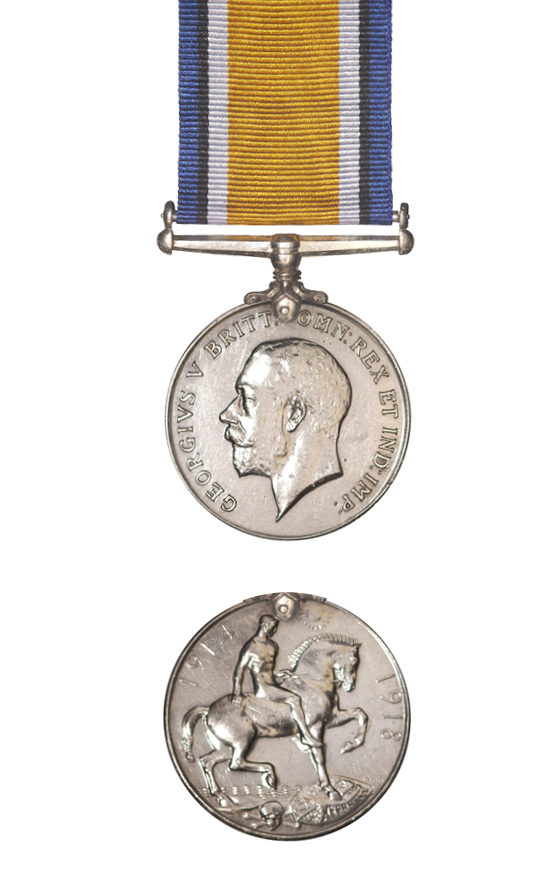
The British War Medal was instituted in 1919 to recognise the successful conclusion of the First World War (1914-1918). Its coverage was later extended to recognise service until 1920, recognising mine clearing operations at sea, and participation in operations in North and South Russia, the eastern Baltic, Siberia, the Black Sea and the Caspian Sea.
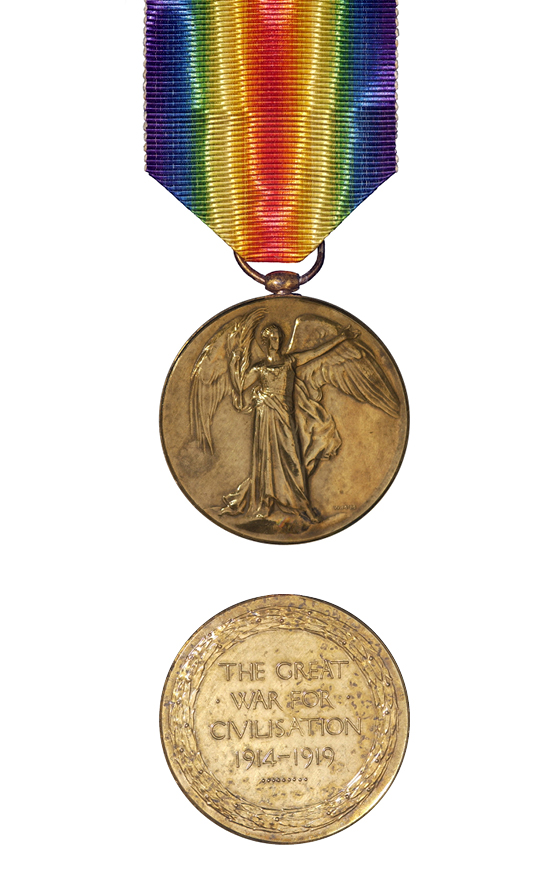
The Victory Medal was awarded in the First World War to all those who had already qualified for the 1914 Star or the 1914-15 Star, and to most persons who had already qualified for the British War Medal. The Victory Medal was awarded to all New Zealand troops serving overseas, except for those who arrived in Samoa after 30 August 1914 and those serving in Great Britain only. It has a unique double rainbow ribbon.
A bronze spray of oak leaves on the medal ribbon denotes that the recipient was Mentioned in Despatches during the period that the medal recognises. To be Mentioned in Despatches a member of the armed forces has had their name mentioned in an official report, written by a superior officer, and sent to a higher command. The report would describe the individual’s gallant or meritorious action in the face of the enemy.
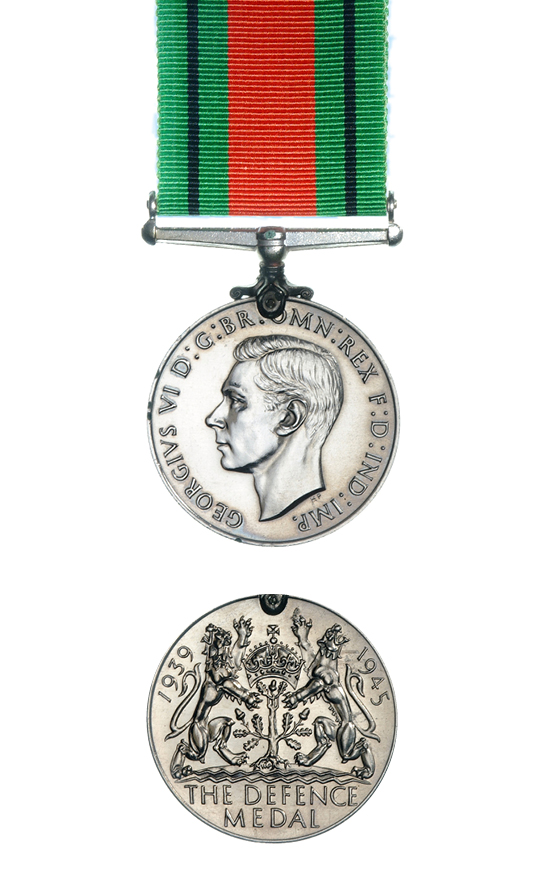
The Defence Medal was awarded to British and Commonwealth forces who served during the Second World War. It was awarded to New Zealand military personnel who served overseas in a non-operational area such as Great Britain, Palestine or Fiji. The ribbon’s flame-coloured orange centre band and green edge bands symbolise enemy attacks on Britain’s green and pleasant land. The narrow black stripes represent the black-outs against enemy air-attacks.
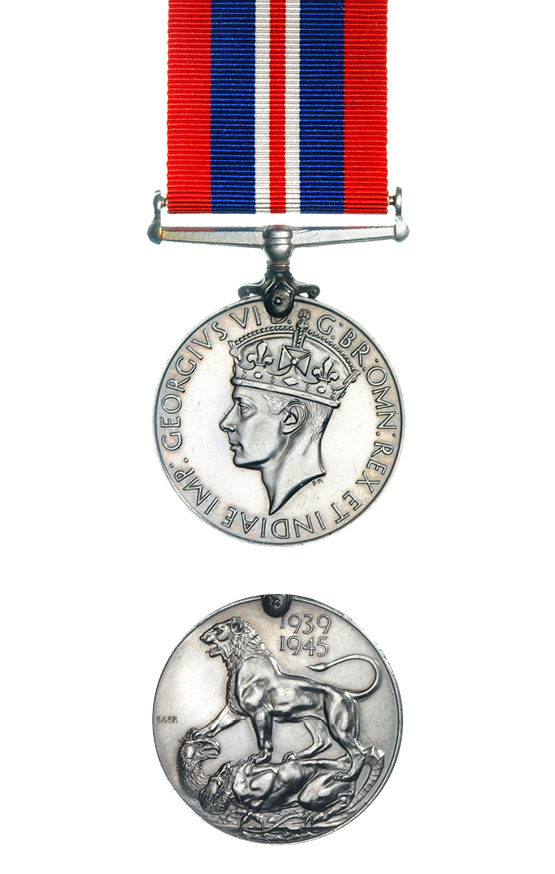
The War Medal 1939-45 was awarded across the British Commonwealth to all full-time members of the Armed Forces in the Second World War for 28 days service between 3 September 1939 and 2 September 1945, irrespective of where they were serving. The ribbon is the red, white, and blue of the (British) Union Flag. There is a narrow central red stripe with a narrow white stripe on either side. There are broad red stripes at either edge, the two intervening stripes being blue.
A bronze oak leaf on the medal ribbon denotes that the recipient was Mentioned in Despatches. To be Mentioned in Despatches a member of the armed forces had their name mentioned in an official report, written by a superior officer, and sent to a higher command. The report would describe the individual’s gallant or meritorious action in the face of the enemy.
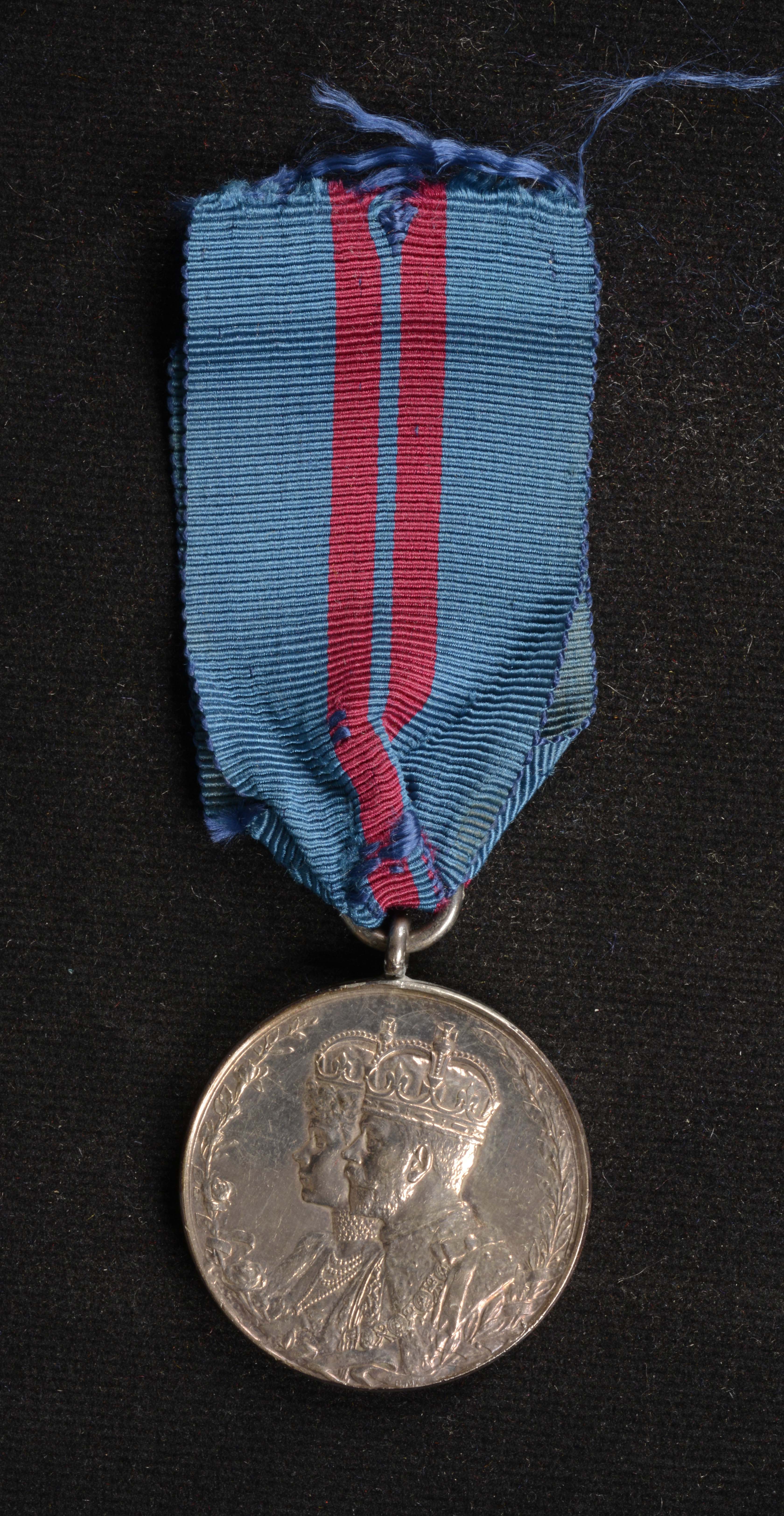
A commemorative medal instituted in 1911 to celebrate the coronation of King George V on 22 June, 1911.
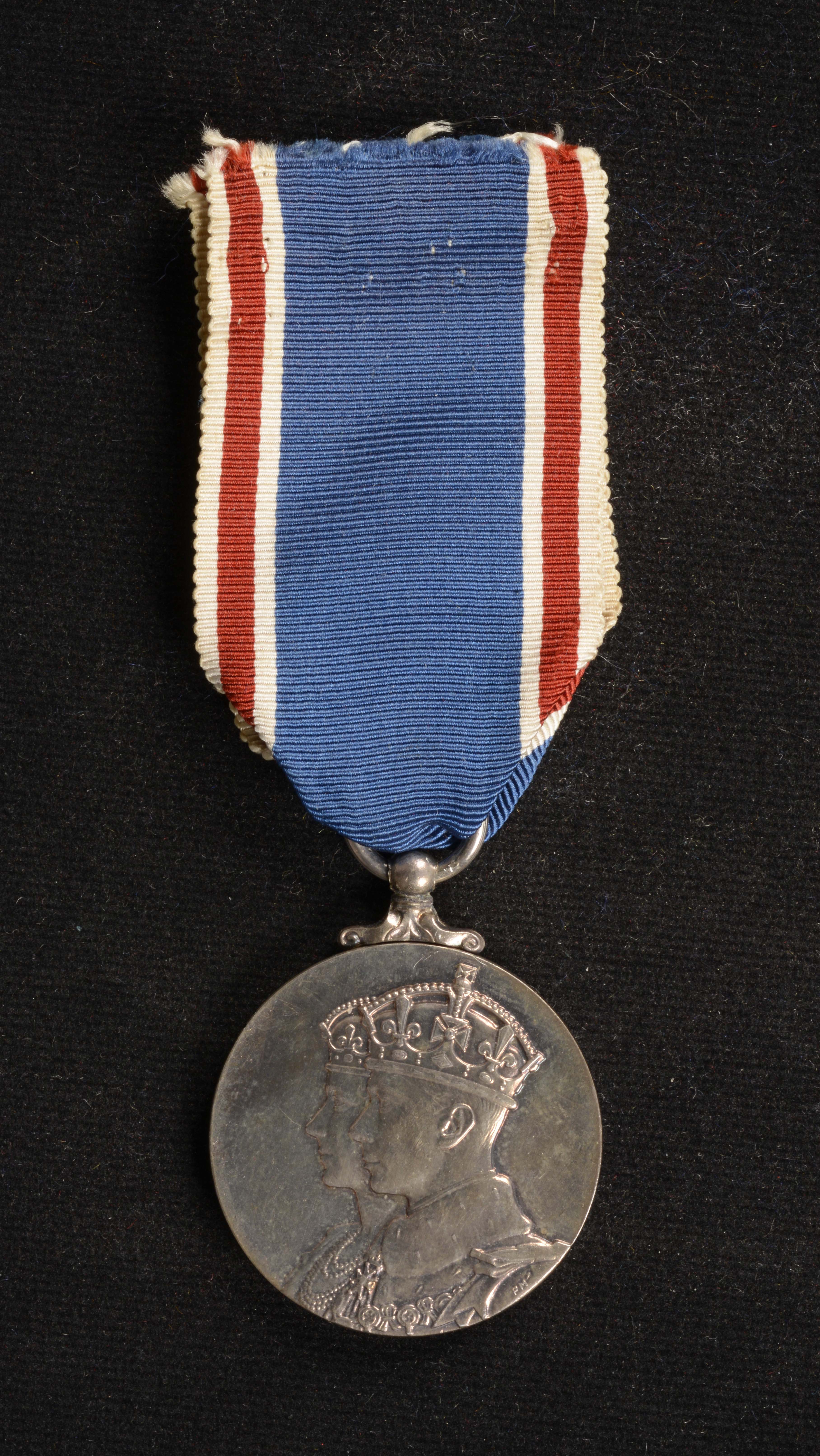
This medal was issued to celebrate the Coronation of King George VI in 1937. This silver medal was awarded in large numbers to citizens of the British Commonwealth including New Zealanders, both military and civilian.
