Display No. 5C
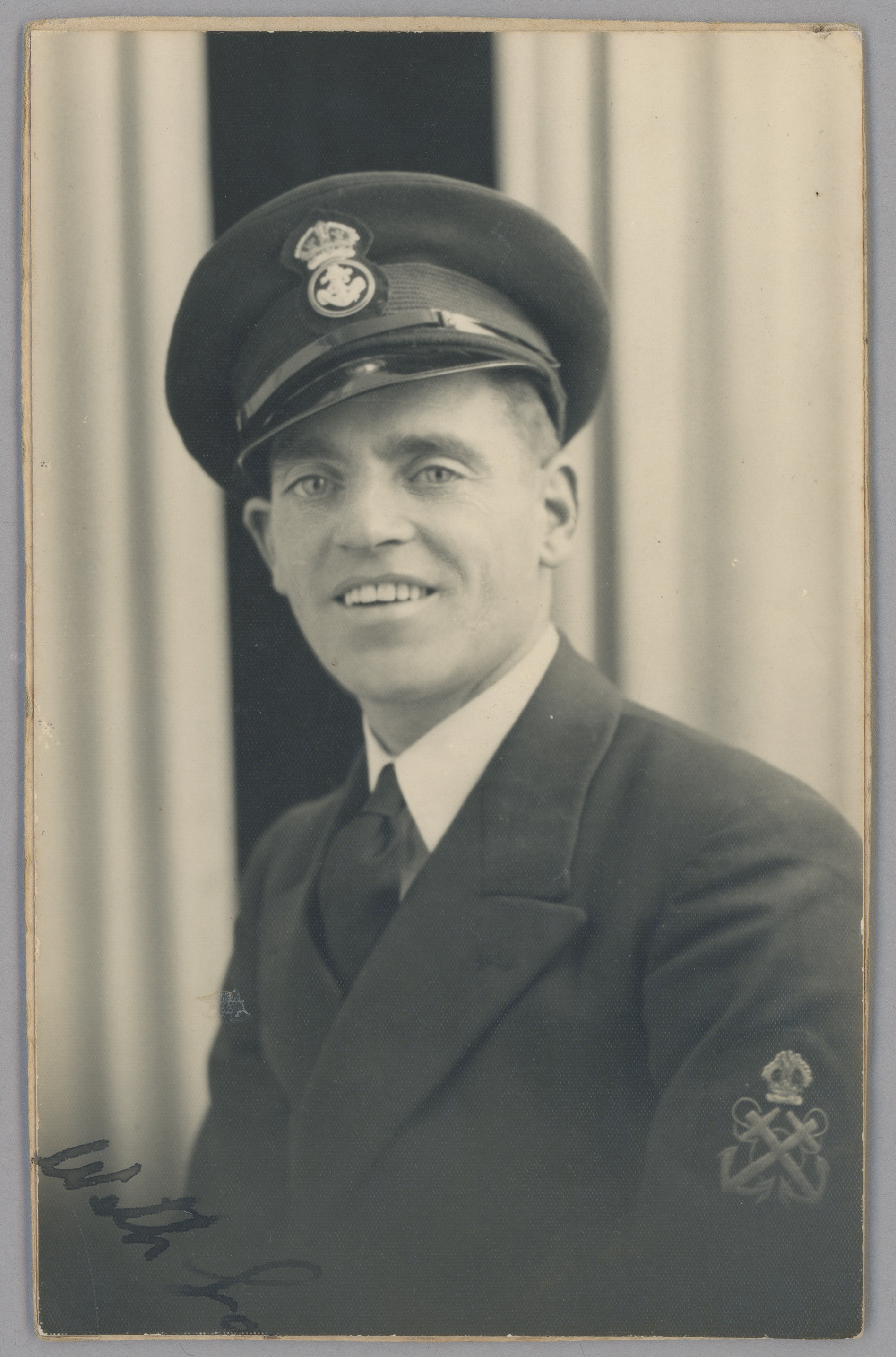
GIBSON, William Gemmell
William Gibson joined the Royal Navy as an Acting Engine Room Artificer 4th Class in December 1940. He trained in the shore establishment HMS Pembroke. During the Second World War, Gibson spent most of his time serving in the minesweeper HMS Brave in the Atlantic and Mediterranean. After the war he was released from the Navy and entered the Royal Fleet Reserve (RFR) until being freely discharged in May 1952. Immediately upon leaving the RFR, Gibson joined the Royal New Zealand Navy (RNZN). He spent his first year with the RNZN serving ashore in HMNZ Ships Philomel and Tamaki before being posted to sea in HMNZS Black Prince. At this time Black Prince was providing royal escort duties to HMS Gothic and in 1953 the ship gave aid and assistance to the people affected by the 1953 Ionian earthquake in Greece. In the late 1950s, Gibson was posted to HMNZS Pukaki which was serving on Operation Grapple. He also served in HMNZ Ships Bellona, Lachlan, Stawell, Pukaki, and Takapu. Gibson retired from service in October 1963 as an Engine Room Artificer 1st Class.
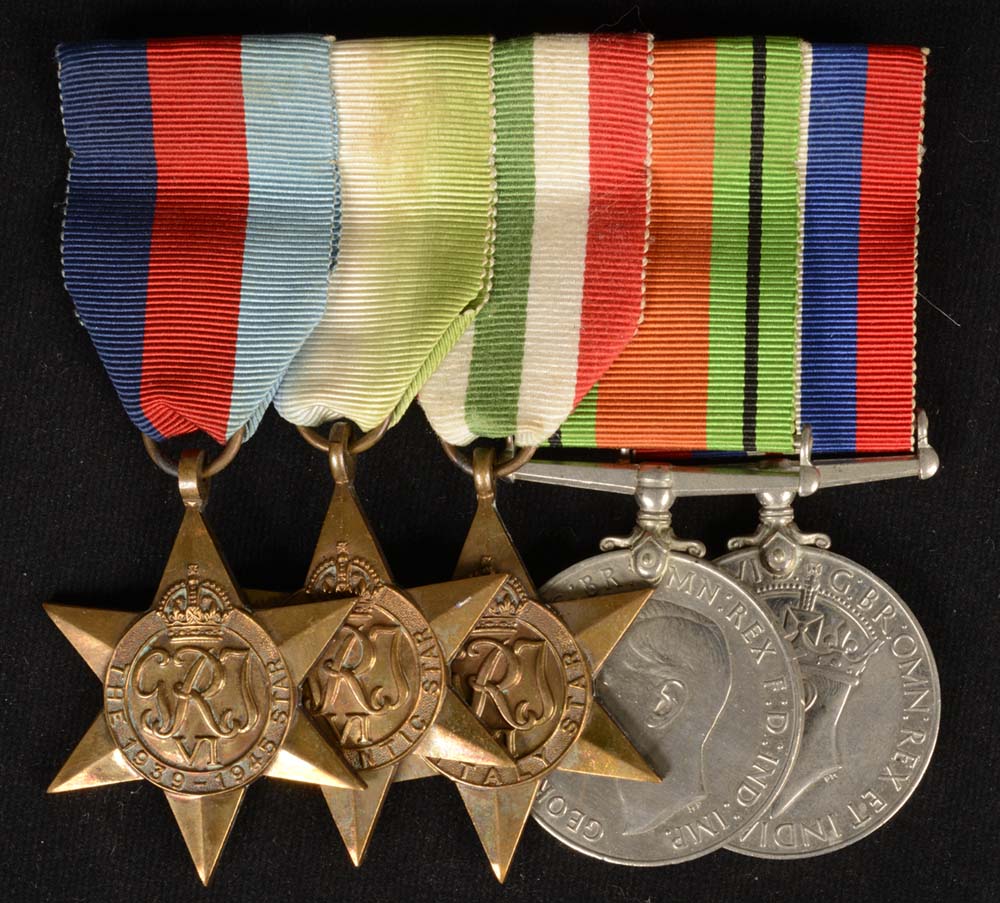
Awarded medal(s)
Medal Description [Left to Right]:
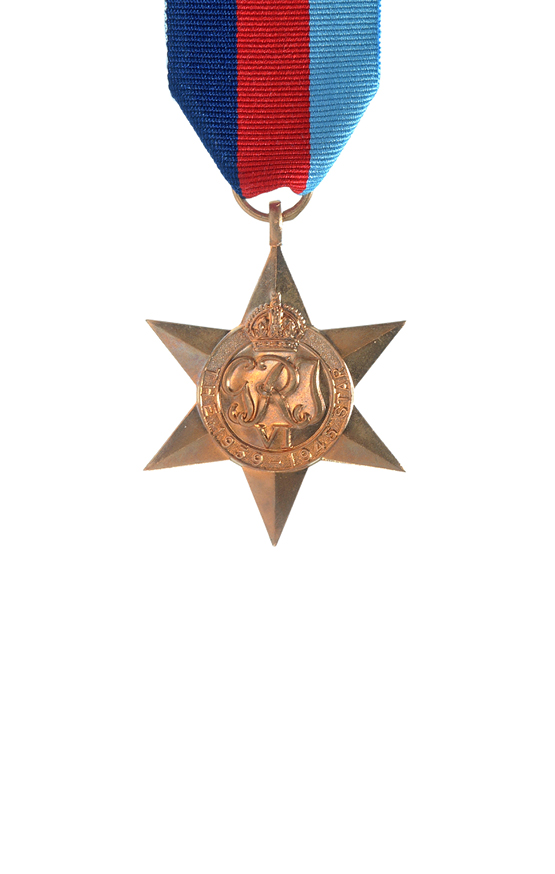
The 1939-1945 Star

The 1939-45 Star is the first in a series of eight campaign stars instituted in 1945 to recognise service in World War Two. The ribbon has three equal vertical stripes of dark blue, red and light blue. The dark blue stripe symbolises the service of the Navy and the Merchant Navy, the red stripe symbolises the service of the Army, and the light blue stripe symbolises the service of the Air Force. The equal width bands represent the equal contributions of the three service arms towards victory. The ribbon was devised by King George VI. Two clasps could be awarded with this medal: ‘Battle of Britain’ and ‘Bomber Command’. Only aircrew would qualify for these clasps although a small number of Fleet Air Arm naval pilots flew for the air force and would be eligible for the ‘Battle of Britain’ clasp.
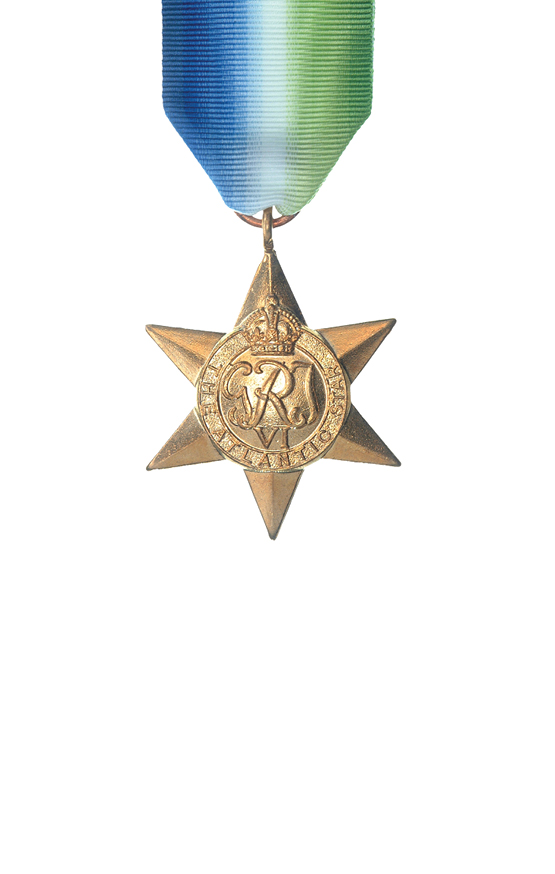
The Atlantic Star

The Atlantic Star was awarded for service during the Second World War. It was instituted to commemorate the Battle of the Atlantic the longest continuous military campaign in the Second World War running from 3 September, 1939 – 8 May, 1945. Six months naval service or four months air service in the Atlantic, United Kingdom (‘home’) waters or North Russian waters was normally required. The ribbon is watered silk coloured blue, white and green, symbolising service in the oceans. Two clasps could be awarded with this medal: ‘France and Germany’ and ‘Air Crew Europe’. Personnel issued the Atlantic Star who then qualified for either the France and Germany and the Air Crew Europe Stars were awarded a clasp in respect of the second only (as only one clasp could be worn on the star).
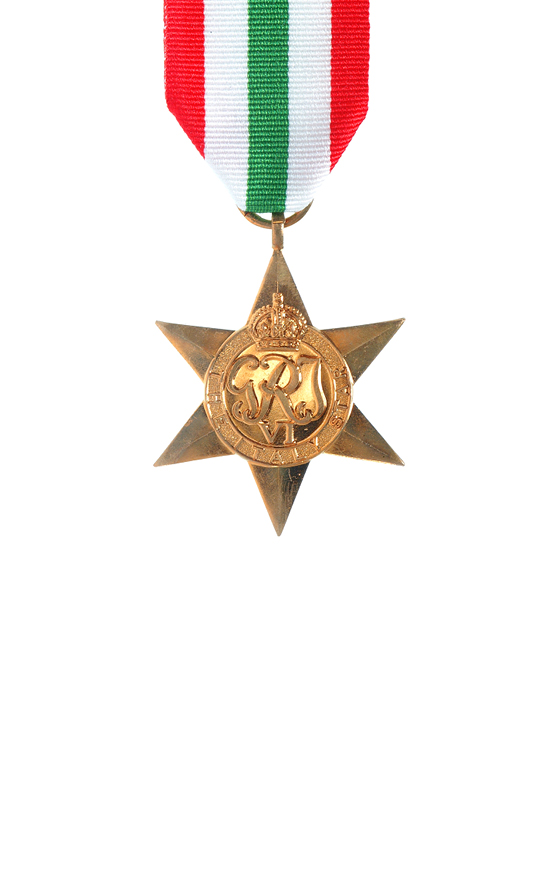
The Italy Star

The Italy Star was awarded for operational service in Italy and adjacent countries in the Second World War between 11 June 1943 and 8 May 1945. No clasps were awarded. The ribbon uses the national colours of Italy; red, white and green as seen on the flag.
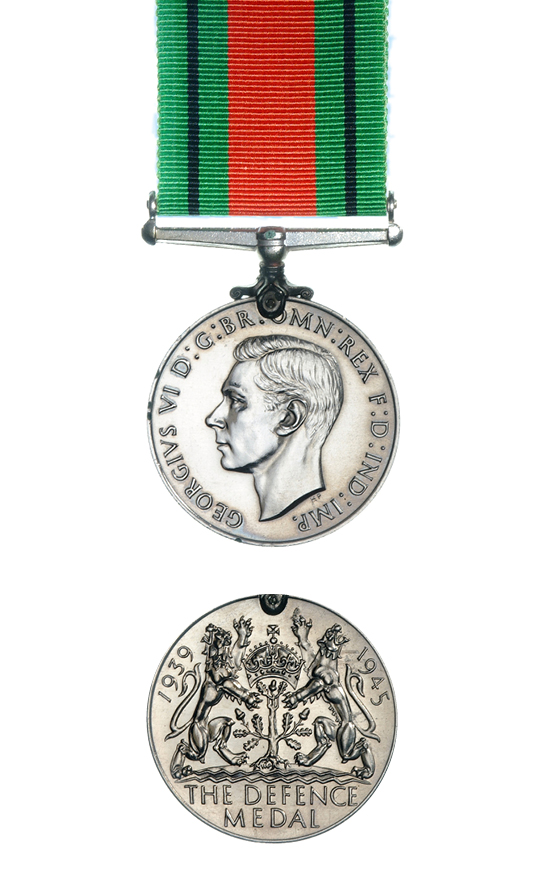
The Defence Medal

The Defence Medal was awarded to British and Commonwealth forces who served during the Second World War. It was awarded to New Zealand military personnel who served overseas in a non-operational area such as Great Britain, Palestine or Fiji. The ribbon’s flame-coloured orange centre band and green edge bands symbolise enemy attacks on Britain’s green and pleasant land. The narrow black stripes represent the black-outs against enemy air-attacks.
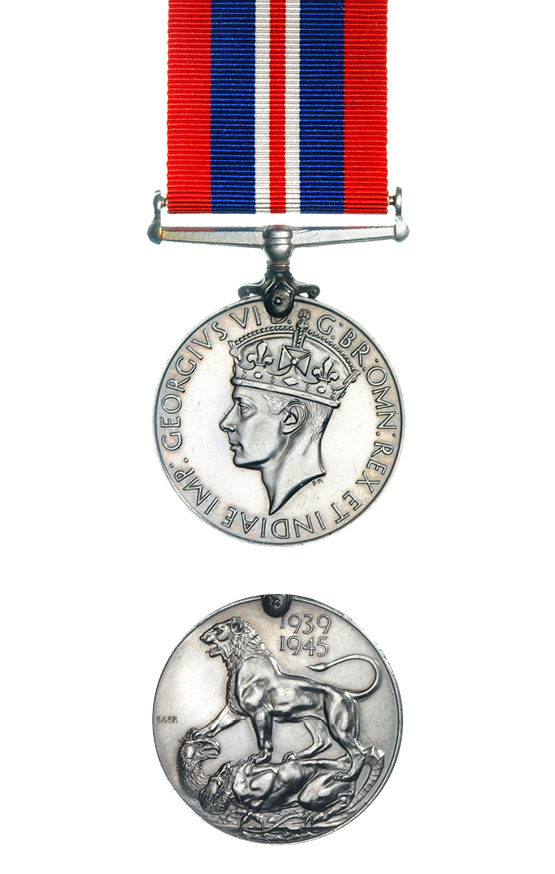
The War Medal 1939-1945

The War Medal 1939-45 was awarded across the British Commonwealth to all full-time members of the Armed Forces in the Second World War for 28 days service between 3 September 1939 and 2 September 1945, irrespective of where they were serving. The ribbon is the red, white, and blue of the (British) Union Flag. There is a narrow central red stripe with a narrow white stripe on either side. There are broad red stripes at either edge, the two intervening stripes being blue.
A bronze oak leaf on the medal ribbon denotes that the recipient was Mentioned in Despatches. To be Mentioned in Despatches a member of the armed forces had their name mentioned in an official report, written by a superior officer, and sent to a higher command. The report would describe the individual’s gallant or meritorious action in the face of the enemy.