Rank:
Chief Petty Officer
Post nominals:
DSM
Birth date:
29.10.1876
Birth Place:
Monkstown, Cork, Ireland
Service Number:
171331
Date Joined:
13.01.1893
Date Discharged:
10.03.1919

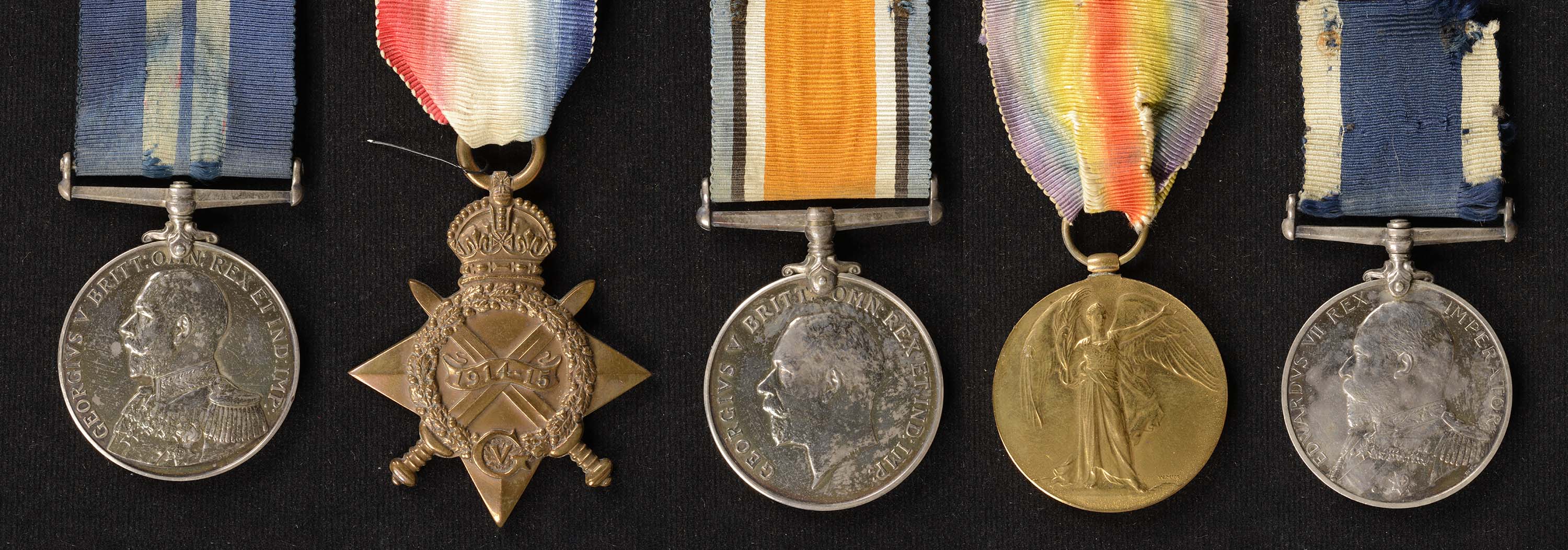
Edward ‘Eddie’ Fitzgerald joined the Royal Navy in 1893 as a Boy Seaman. He trained in HM Ships Lion and Boscawen. Fitzgerald’s first posting was in HMS Aurora, an armoured cruiser based in Ireland. In March 1895, having reached the rate of Able Seaman, he was sent to the Mediterranean and served in HMS Dreadnought until the end of that year. In March 1898, Fitzgerald was posted in HMS Magdala based in Bombay Harbour, India. Fitzgerald remained serving there until early 1900, having reached the rate of Leading Seaman. He returned to the United Kingdom for further training in gunnery and torpedoes. In October 1904 Fitzgerald went to the China Station on-board HMS Hogue and was based out of Hong Kong until September 1906.
He returned to UK waters and over the next six years spent time on several ships in the Home Fleet including HM Ships Empress of India, Caesar, Aquarius and Hood as well as completed further training. Fitzgerald was awarded the Naval Long Service and Good Conduct Medal during this time. In November 1912 Fitzgerald was part of the commissioning crew of HMS New Zealand. He was on board for the ship’s world cruise in 1913 which included a visit to New Zealand. He continued to serve in the ship throughout the First World War and was awarded the Distinguished Service Medal (DSM) for his actions as the Quartermaster during the Battle of Jutland. He was also onboard at the two other major surface actions of the war, the battles of Heligoland Bight and Dogger Bank. Fitzgerald was posted ashore from HMS New Zealand in 1919.
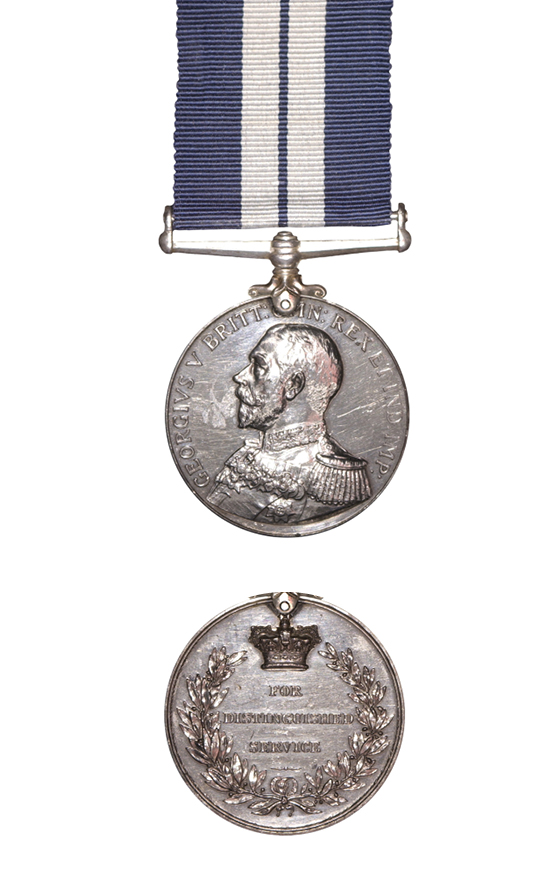
The Distinguished Service Medal (DSM) was instituted in 1914 for senior and junior ratings of the Navy. It was awarded for acts of bravery in the face of the enemy for which the award of the Conspicuous Gallantry Medal was not considered appropriate. It was replaced in 1999 by the New Zealand Gallantry Decoration. The ribbon has three equal stripes: dark blue, white and dark blue with a thin dark blue stripe down the centre of the white stripe.
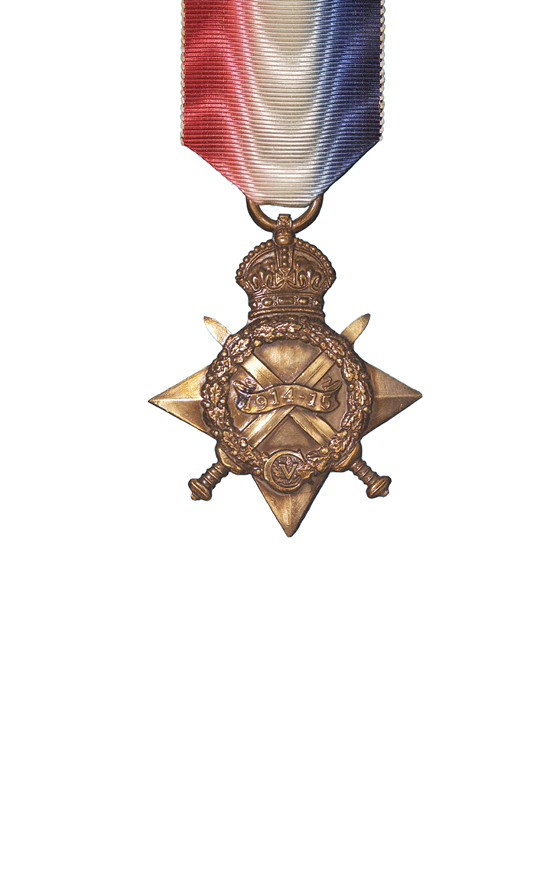
The 1914-15 Star was awarded to servicemen and servicewomen who served in the First World War between 5 August 1914 and 31 December 1915 in any “theatre of war”, provided they had not qualified for the 1914 Star. This included service at Gallipoli between 25 April 1915 and 31 December 1915, service in Egypt between 5 November 1914 and 31 December 1915, and service during the capture of German Samoa on 29 August 1914. Those eligible for the medal must have “served on the establishment of a unit in a theatre of war” during the relevant dates of operations in that area. The ribbon’s red, white and blue shaded and watered bands represent the flag of the United Kingdom.
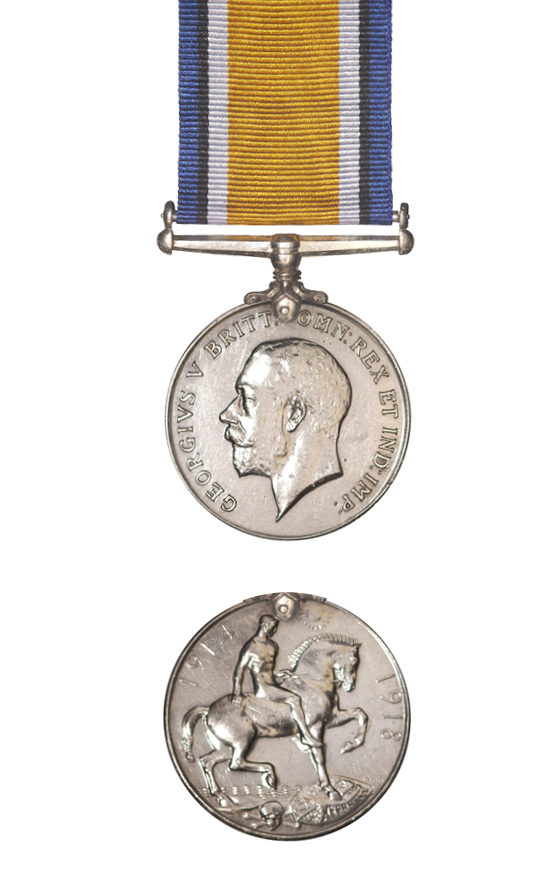
The British War Medal was instituted in 1919 to recognise the successful conclusion of the First World War (1914-1918). Its coverage was later extended to recognise service until 1920, recognising mine clearing operations at sea, and participation in operations in North and South Russia, the eastern Baltic, Siberia, the Black Sea and the Caspian Sea.
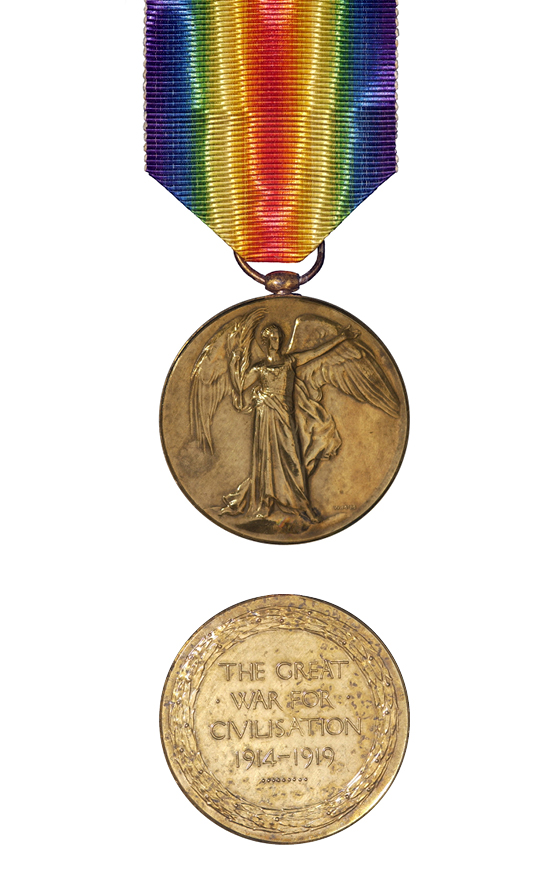
The Victory Medal was awarded in the First World War to all those who had already qualified for the 1914 Star or the 1914-15 Star, and to most persons who had already qualified for the British War Medal. The Victory Medal was awarded to all New Zealand troops serving overseas, except for those who arrived in Samoa after 30 August 1914 and those serving in Great Britain only. It has a unique double rainbow ribbon.
A bronze spray of oak leaves on the medal ribbon denotes that the recipient was Mentioned in Despatches during the period that the medal recognises. To be Mentioned in Despatches a member of the armed forces has had their name mentioned in an official report, written by a superior officer, and sent to a higher command. The report would describe the individual’s gallant or meritorious action in the face of the enemy.
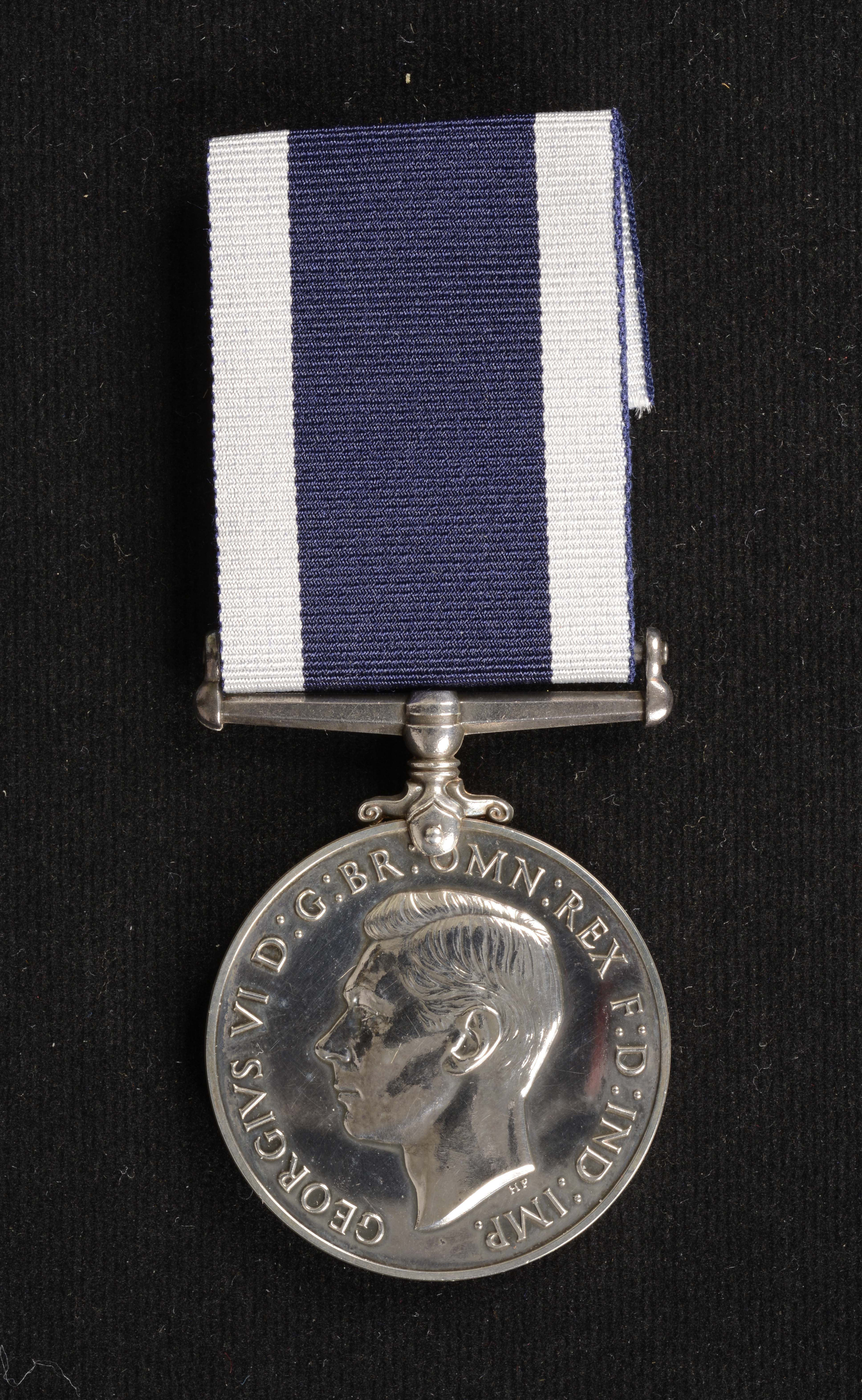
Awarded to ratings who have served a minimum of 15 years in the Royal Navy (previously 21 or 10 years), the first version of this medal was instituted in 1831 and it is still issued to Royal Navy personnel today. It features the reigning monarch’s head on the obverse and HMS Victory on the reverse with the recipient’s details engraved or impressed on the edge of the medal. This medal was also issued to eligible personnel serving in the New Zealand Division of the Royal Navy from 1921-1941 and then to Royal New Zealand Navy personnel from 1941-1981. In 1985 a New Zealand Royal Navy Long Service and Good Conduct Medal was introduced bearing the exact same design.