profile-image-holder
Rank:
Chief Engine Room Artificer
Birth date:
23.10.1896
Birth Place:
Portadown, Armagh, Northern Ireland
Service Number:
M3820 (RN); NZ1476 (RNZN)
Date Joined:
29.12.1911
Date Discharged:
1938
Death date:
01.01.1978
Place of death:
Auckland, New Zealand

Display No. 17F

BAXTER, Reginald

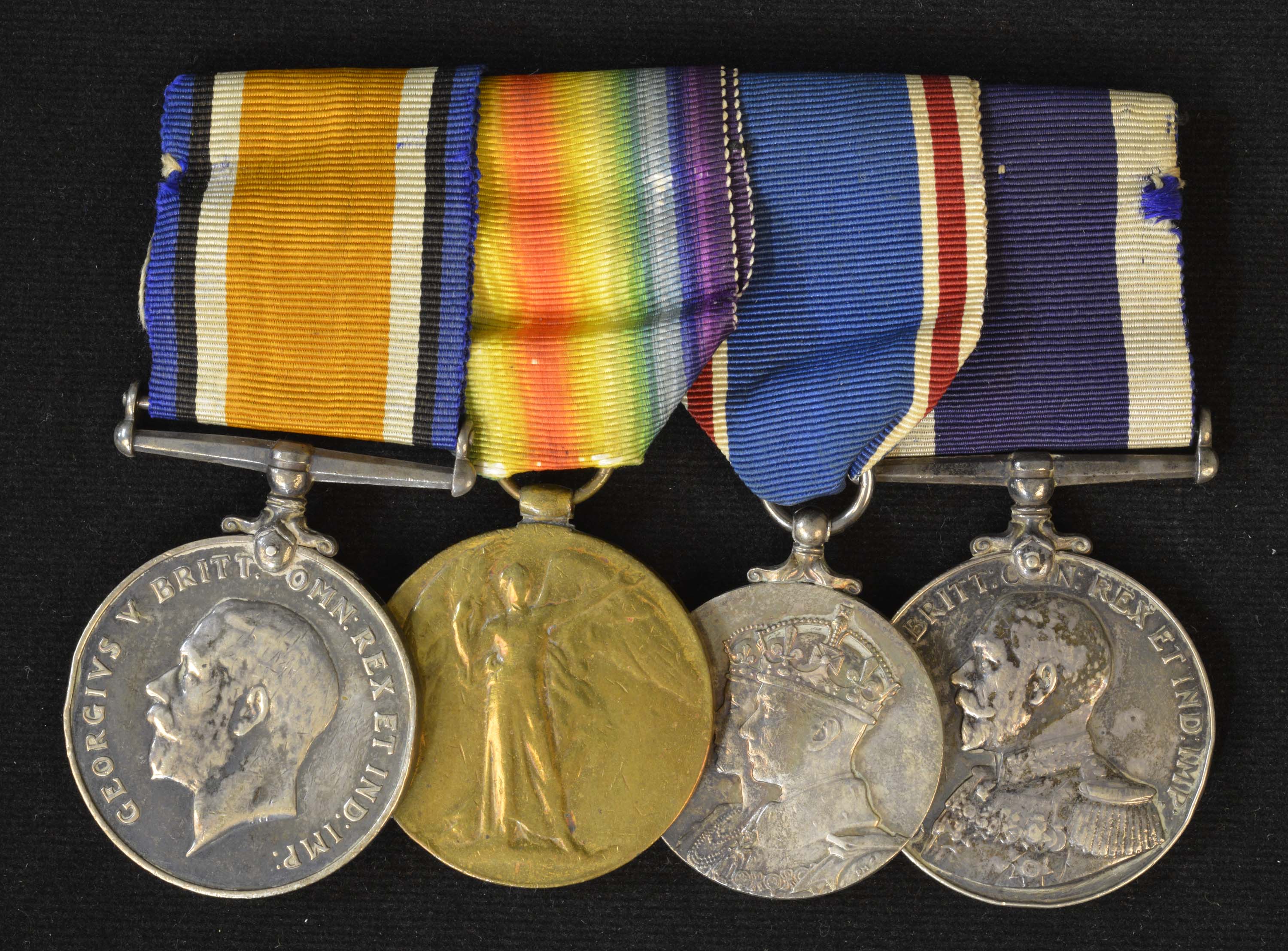
Reginald Baxter joined the Royal Navy as a Boy Artificer when he was fifteen years old. He initially spent three years training in HMS Indus, During the First World War, Baxter was serving in the battleship HMS Constitution as an Engine Room Artificer and took part in the Battle of Jutland in 1916. After the war he served in HMS Inflexible and Blenheim. Baxter spent the early 1920s based in Malta serving in HMS Diligence where he was posted to destroyers. In October 1923 he was posted to the cruiser HMS Dunedin and came out to New Zealand with the ship in 1924 when she joined the New Zealand Division of the Royal Navy. He was posted ashore to the naval base HMS Philomel and served from May 1924 to February 1928 when he reverted back to the Royal Navy. From 1929 to July 1933, Baxter served in the depot ship HMS Sandhurst and achieved the rank of Chief Engine Room Artificer. At the end of 1933, he joined HMS Achilles which he served in until 1935. In March 1935 he re-joined the New Zealand Division as a Chief Engine Room Artificer on loan from the Royal Navy and served again in Dunedin. In early 1937 he took Dunedin back to the Royal Navy and was part of the ships’ company that took over the cruiser HMS Leander. He took part in the 1937 Coronation Review in Leander and brought her back out to New Zealand. His loan agreement expired in March 1938 and he again reverted back to the Royal Navy where he was discharged.

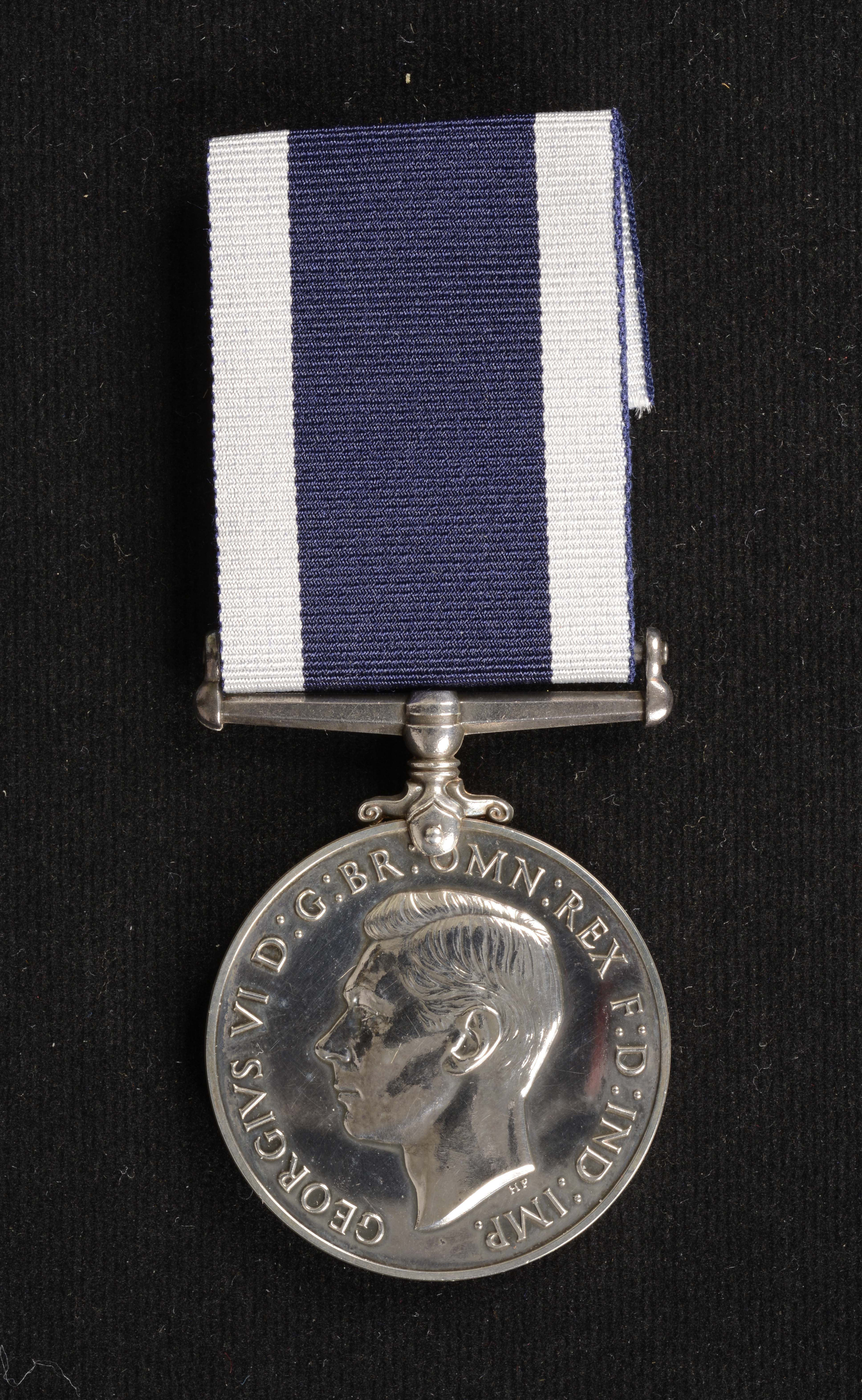
The British War Medal, The Victory Medal, Coronation Medal 1937, Royal Naval Long Service and Good Conduct Medal

Awarded medal(s)

Medal Description [Left to Right]:

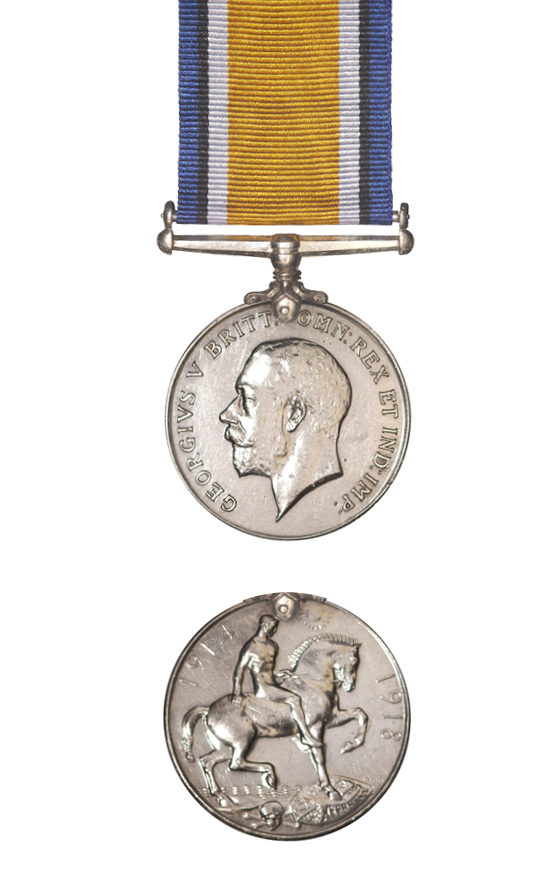
The British War Medal

The British War Medal was instituted in 1919 to recognise the successful conclusion of the First World War (1914-1918). Its coverage was later extended to recognise service until 1920, recognising mine clearing operations at sea, and participation in operations in North and South Russia, the eastern Baltic, Siberia, the Black Sea and the Caspian Sea.

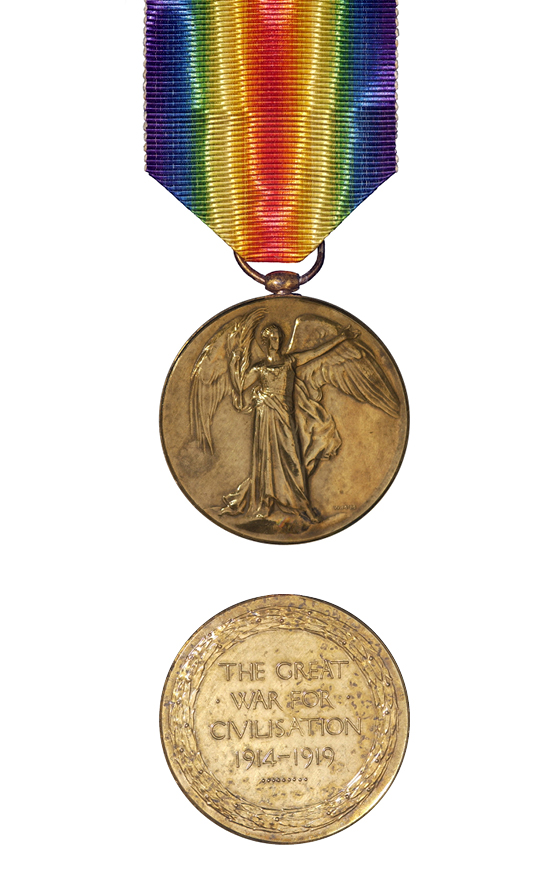
The Victory Medal

The Victory Medal was awarded in the First World War to all those who had already qualified for the 1914 Star or the 1914-15 Star, and to most persons who had already qualified for the British War Medal. The Victory Medal was awarded to all New Zealand troops serving overseas, except for those who arrived in Samoa after 30 August 1914 and those serving in Great Britain only. It has a unique double rainbow ribbon.

A bronze spray of oak leaves on the medal ribbon denotes that the recipient was Mentioned in Despatches during the period that the medal recognises. To be Mentioned in Despatches a member of the armed forces has had their name mentioned in an official report, written by a superior officer, and sent to a higher command. The report would describe the individual’s gallant or meritorious action in the face of the enemy.


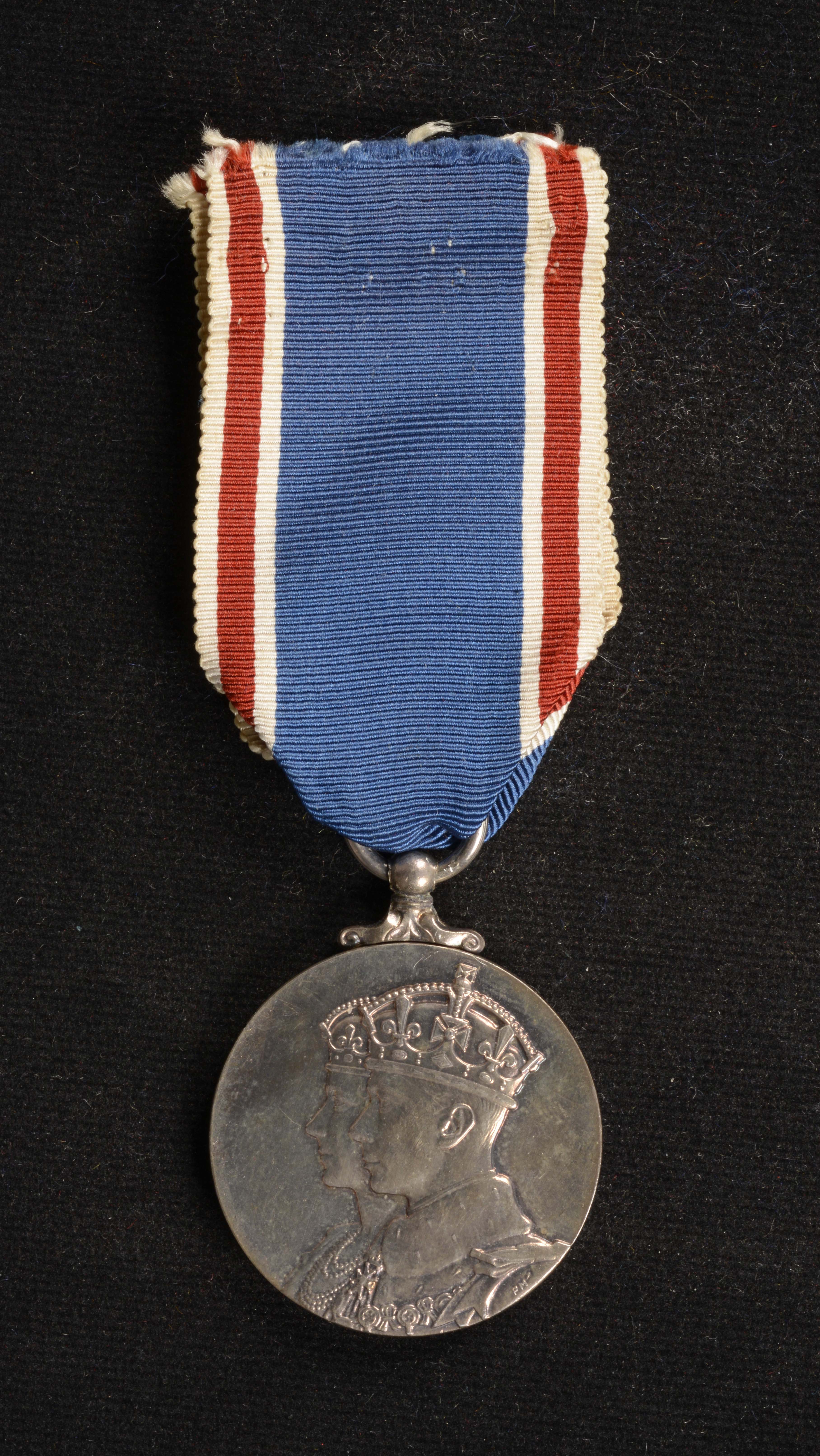
Coronation Medal 1937

This medal was issued to celebrate the Coronation of King George VI in 1937. This silver medal was awarded in large numbers to citizens of the British Commonwealth including New Zealanders, both military and civilian.

Royal Naval Long Service and Good Conduct Medal

Awarded to ratings who have served a minimum of 15 years in the Royal Navy (previously 21 or 10 years), the first version of this medal was instituted in 1831 and it is still issued to Royal Navy personnel today. It features the reigning monarch’s head on the obverse and HMS Victory on the reverse with the recipient’s details engraved or impressed on the edge of the medal. This medal was also issued to eligible personnel serving in the New Zealand Division of the Royal Navy from 1921-1941 and then to Royal New Zealand Navy personnel from 1941-1981. In 1985 a New Zealand Royal Navy Long Service and Good Conduct Medal was introduced bearing the exact same design.

Special interest medal(s)

Display No. 26B

Medal Description [Left to Right]:

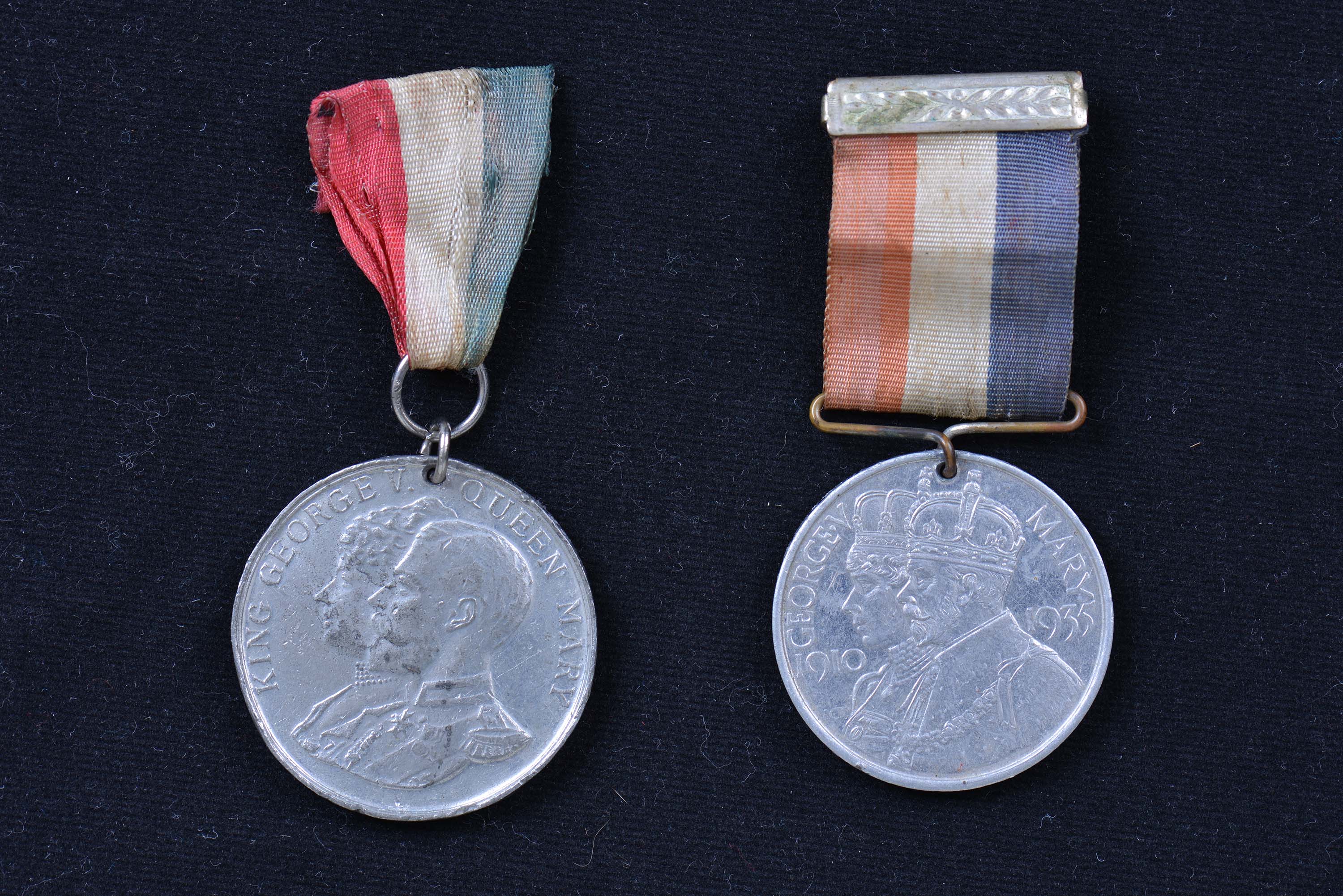
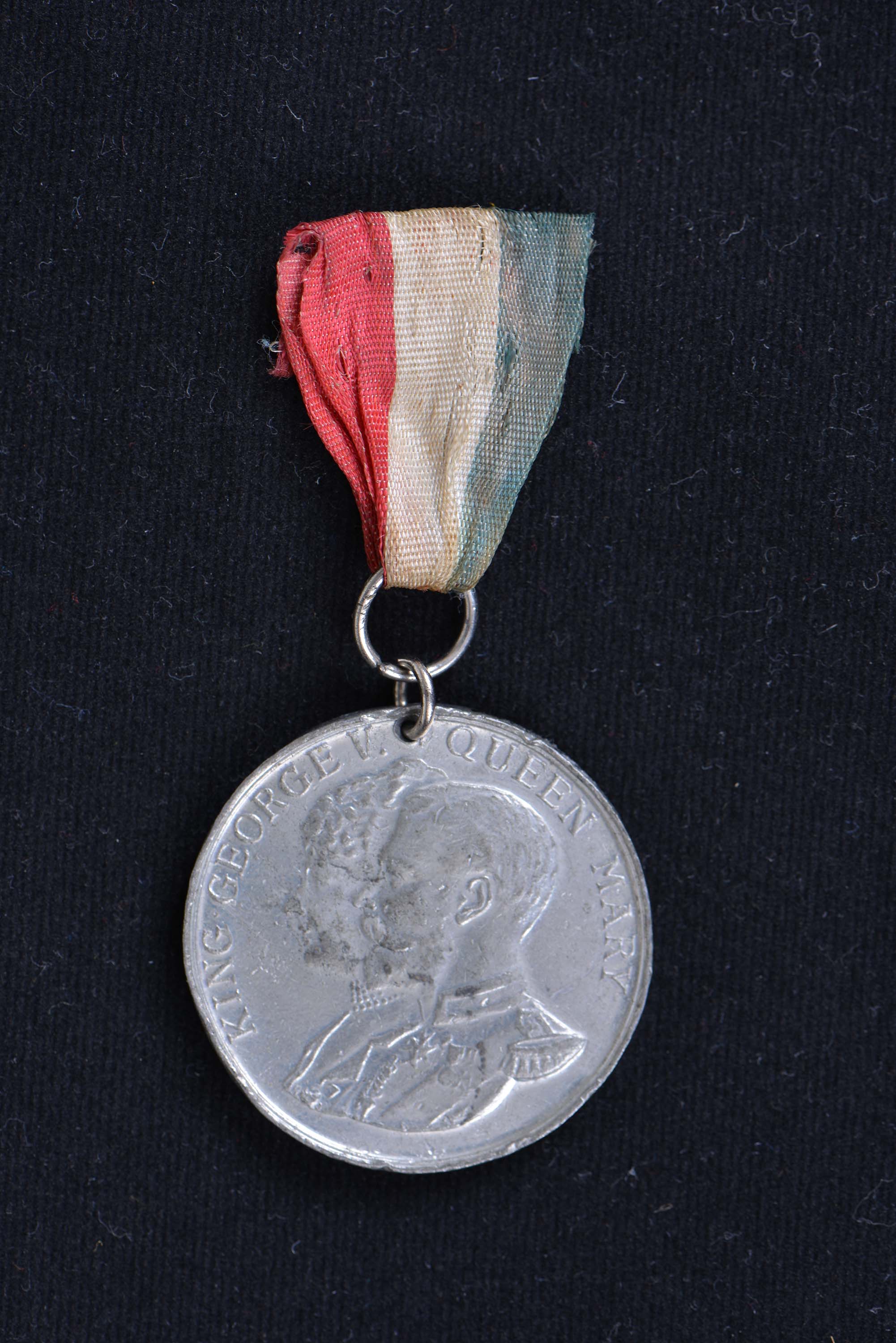
Silver Jubilee Commemorative Medallion King George V and Queen Mary

Souvenir medallion to commemorate the Silver Jubilee of King George V and Queen Mary on the 6th of May 1935.

Silver Jubilee Commemorative Medal King George V and Queen Mary

Souvenir medal to commemorate the Silver Jubilee of King George V and Queen Mary on the 6th of May 1935.

Display No. 27I

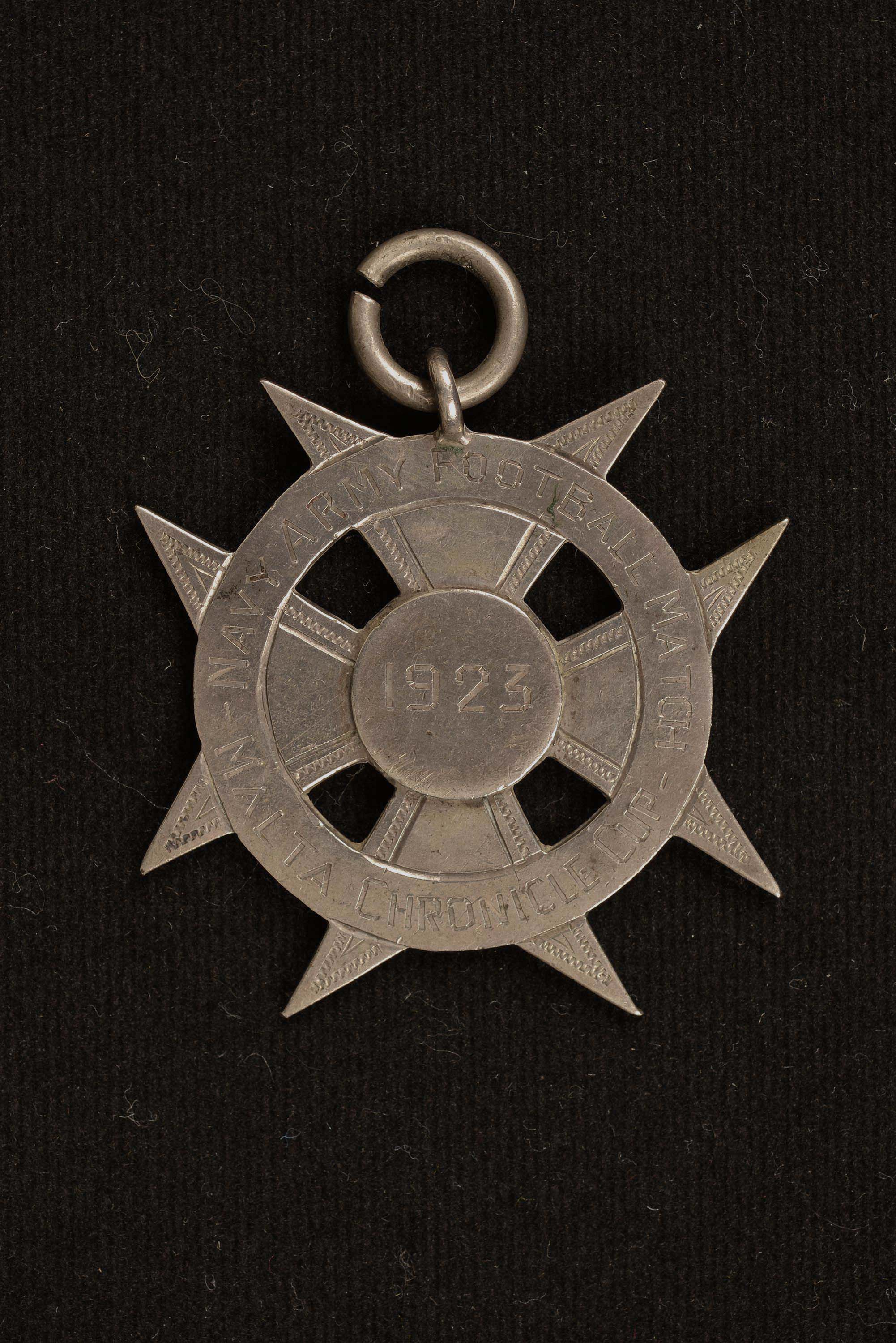
Silver Medallion for Football

Awarded for the Navy Army Football match, Malta Chronicle Cup 1923.